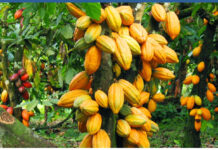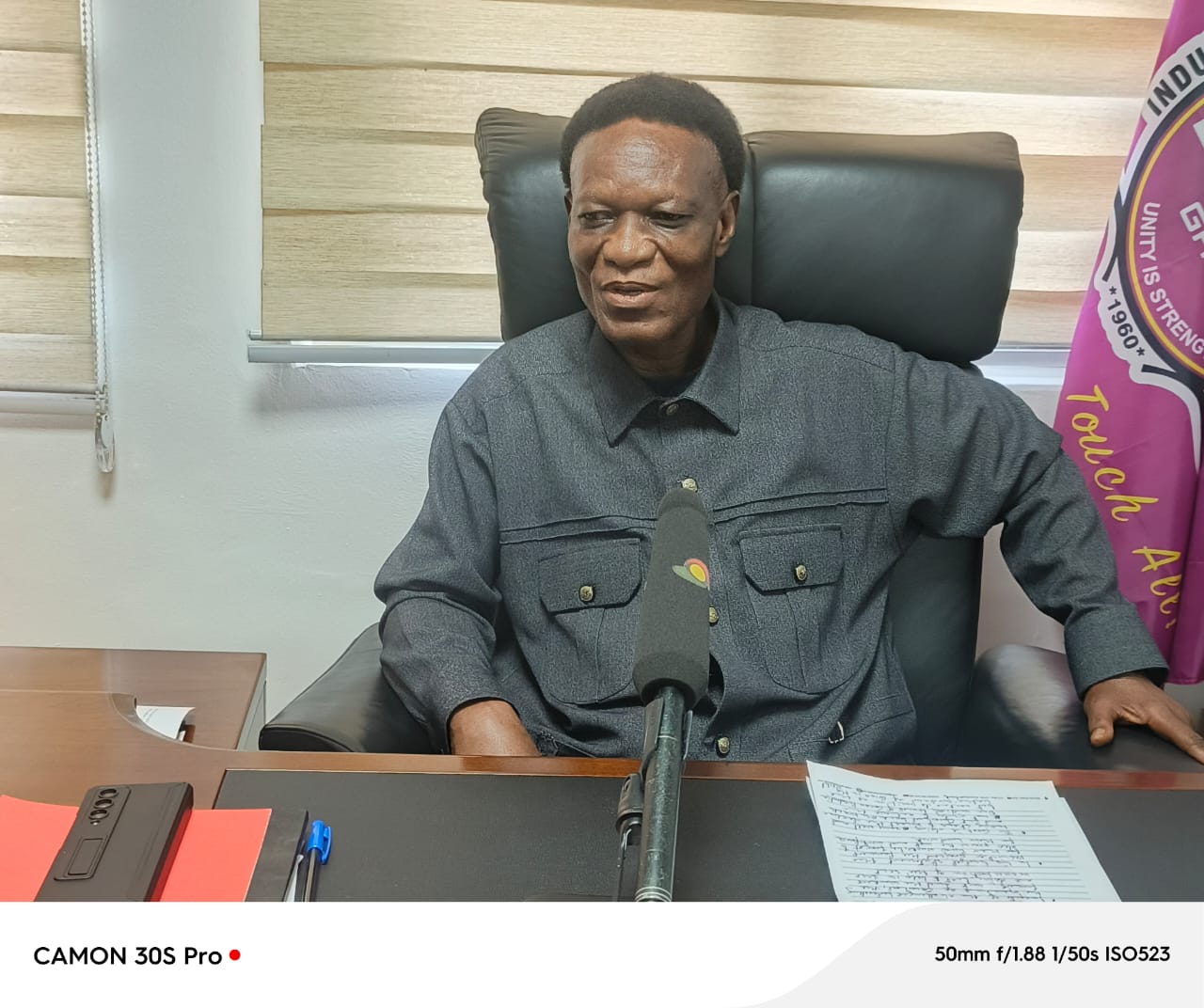

The Industrial and Commercial Workers Union (ICU) is urging government to write off the more than GH¢30 billion debt owed by COCOBOD, warning that the continued financial strain could cripple Ghana’s cocoa sector.
Reacting to the 2026 Budget Statement, ICU General Secretary Morgan Ayawine welcomed government’s renewed commitment to improving the fortunes of COCOBOD but insisted that only decisive financial intervention would save the sector from further decline.
Speaking in an exclusive interview with Labour Affairs Correspondent Daniel Opoku in Accra, Mr. Ayawine explained that the current challenges facing the cocoa industry demand bold action from government.
“Recently we have been saddled by challenges in the cocoa industry. Every sector globally is bedeviled with issues such as debts, so when we hear that COCOBOD has debts, it should not be taken as though COCOBOD alone is at fault,” he said. “What government needs to do is to see the importance of Ghana COCOBOD and take pragmatic steps to halt its decline. These are challenges, even though management and workers are doing their best.”
The Finance Minister, Dr. Ato Forson, earlier announced in the 2026 Budget that government intends to procure more than 200,000 hectares of land from next year to expand cocoa production and revive the sector.
Mr. Ayawine lauded the initiative, describing it as “a bold decision” that could help COCOBOD meet its long-standing target of one million metric tonnes of cocoa production.
“If government is able to acquire the 200,000 hectares of land to boost production, there will be no doubt in anyone’s mind that COCOBOD is moving towards achieving its one million metric tonnes,” he added.
He stressed, however, that the sector requires immediate capital injection.
“What COCOBOD needs is capital injection to reclaim its glorious position as the leading producer of cocoa in the world. Writing off COCOBOD’s debt and recapitalizing the institution will put it on the right pedestal to boost production.”
Mr. Ayawine also raised concerns about the Produce Buying Company (PBC), noting that the company had not received funds to purchase cocoa during the main crop season.
“The main season of cocoa is October, and PBC has not been given money to buy cocoa beans. If we are talking about job creation, COCOBOD also employs more people, so recapitalizing the company will revive the sector.”
The ICU leader further reacted to government’s announcement of the full recapitalization of the National Investment Bank (NIB). While acknowledging the progress, he urged the Finance Minister to extend similar support to distressed commercial and rural banks.
“The Minister talked about the successful recapitalization of NIB, which was expected to merge with ADB. Through discussions, government allowed both banks to operate independently, and fully recapitalizing NIB is commendable,” he said. “We need to escalate this to other banks that are in distress.”
Turning to the textiles and garments sector—expected to contribute 20,000 jobs under the budget—Mr. Ayawine argued that government must first revive distressed companies already operating in the industry.
“The textiles and garments sector used to have about 40 companies. Today, we are talking about three or four, and even these existing factories are not functioning well. Thousands of workers are at home,” he noted.
“If government is coming with this laudable idea to set up new companies, we believe the old factories should be revived to complement the new ones,” he suggested.