

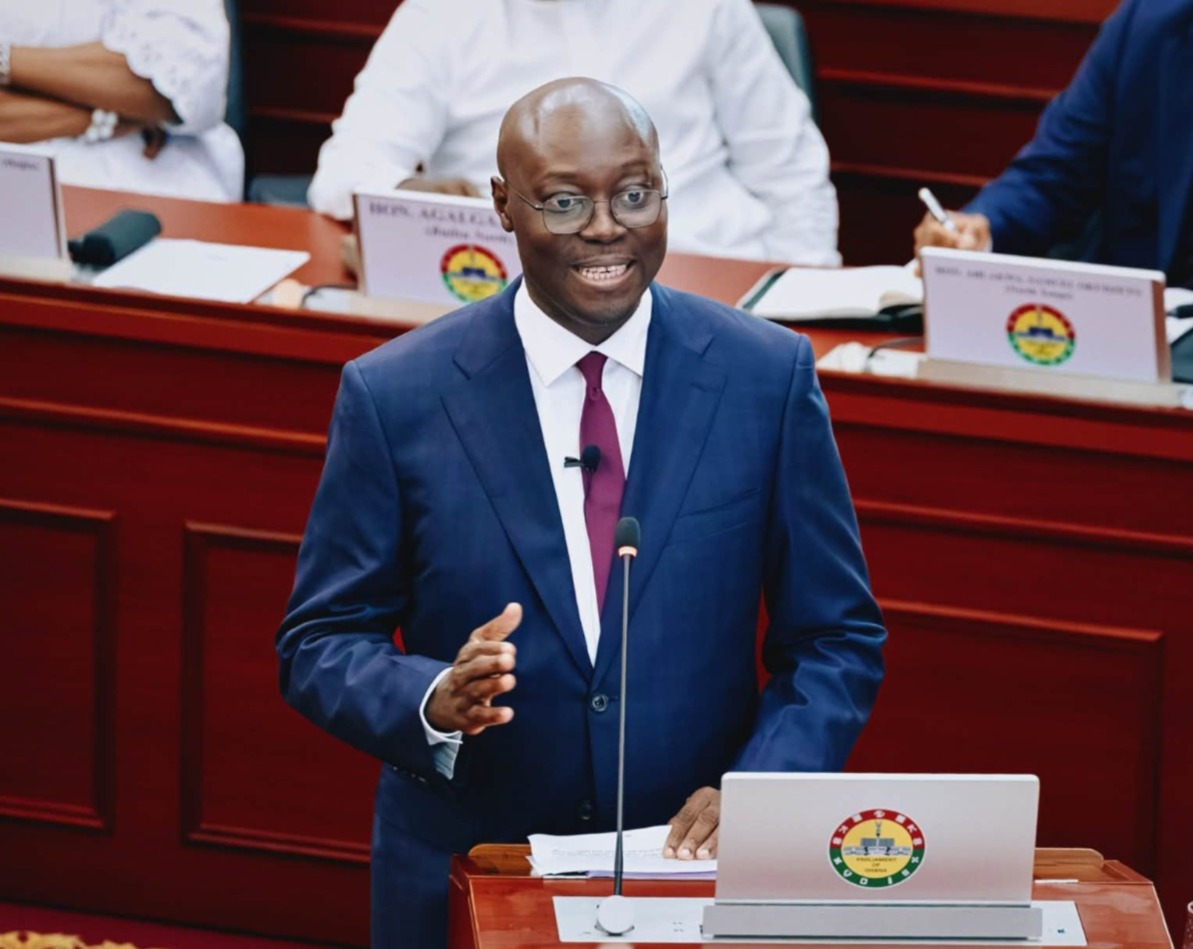

A Development Economist and Lecturer at the Ghana Institute of Management and Public Administration (GIMPA), Dr Frank Bannor has issued an analysis of the 2027 budget statement presented by the Finance Minister, in which he compares the 2026 and 2027 budgets of the Government of Ghana sector by sector.
For each major 2026 commitment, Dr Bannor said the analysis checks what the 2027 Budget itself reports as achieved, and whether the commitment has been quietly re-announced, enlarged, re-priced or dropped.
It also traces the education allocation across 2024, 2026 and 2027, and assesses the Big Push infrastructure programme and the new US$10 billion ‘New Economy’ programme, he said.
“Bottom line: the 2027 Budget is built on genuine macroeconomic gains, but it re-announces a large share of 2026 promises as if they were new, loosens the fiscal rule only a year after it was legislated, and places GH¢30 billion in a single, un-itemised New Economy line.
“The education sector, despite a larger headline figure, is shrinking as a share of GDP and has almost no government-funded capital budget,” he said in the analysis.
Key findings at a glance
• Scorecard of 69 specific 2026 commitments tracked in this report: 9 delivered; 22 partly delivered; 16 not delivered and restated in 2027; 20 simply not reported in the 2027 Budget; and 2 dropped with no 2027 provision.
• Macro gains are real: growth of 6.2% in the first half of 2026 (target 4.8%), inflation of 5.5% in October 2026, a policy rate cut from 21.5% to 14.0%, three rating upgrades, early repayment of more than GH¢36bn of DDEP and Eurobond obligations, and GH¢20.8bn of legacy arrears cleared.
• But public debt rose in 2026: from GH¢630.2bn (45.0% of GDP) in October 2025 to GH¢759.3bn (47.5% of GDP) in October 2026, and the cedi depreciated by about 10% against the dollar. The “debt reduction” story of the 2026 Budget did not continue in 2026.
• The fiscal rule is being relaxed: the 2026 Budget described a legislated minimum primary surplus of 1.5% of GDP and projected 1.5% for every year to 2029. The 2027 Budget cuts the target to 0.5% of GDP to finance the New Economy, and is silent on the Independent Fiscal Council that was due to be constituted in January 2026.
• Big Push: GH¢30bn was announced for 2026, but the 2027 Budget’s own narrative reports only GH¢14.3bn spent in January–October. For 2027, the budget gives three different figures (GH¢28.0bn, GH¢29.8bn and GH¢27.76bn). The Accra–Kumasi Expressway has about US$3bn in a Bank of Ghana account, but construction has not begun.
• New Economy (US$10bn, 2027–2030): ambitious and coherent in vision, but the 2027 GH¢30bn is a single lump-sum line with no project list; the energy pillar appears under-costed; growth targets are inconsistent (8% by 2030 in Pillar One versus “at least 5%” in the macro framework); and many “new” pillars are 2026 promises re-badged (oil palm, garment factories, state power plant, nuclear, local food purchase).
• Education: total education envelope (Ministry of Education plus GETFund) of GH¢32.8bn (2024), GH¢49.1bn (2026) and GH¢52.9bn (2027). As a share of GDP this falls from 3.12% to 3.07% to 2.93%, and as a share of total expenditure from 16.2% (2026) to 14.1% (2027). Ministry of Education GoG capital expenditure is only GH¢25m in 2027. Free SHS – GH¢4.2bn in 2026 – is not mentioned anywhere in the 2027 Budget. The 200 JHS/200 primary/200 KG building programme and the GH¢3bn textbooks-and-desks programme of 2026 are neither reported nor funded in 2027.
• Internal inconsistencies that Parliament should resolve include capital expenditure (GH¢100.4bn versus GH¢98.3bn), the Big Push (three figures), the rural electrification regions (six in the speech versus three in the appendix), the Housing Fund (GH¢500m versus GH¢1.0bn), and social protection transfers that do not reconcile with LEAP plus school feeding.