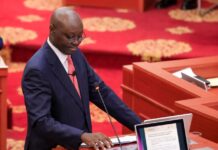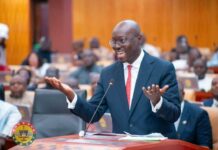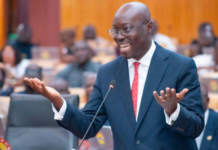

Finance Minister, Dr Cassiel Ato Forson has distinguished the government’s New Economy Programme from the 24-Hour Economy initiative, saying the former is public sector-led while the latter is driven by the private sector.
He said the two programmes had different approaches and should not be treated as the same initiative.
Speaking in an interview on TV3 New Day’s The Big Issue, Friday, November 13, he explained that the 24-Hour Economy was designed as a private sector-led initiative, under which government would provide the necessary incentives and policy direction to encourage businesses to invest and expand economic activity.
He contrasted it with the New Economy Programme, which he described as government-driven.
“The NDC said that the 24-Hour Economy programme was a private sector-driven initiative. It has always been, go back to our manifesto, we have never said it is going to be public sector-led.
“Unlike the New Economy that government is saying that Government is going to be government-driven programme and have allocated resources to build power plant, to build railway,” he stated.
He added: “What we are seeing with the 24-Hour Economy is that the Secretariat will attract investment into the economy by a number of policies.”
The Finance Minister further outlined conditions businesses must meet to benefit from incentives under the 24-Hour Economy Programme, including commitments to job creation, additional investment and tax compliance.
Under the proposed arrangement, participating businesses will be required to sign performance agreements with the Ghana Revenue Authority (GRA) and the 24-Hour Economy Secretariat.
He said access to incentives would be conditional on enterprises meeting binding commitments, particularly adopting the 1-3-3 shift system.
He explained that businesses that fail to meet the requirements would not qualify for the incentives.
He added that the Secretariat would assess applications from businesses to determine whether they met the requirements for participation and access to incentives.