
Some young women working as head porters, popularly known as ‘Kayayei’ in Accra, say they are ready to quit the trade and return to school if only they are supported with employable skills and educational opportunities.
They believe that going back to school would offer them a safer and more sustainable future, compared to the risks and hardships they currently face in the capital.
The portering business in Ghana is widely regarded as one of the most dangerous and physically demanding jobs. It is largely dominated by young women and girls from the northern part of the country, many of whom have dropped out of school due to poverty.

For some, like Mary, a 19-year-old Senior High School (SHS) graduate, the dream of continuing her education has led her to the bustling streets and markets of Accra. Mary has been working as a ‘Kayayoo’ for the past eight months, hoping to save enough money to fund her university education.
“It’s not easy at all,” Mary shares. “I have to carry heavy loads every day just to make about 100 cedis a week. From that, I take care of myself and send money to my family back home,” she lamented.

Mary’s story is echoed by many of her peers. Some say they were introduced to the trade after completing SHS, with the hope of saving enough to return to school. Others, who dropped out earlier, see engaging in ‘Kayayei’ as their only option for survival.
Beyond the physical toll of the work, a more troubling issue is where these young women sleep. Many are forced to sleep in open markets or makeshift structures, leaving them vulnerable to theft, assault, and harsh weather conditions.

However, there is a glimmer of hope.
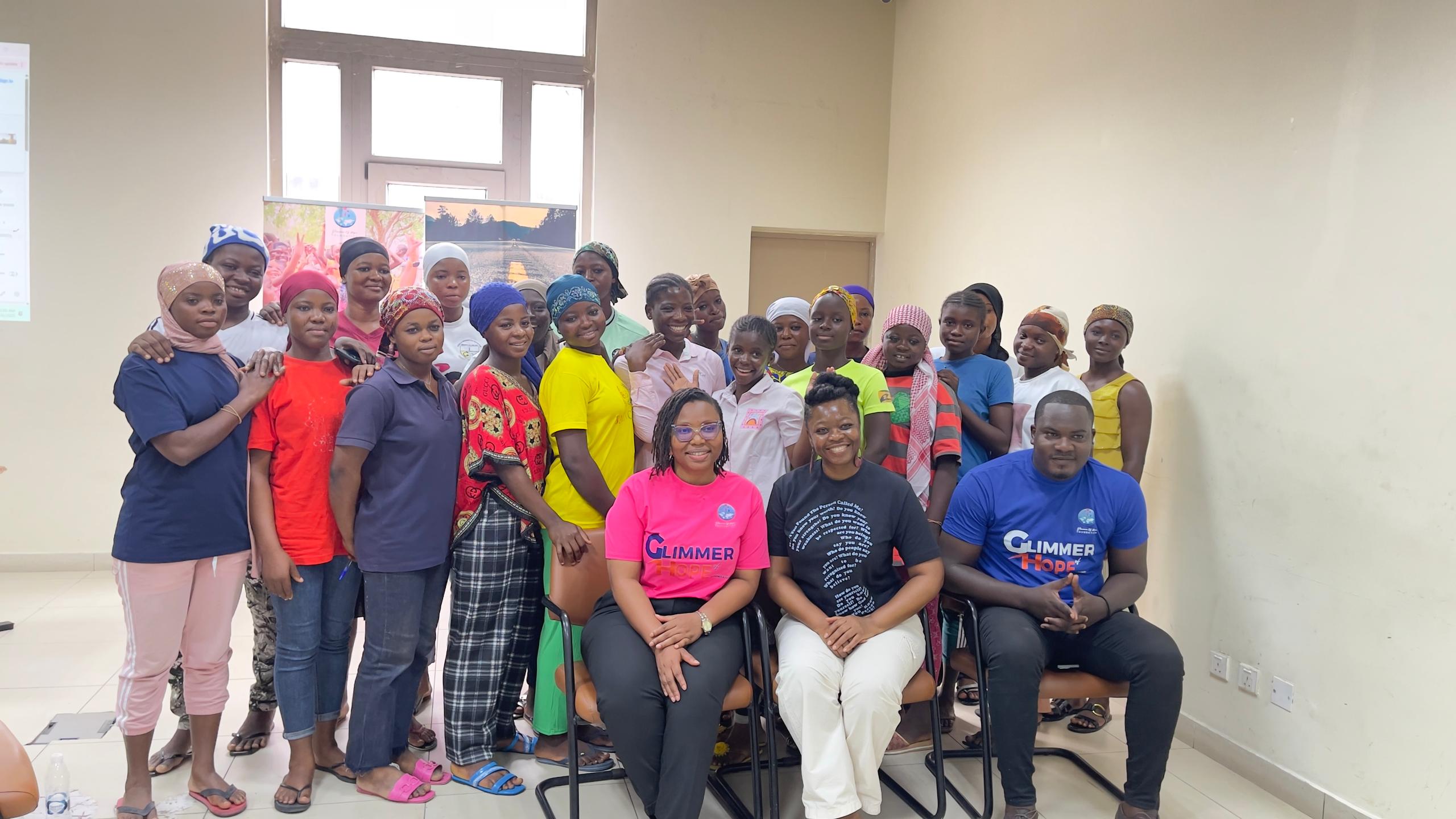
Thanks to the efforts of Glimmer of Hope, a local non-profit organization, Mary and about 20 of her colleagues all senior high school graduates are now receiving hands-on training in vocational skills such as soap making among others.
They have also been thought how to get destiny helpers. They hope these skills will open doors to better livelihoods and, more importantly, a chance to go back to school.
Ernestina Mensah, founder and leader of Glimmer of Hope, emphasized the urgent need for support: “These girls are willing to change their lives, but they need help,” she said. “So far, we’ve been able to sponsor more than four of them to enter the university over the years, but we can’t do it alone.”
The organization is calling on government agencies, private institutions, and benevolent individuals to support the initiative by providing scholarships, skills training, and safe accommodation for these girls.
Mary and many others still carry heavy loads daily, but they carry even heavier dreams. Dreams of classrooms, graduation gowns, and a future far from the streets.