
Ghana’s High Commissioner-designate to South Africa, Benjamin Quashie, has emphasized that Ghana can leverage its robust bilateral relations with South Africa to harness the opportunities presented by the BRICS nations.
According to him, strengthening ties with South Africa presents “a sure pathway to BRICS,” which will in turn lead to wide-ranging sectoral advantages for Ghana.
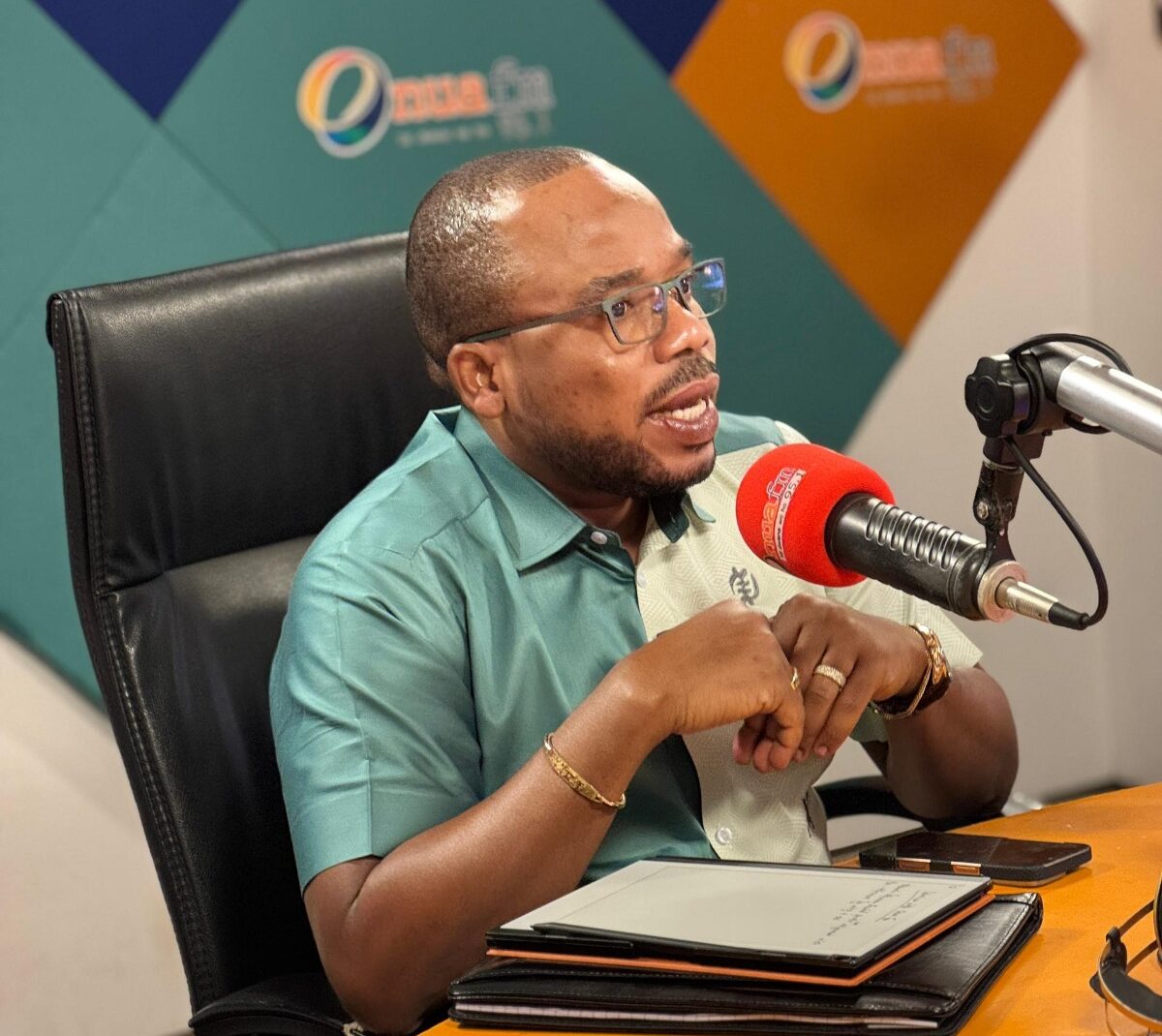
Speaking in an interview on Onua FM on Monday, August 26, 2025, Mr. Quashie outlined several benefits Ghana could derive from a deeper association with South Africa.
He noted that South Africa’s wealth of industrial experience in mining, manufacturing, petrochemicals and other key sectors provides strong partnership potential and a crucial learning curve for Ghana’s development agenda.
He further stressed that Ghana’s import-substitution goals could be accelerated through joint ventures in these sectors, adding: “This is a sure advantage in value-addition and industrial policy for Ghana.”
On the Pan-African front, the High Commissioner-designate highlighted the importance of finance and investment cooperation.
He pointed out that Ghana could tap into South Africa’s Development Finance Institution, which leans towards public-interest investment, describing such collaboration as “a sustainable and futuristic source of capital for our key sectors.”
As a current AfCFTA Youth Champion Fellow, Mr. Quashie also underscored that the AfCFTA Secretariat in Accra could serve as a platform for co-developing cross-border supply chains between the two nations.
These could span pharmaceuticals, agricultural processing, and renewable energy alternatives.
He added that the Ghana–South Africa partnership could act as a diplomatic bridge into BRICS, enabling both countries to spearhead regional coordination and push reformatory proposals for Africa at BRICS summits—especially on critical issues such as debt restructuring, global trade, and climate finance.
Touching on how Ghana can leverage BRICS for national development, Mr. Quashie observed that, as realpolitik suggests, every nation must act in its own interest.
He, therefore, proposed that Ghana strategically position itself to benefit from BRICS through development financing—particularly by accessing the New Development Bank (NDB), which Ghana is eligible to join as a UN member even without BRICS membership.
“This is necessary because Ghana can use such sources to fund large-scale infrastructure projects in transport, energy and beyond. Our President’s keenness on development through industrialization would greatly benefit from this move, tied to foreign policy and bilateral ties with South Africa,” he noted.
Citing examples, he said major projects such as the Volta Aluminium Integrated Project and the Western Railway Line Extension would benefit immensely from such financing.
He also stressed the importance of diversifying trade and investment by enabling bilateral settlements in local currencies, which would reduce pressure on Ghana’s forex reserves.
Mr. Quashie further explored the potential of Artificial Intelligence (AI) and technology within the BRICS framework.
He noted that India, Russia, and China are leading in digital governance and AI, while South Africa and Brazil are advancing in industrial skills and Technical Vocational Education Training (TVET).
India and Brazil, he added, are also pioneering smart agriculture and irrigation systems, significantly boosting their food security. Ghana, therefore, stands to gain from open-source technologies, reduced intellectual property barriers, and affordable patents within the BRICS framework.
He went on to propose six national strategies for collaboration:
* Diplomatic – formalizing a BRICS “partner country” status via South Africa;
* Financial – joining the New Development Bank;
* Industrial – developing joint Ghana–South Africa projects in electric vehicles, aluminium, agro-processing and more;
* Trade – initiating local currency settlements with China, India and others;
* Technology and Education – launching a Ghana–BRICS partnership in training and tech transfer;
* AfCFTA – fostering BRICS trade synergies through the Accra Secretariat.
As a Pan-Africanist and Nkrumahist, Mr. Quashie urged Ghana to adopt a strategic approach, guided by Dr. Kwame Nkrumah’s diplomatic vision that combined positive non-alignment with Pan-Africanism.
This, he said, would help Ghana leverage both Eastern and Western relationships while safeguarding Africa’s sovereignty and unity.
In his concluding remarks, he cautioned that BRICS is not a panacea to Ghana’s development challenges, noting the bloc’s own internal rivalries and the absence of a common currency.
He advised that Ghana should not replace other partnerships but rather use BRICS as a means to diversify opportunities.
“The Non-Aligned Movement’s stance of ‘many friends, no enemies’ is applicable here, to balance our deepened ties with BRICS while maintaining strong links with the EU, US and IMF,” he concluded.
By Lois Dogbe