
The Ghana Tertiary Education Commission, (GTEC) has flagged down some 149 institutions for running open distance learning across the country without accreditation.
According to GTEC the institutions are running these courses without authorisation and accreditation.
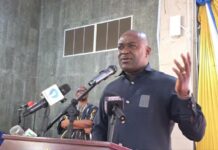
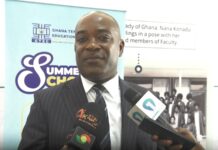
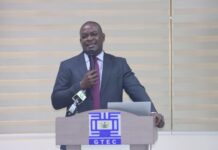
Director-General of GTEC, Professor Ahmed Abdulai Jinapor, said the institutions were closed down because they are unfit for purpose .
He made the pronouncement at a two-day capacity building workshop on Ghana Open and Distance Learning (ODL) policy implementation strategies for national quality assurance and tertiary education stakeholders meeting in Accra.
According to Prof. Jinapor, “Open and distance learning, therefore, is not merely an alternative mode of education, but a central pillar for broadening access, promoting equity, and driving innovation in tertiary education.”
He says although they have been working hard to encourage and promote access to tertiary educational delivery in this country, “unfortunately, distance education seems to be replaced with distancing education.”
“Distancing education manifesting in institutions moving across this country to replicate what is happening in traditional classrooms cannot be deemed as distance education. In fact, as we speak, the Ghana Tertiary Education Commission has flagged some 149 distance learning centers that we think are not fit for purpose. These centers are found in second cycle institutions, institutions that are overstretched as a result of the double track.
We have centers being organized in churches, public services, public works departments, PWDs, electricity companies. In fact, we cannot allow this to happen”.
He also emphasized that the Commission has issued a moratorium for institutions to go through the due processes to acquire authorization for running these programmes and in the right environment.
“As a Commission, we’ve issued a moratorium to all these institutions to teach out students in these centers and to seek accreditation for facilities that are fit for purpose. Today, we are launching this particular policy involving quality assurance . What we’ve realized as a commission is that quality assurance in most of these institutions becomes overly transactional. Institutions do what they are supposed to do to please us and once we leave, then it’s business as usual. We cannot allow that.
“The Ghana Tertiary Education Commission recognition these dynamics has developed the Ghana Open and Distance Learning Policy to serve as a regulatory and guiding framework for the establishment and operation of distance learning centers and for the integration of ODL into our mainstream tertiary education system. This policy underscores our understanding of this policy and to translate it into concrete strategies for institutional practice”.
On his part, the Commonwealth Consultant for the Open Distance Learning Policy, Professor Olugbemiro Jegede said Ghana must come to a negotiated agreement as to what open distance learning is and guide its implementation.
“Let me say that the Ghana Tertiary Education Commission has done marvelously well, and we were even praising it in Nigeria a few days ago when I had to talk to people, by getting your open and distance-learning policy done.
“What are you doing? Which is fantastic. However, we must begin from the beginning. And that’s where we think it’s better for us, not only to listen to aspects of the policy that has been put out, we should actually come to a concerted, a negotiated agreement as to what distance-learning means.”
“What does distance-learning mean? If I ask everybody, we’ll have more than 40 different answers. But we want to have a single, negotiated understanding of what distance-learning means, as well as what open-learning means. There’s a difference between distance-learning and open-learning.
“In fact, research has shown, several years ago, as far back as 1977, that open and distance-learning is on the same footing as face-to-face. In fact, now almost better, because in almost every country in the world, open and distance-learning is taking the center stage. That is what everybody is doing now.
“If it is no center stage, tell me, why is Oxford University doing ODL? Why is Stanford doing it? Why is Harvard University doing it? So, I mean, why are all the big universities in the world now rushing to do open and distance-learning? It’s because that is easy,” he stressed.
By Richard Bright Addo