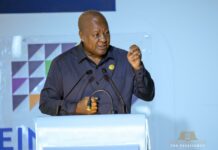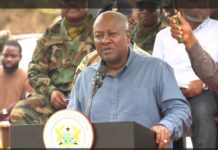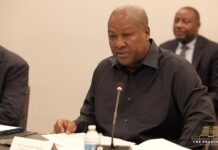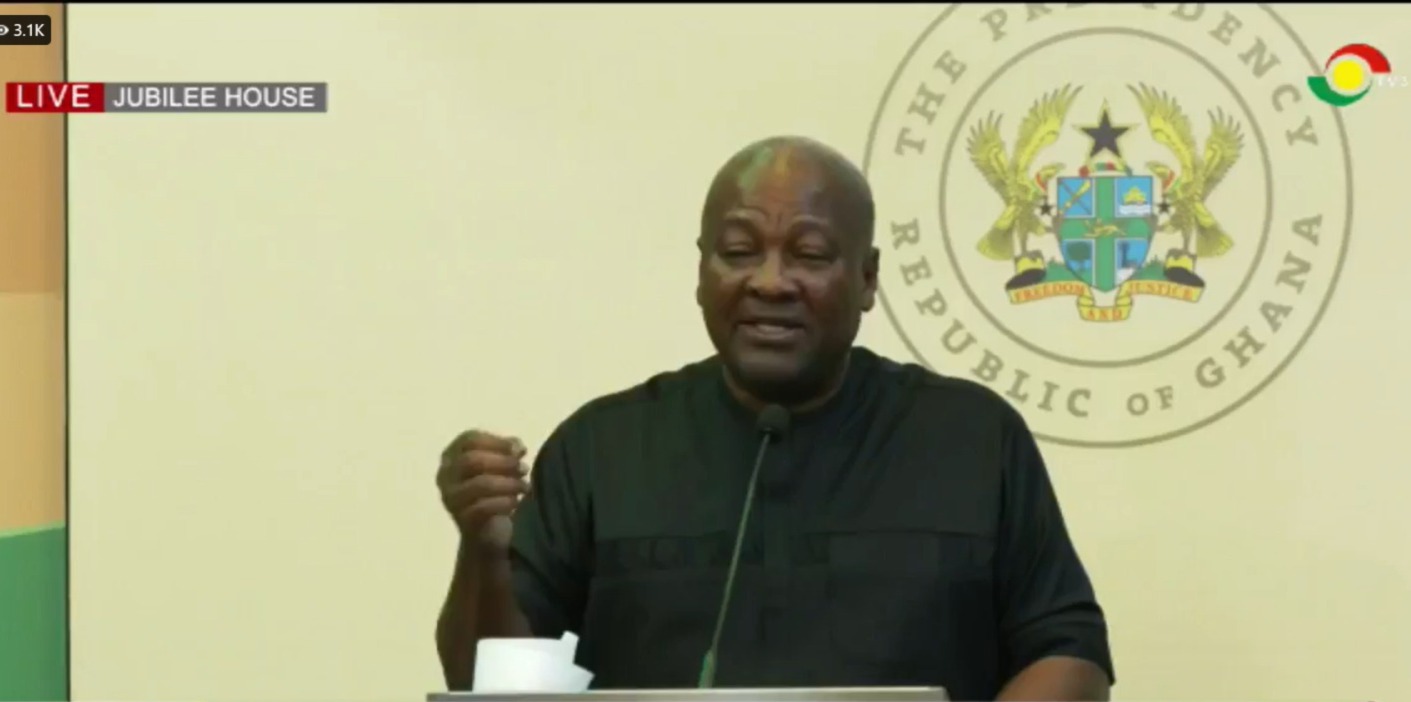

President John Dramani Mahama has said that there is a renewed willingness among the people to trust that their elected officials have Ghana’s interests at heart and that we are progressing together.
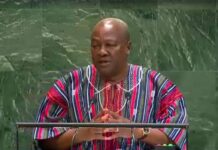
He said this when he addressed the 80th United Nations General Assembly in New York on Thursday, September 25.
“There is a renewed willingness among the people to trust that their elected officials have Ghana’s interests at heart and that we are progressing together,” he said.
Touching on other matters, President Mahama said that the slave trade must be recognised as the greatest crime against humanity.
He said as African Champion on reparations, Ghana intends to introduce a motion in the August body to that effect.
“More than twelve and a half million Africans were forcibly taken against their will and transported to create wealth for the powerful Western nations. We must demand reparations for the enslavement of our people and the colonisation of our land that resulted in the theft of natural resources, as well as the looting of artefacts and other items of cultural heritage that have yet to be returned in total.
“We recognise the value of our land and the value of our lives. As did our coloniser, as well as the governments that happily paid reparations to former slaves owners as compensation for the loss of their ‘property’—that ‘property’ for which compensation was paid referred to enslaved people who had been freed,” he said.
President Mahama further told the assembly that an increasingly insecure world is witnessing upward spending on defence budgets of bilateral partners and steep cuts in Official Development Assistance. Since July 2024, there has been a 40% drop in humanitarian aid to Africa.
In this era of global uncertainty, he said, Africa must exercise sovereignty over its natural resources to raise the necessary funds to ensure the well-being of its citizens.
“The days of parceling out vast concession areas to foreign interests for exploitation must come to an end. We will continue to welcome foreign investment, but we must negotiate better for a bigger share of the natural resources that belong to us.
“We are Pred of the continued image of poverty-stricken, disease-ridden rural communities, living at the periphery of huge foreign-controlled natural resource concession areas. We are Pred of having people extract the most they can from us and, in return, offer us the very least by way of respect, consideration, and dignity.
“We are Pred of not being represented in ways that reveal the richness and complexity of our history or acknowledge all that we have overcome to arrive here, in this liminal space of untold possibilities.”