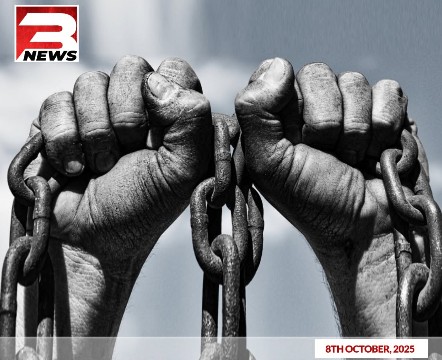

Modern slavery has surged by 10 million in just five years, bringing the global total to a staggering 50 million victims, according to the 2023 Global Slavery Index Report.
In Ghana, an estimated 91,000 people are currently trapped in modern slavery, primarily through human trafficking, forced labour, and forced marriage.
Of the global figure, 22 million are victims of forced marriage, with 12 million children identified as the most vulnerable.
The report highlights several industries where exploitation is most prevalent, including fishing, gold mining, cocoa farming, commercial sex work, domestic labour, and street begging.
Speaking at the Faith in Action Modern Slavery Conference held on October 8, Director of Operations at Walk Free, Katherine Bryant, called for stronger enforcement against perpetrators and greater protections for victims.
“In Ghana and across Africa, exploitation takes many forms, from forced labour in agriculture and mining to domestic servitude,” Bryant said.
“In some countries, girls as young as nine are forced into marriage. The absence of a legal age of marriage creates dangerous loopholes. Governments, businesses, NGOs, and faith leaders all have a role to play.”
Head of the Global Freedom Network, Franca Pellegrini, emphasized the importance of unity in tackling the crisis.
“Collaboration is non-negotiable. No single faith organization or government can end slavery alone,” she said. “Interfaith solidarity, cross-sector partnerships, and survivor leadership are essential. Faith leaders must use their pulpits as platforms for freedom. Civil society must continue to innovate and reach the margins. Survivors, your leadership is vital.”
Spokesperson for the Chief Imam, Sheikh Aremeyaw Shaibu, urged scholars and policymakers to confront cultural norms that perpetuate modern slavery.
“The greatest affront to human dignity is to keep any human being in bondage,” he said.
He added: “some practices are rooted in tradition and belief systems. We must challenge these mentalities and work with state institutions to ensure legal protections for those who migrate for work, especially in safeguarding their human rights.”
While the fight against modern slavery is far from over, stakeholders remain hopeful. With collective action, accountability, and compassion, they believe exploitation can be eradicated.
By Beatrice Sowah