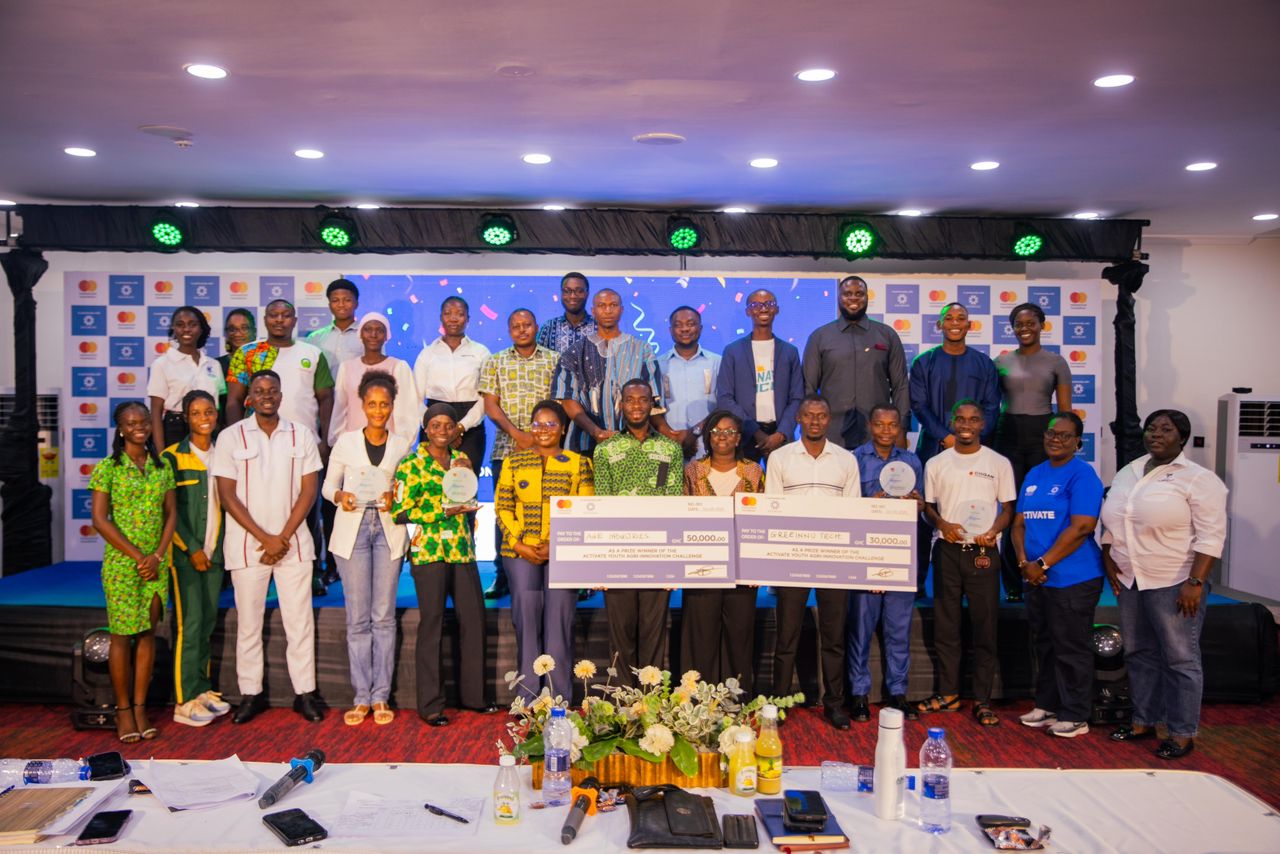

Sixteen young innovators showcased their business solutions, including climate-smart farming technologies and value-added food processing, as they competed for funding, mentorship, and partnership opportunities in the national challenge.
The Challenge showcases a shift towards policy-driven agricultural transformation, with young people playing a central role in driving innovation, job creation, and food security.
The Accelerating Change Through Innovation in Agricultural TVET (ACTIVATE) Project aims to align with Ghana’s agricultural and employment policies by equipping young people with practical skills and access to financing to boost value addition and productivity in the agri-food sector.
To achieve this, stakeholders gathered in Accra for the national Youth Agri-Innovation Challenge, themed “Youth at the Frontlines of Agricultural Transformation,” bringing together young entrepreneurs, business development organizations, and financial institutions.”
The World University Service of Canada (WUSC) and the Mastercard Foundation are partnering to drive youth-led transformation in Ghana’s agricultural sector, focusing on innovation, skills development, and entrepreneurship.
The Challenge showcases a growing trend where young people are at the forefront of agricultural transformation, driving innovation, job creation, and food security through policy-backed initiatives.
Deputy Project Director ACTIVATE at WUSC, Timothy Akanpabadai emphasized that young people should lead Ghana’s response to challenges in food production, post-harvest losses, and market access.
He encouraged youth to think creatively and approach agriculture as a business, urging them to leverage their skills to drive transformation in the sector.
Senior Manager at Challenges Group Ghana, Marcel Koomson, stated that the ACTIVATE Project aims to bridge the gap between Agricultural Technical and Vocational Education and Training (ATVET) institutions and the private sector, promoting youth inclusion and business growth.
He noted that the project seeks to engage more young people in the agriculture value chain, highlighting examples of innovative ideas from youth, such as smart storage systems and organic value-added products, with the goal of creating meaningful employment opportunities.
Through their partnership, WUSC and the Mastercard Foundation aim to promote inclusive growth and youth empowerment in Ghana’s agricultural sector, leveraging innovation and entrepreneurship to drive the sector’s transformation.
Some young innovators noted that limited access to funding has hindered their business growth, and initiatives like the Youth Agri-Innovation Challenge can help boost start-ups and entrepreneurial ventures.
By Kingsley Adusei Amakye