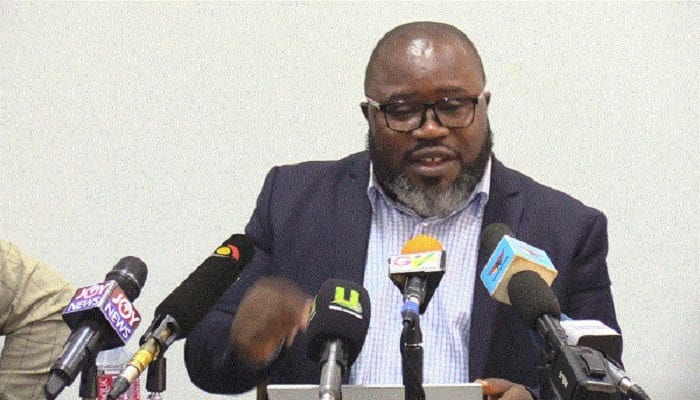

Education think tank Africa Education Watch (Eduwatch) is calling on government to increase investment in the education sector in the 2026 national budget, warning that the current allocation falls short of global standards.
Executive Director of Eduwatch, Kofi Asare, said Ghana’s 2025 budget “fell below minimum international benchmarks for education financing,” adding that “Ghana should be doing at least 20% of the national budget or 6% of GDP for education.”
Speaking in an exclusive interview with TV3 ahead of the budget presentation on Thursday November 13, 2025, he noted that this year’s allocation was “about 3.1% of GDP and 14% of the national budget,” which leaves “a lot of room to improve in terms of the quantum of funds committed to education.”
Eduwatch wants the next budget to prioritize teacher recruitment, saying at least 30,000 to 50,000 new teachers must be employed and deployed to deprived areas where deficits are high.
“There are thousands of empty classrooms in basic schools,” Mr. Asare explained.
“In some areas, one teacher handles classes from Primary One to Primary Six. That situation must not continue.”
He warned that the teacher shortage has begun reversing progress in enrolling out-of-school children.
“Where we have made gains in bringing children back to school, they’ve dropped out again because there are no teachers.”
On infrastructure, Eduwatch commended the 2025 budget for the allocation of ₵1.2 billion under the District Assemblies Common Fund to build new schools but urged government to repeat the initiative in 2026.
“We want to see a repeat of that so that within three years, we’ll have over 500 new basic schools constructed. The infrastructure deficit at the basic level is huge,” Mr. Asare stressed.
Eduwatch also wants at least 5% of the education budget directed to technical and vocational education (TVET), in line with government’s vision to build skills at the secondary level.
It further called for continued funding for Student Loan Plus, free sanitary pads for girls, and free tertiary education for persons with disabilities, which costs about ₵15 million annually.
“We want to see continuous commitment to free tertiary education for persons with disabilities. The President has already committed to that, and it must be sustained,” he added.
Finally, Eduwatch is asking the Finance Ministry to report on how education funds for 2025 have been spent and to improve budget execution and disbursement.
“We want to see how GETFund and other sources are performing in terms of releases. Budget allocations mean little if the funds are not released on time,” Mr. Asare said.
Eduwatch says it hopes to see “one of the best budgets for education” when the finance minister presents the 2026 national budget later this week.