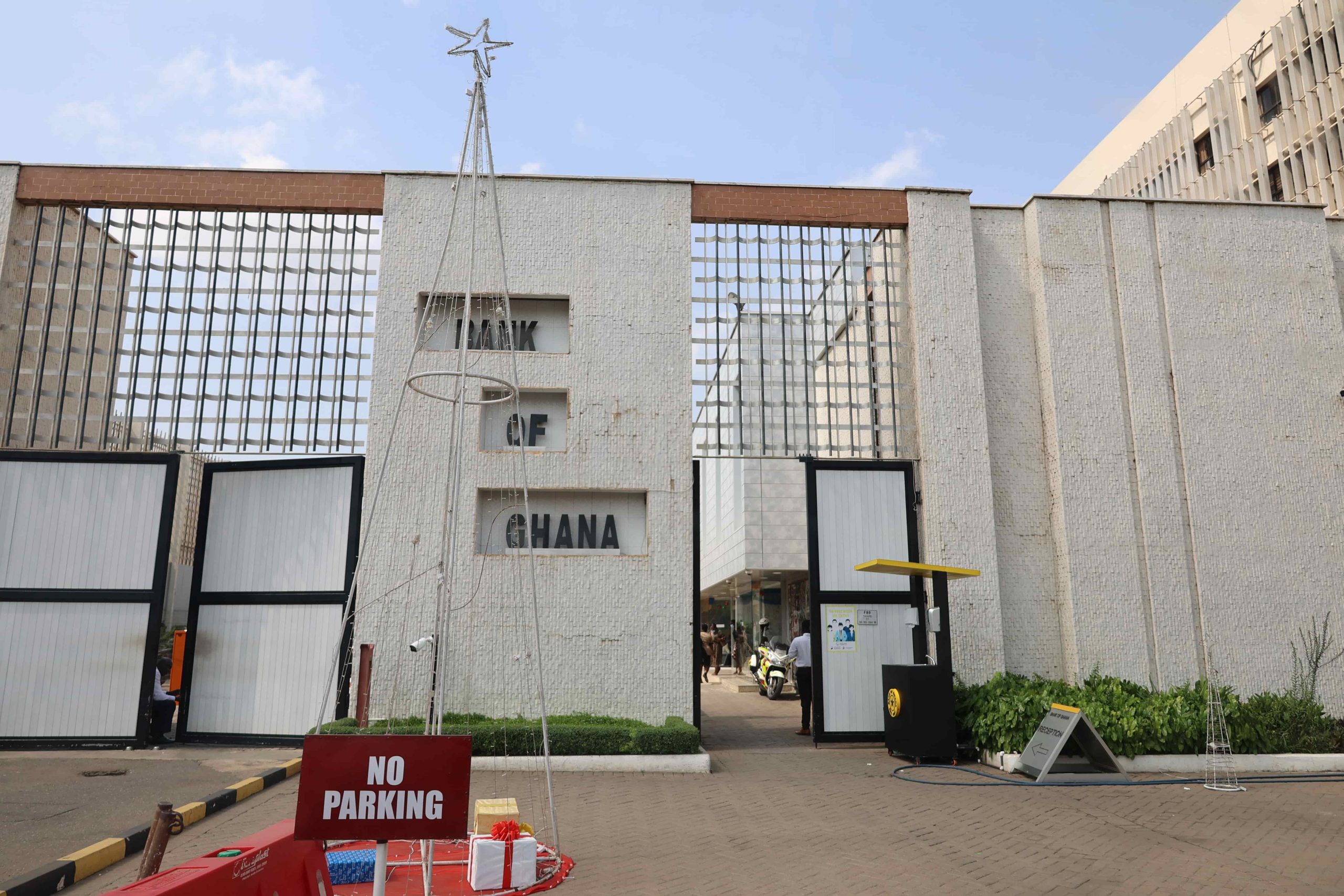

The Bank of Ghana (BoG) is expected to cut its monetary policy rate to 16.50% by the end of 2026, Fitch Solutions, has projected.
The drop, according to Fitch, will be supported by continued currency stability and steady decline in inflation.
Mike Kruiniger, Assistant Director at Fitch Solutions, speaking at the 2026 PricewaterhouseCoopers (PwC) Post-Budget Forum in Accra Monday, November 24, 2025, he noted that this monetary easing will be occasioned by the strengthened macroeconomic environment.
According to him, an aggressive easing cycle had already been initiated by the central bank to this effect.
“Rates have remained elevated, but the Bank of Ghana launched a decisive easing cycle this summer, cutting by 650 basis points so far — the fastest monetary easing cycle globally this year,” he said.
Kruiniger added that with inflation now back within the central bank’s target band—supported by robust foreign exchange inflows and a relatively stable currency—Fitch expects the benchmark policy rate to be gradually reduced to 16.50% by the end of 2026.
“While monetary transmission takes time, we anticipate a clear pickup in private-sector credit demand over the coming quarters, following nearly three years of weakness”, he noted.
Fitch Solutions, has, meanwhile, predicted a robust economic growth for Ghana in 2026, projecting that the country will outperform many of its emerging-market peers.
The research firm based in the UK added that the strong macroeconomic indices for 2025 will propel the expected growth for the upcoming year.
“We see the 2026 budget as broadly supportive of growth, and this aligns with our forecast that Ghana’s real GDP growth will rise from an already strong 5.8% in 2025 to 5.9% in 2026. Continued strong economic performance will be driven by private consumption and an ongoing recovery in fixed investment, which is rebounding from the sharp contraction recorded in 2023,″ Kruiniger added.
The rising Islamist insurgency in the Sahel, however, Kruiniger cautioned, poses a significant threat to Ghana’s economic outlook, heading into 2026.
He explained that persistent instability in the region could lead to security spillovers with implications for Ghana’s investment climate, fiscal health, and broader macroeconomic stability.
He further noted that Ghana may be compelled to increase military spending to safeguard the economy from potential shocks.