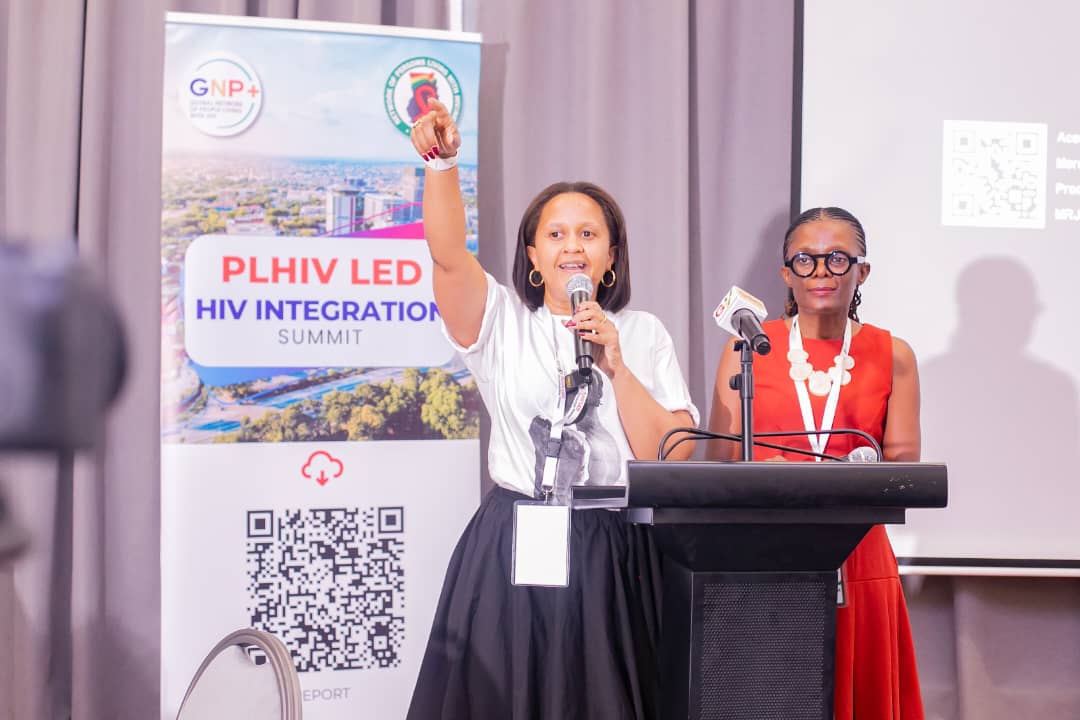

The Global Network of People Living with HIV (GNP+) has brought together country networks from across the world for the PLHIV Integration Summit in Accra, a key event as part of ICASA 2025.
The summit also marked the launch of the inaugural GNP+ World AIDS Day Report, a document capturing the voices of PLHIV leaders, partners, and stakeholders calling for stronger, sustainable and people-centred HIV service integration within public health systems.
According to GNP+, the new report, “PLHIV Minimum Requirements for Integrated HIV Services,” builds on commitments made during the Nairobi PLHIV Leadership Summit in April.
The organisation states that the publication is expected to become an annual benchmark for defining and monitoring non-negotiable standards for integrating HIV services into primary healthcare, without leaving any community behind.
GNP+ noted that the report reflects the collective agency of more than 40 million people living with HIV, drawing from lived experiences to shape policy direction amid declining donor funding and increased government responsibility for HIV services.

A total of 1,834 respondents contributed to the findings, sharing personal experiences of navigating HIV care during the health systems transition, while national PLHIV networks and partners added expert perspectives.
The organisation says the publication is expected to become an annual benchmark guiding countries as donor support declines and governments assume full responsibility for HIV services.
The World AIDS Day Report outlines seven minimum requirements that must guide every HIV service integration plan:
- Effective and transformative PLHIV participation
- Local context consideration
- Recognition of PLHIV diversity
- Comprehensive and self-care support
- Resilient health systems
- Stigma-free and dignified services
- Full government responsibility for HIV treatment
Co-Executive Director of the Global Network of people living with HIV, Sbongile Nkosi, emphasised that integration must not overlook the people most affected.
“This report is a reminder that people living with HIV are not beneficiaries of the response, we are co-architects of it,” she said.
She further added that “Integration must strengthen, not weaken, the services we rely on. When systems are redesigned with our voices at the centre, equity becomes possible.”
Her fellow Co-Executive Director of the Global Network of people living with HIV, Florence Riako Anam, highlighted the evidence gathered from communities and its value for policymakers.
“Over 1,800 people living with HIV contributed firsthand experiences to this report. Their voices are not anecdotes; they are data,” she said.
She stressed that “This is the strongest signal yet that governments must prioritise stigma-free, resilient and fully funded HIV services as they transition into national health systems.”
PLHIV Consultant, Dr. Mumbi Chola, stressed the need for countries to adopt the report’s minimum requirements to protect progress made in the HIV response.
“If integration is rushed or underfunded, we risk reversing decades of gains,” he warned.
Dr. Mumbi said, “The seven requirements we outline are not optional”.
“He stressed that they are the foundation for maintaining viral suppression, saving lives and achieving the vision of Zero AIDS-related deaths.”
GNP+ says the roadmap included in the report will help countries maintain viral suppression, protect lives and accelerate global goals of Zero new infections, Zero AIDS-related deaths and Zero stigma.
The organisation describes the publication as an invitation to deeper collaboration.
“When integration is done with us, it works for us and when it works for us, U=U becomes a reality for every person living with HIV,” GNP+ leadership reiterated.