
The Ghana Federation of Forest and Farm Producers (GHAFFAP), has appealed to the government to support farmers in their efforts to restore degraded forests in the country.
This appeal comes as farmers continue to grow trees on their farms as part of forest restoration initiatives.
General Secretary of GHAFFAP, Maxwell Kpetaa, stated that while farmers, with the help of non-governmental organizations, are making some progress, government support is necessary to boost their efforts.
“This is an advocacy platform, and we meet all involved. Government and the general public will have to join us in this advocacy to restore the vegetative cover,” he stated.
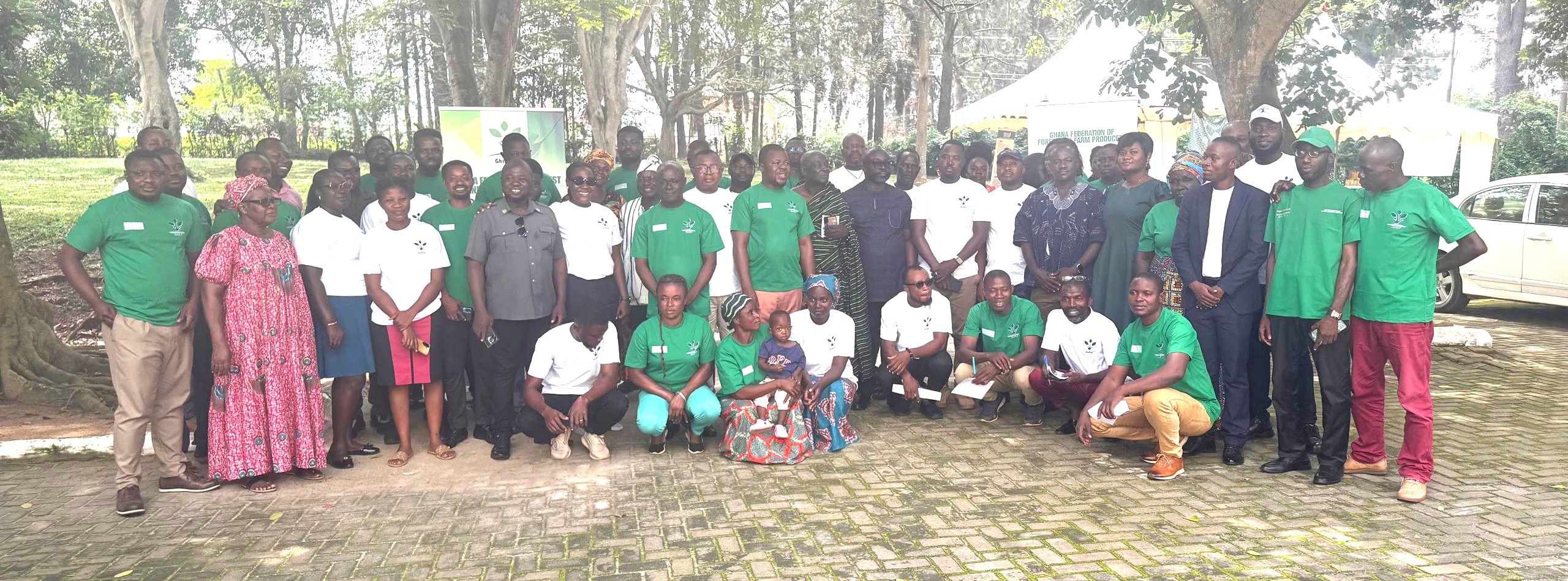
Kpetaa made this statement at a National Dialogue organized by the federation in Kumasi, with support from the Food and Agriculture Organization (FAO) of the United Nations (UN) through its Forest and Farm Facility Programme.
The federation comprises 157,576 farmers across the country’s Savanna, transition, and forest zones. These farmers receive capacity-building, financial, and agricultural training to enhance their knowledge in forest restoration and economic well-being.
Despite their efforts, the harm caused by activities such as illegal mining continues to overwhelm their progress. “The negative impact is more than our efforts; we can easily destroy, but making it is difficult,” Kpetaa observed.
Kpetaa stressed the need for adequate measures to formalize and contain illegal mining, suggesting that a regulated mining sector would allow for small-scale mining to be done sustainably. “If we have a regulated mining sector, small-scale mining could be done as our forests are reserved,” he said.
The dialogue brought together representatives from 28 farmer organizations to share ideas on forest restoration. This year’s event was themed “Reclaiming our degraded lands: Farmers’ role in restoring degraded forests.”
Farmers have been actively involved in restoring degraded lands for about five years, motivated by a government regulation granting them ownership of trees on their farms. Emmanuel Komla Torsu, a farmer at Asante Akyem Obogu, said owning the trees has empowered them to plant more.
By Benjamin Aidoo