
The Minister of Education, Haruna Iddrisu, says government is awaiting inputs from key education stakeholders as part of a broader review of Ghana’s education curriculum aimed at making students more competitive in the global job market.
According to the Minister, the revised curriculum, once finalised, will lead to the printing and distribution of new textbooks and teachers’ guides beginning early next year.
“The technical committee is working, and that is one of the major policy decisions the Ministry took in 2025 to bring finality to the process into 2026. The curriculum will be made available, teachers’ guides will be made available, and then we will get them printed,” Mr. Iddrisu said on December 24.

He explained that the curriculum review will focus on equipping learners with relevant 21st-century skills, including critical thinking and practical competencies.
“In the revised curriculum, our desire is to emphasise what the future of 21st-century education should be—skills, competencies, and critical and analytical minds. We will be introducing robotics, coding, electronics and financial literacy as we prepare our learners for the world of work,” he added.

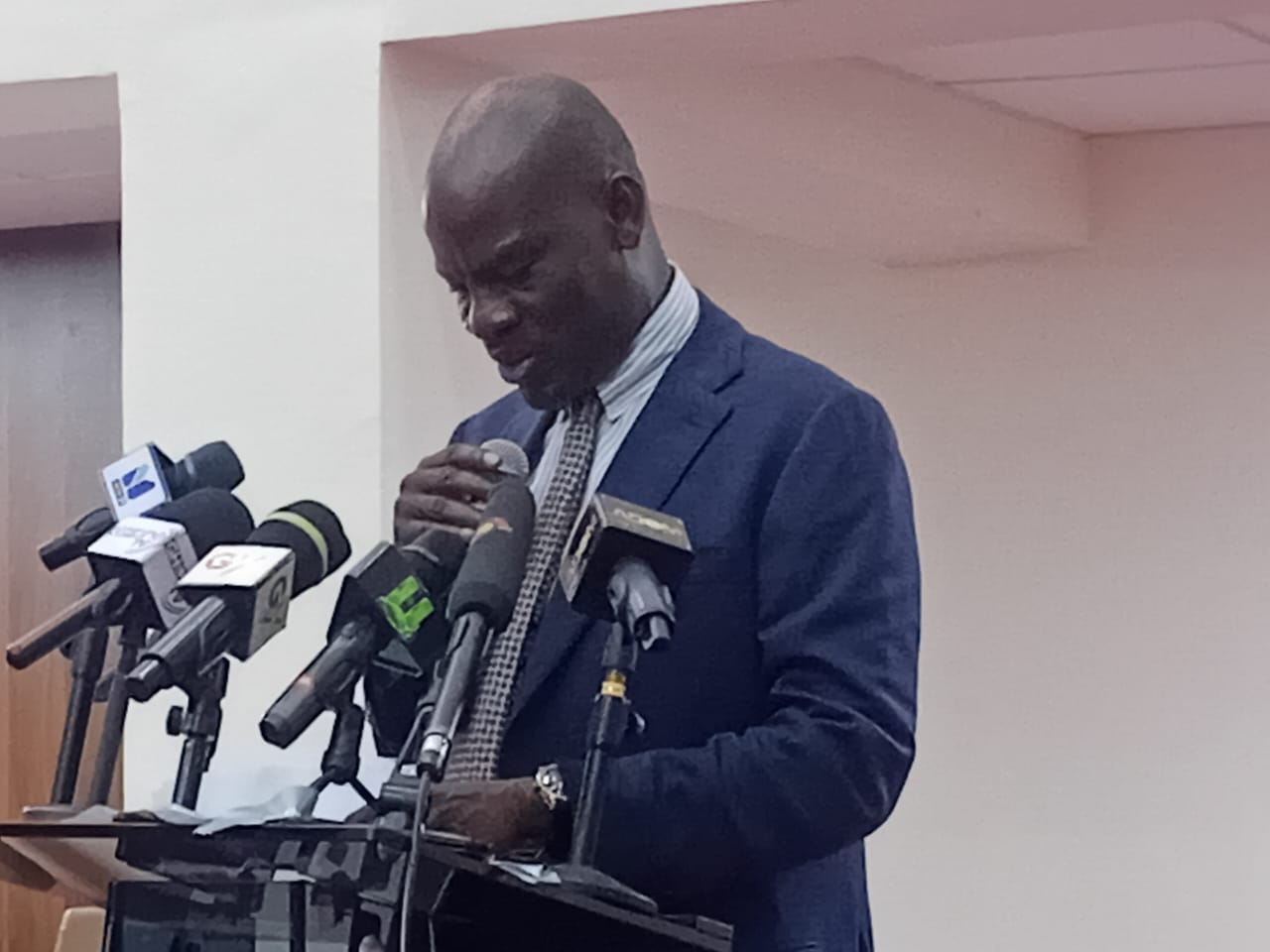
Mr. Iddrisu was speaking at the inauguration of four Colleges of Education in Accra, including Al-Farouck College of Education, Agogo College of Education and Gbewa College of Education.
At the event, the Education Minister reiterated government’s commitment to placing Ghana’s education sector on a sound footing. He described the current curriculum as outdated, noting that it has affected the quality of graduates produced over the years. He also cited the lack of textbooks as a major challenge hindering effective teaching and learning in schools.
The Minister further highlighted significant infrastructure deficits across many Colleges of Education and assured that government will expand a 200-million-dollar World Bank facility to embark on an infrastructure development drive starting next year.

Another major issue raised by Mr. Iddrisu was the amended GETFund law, which now prioritises support for students with disabilities and special needs. He disclosed that GH¢100 million has been earmarked by GETFund to support inclusive and quality education.
“For President John Dramani Mahama, providing for the marginalised in society is key. Through GETFund, an amount of 100 million cedis has been dedicated to roll out a new initiative to finance free education, including feeding, in all special and integrated schools for about 9,000 learners,” he said.
Meanwhile, the Education Minister has rejected claims that government should be blamed for the mass failure recorded in the recent West African Senior School Certificate Examination (WASSCE). He said government, together with relevant agencies, will not accept the poor performance and is currently studying the Chief Examiners’ Report to guide policy decisions from next year.
“I refuse to accept, and the government of President Mahama, the Ministry of Education and the assessment bodies will not accept this poor performance,” he stated.
He described the results as a wake-up call for a broader assessment of quality assurance in secondary education, citing years of neglect in school infrastructure.
“Many of these institutions, from 2008 to today, are still in a deplorable state. Not a dormitory or classroom has been added to some of the schools, and naturally that affects the quality of education delivery,” Mr. Iddrisu noted.
He added that preliminary assessments suggest the challenges may lie more with the application of knowledge, particularly in mathematics, rather than the conduct of the examinations.
“While WAEC conducts the examinations, I have reason to believe the problem has more to do with application, especially in mathematics. Government is studying the Chief Examiners’ Report and will respond appropriately,” he said.