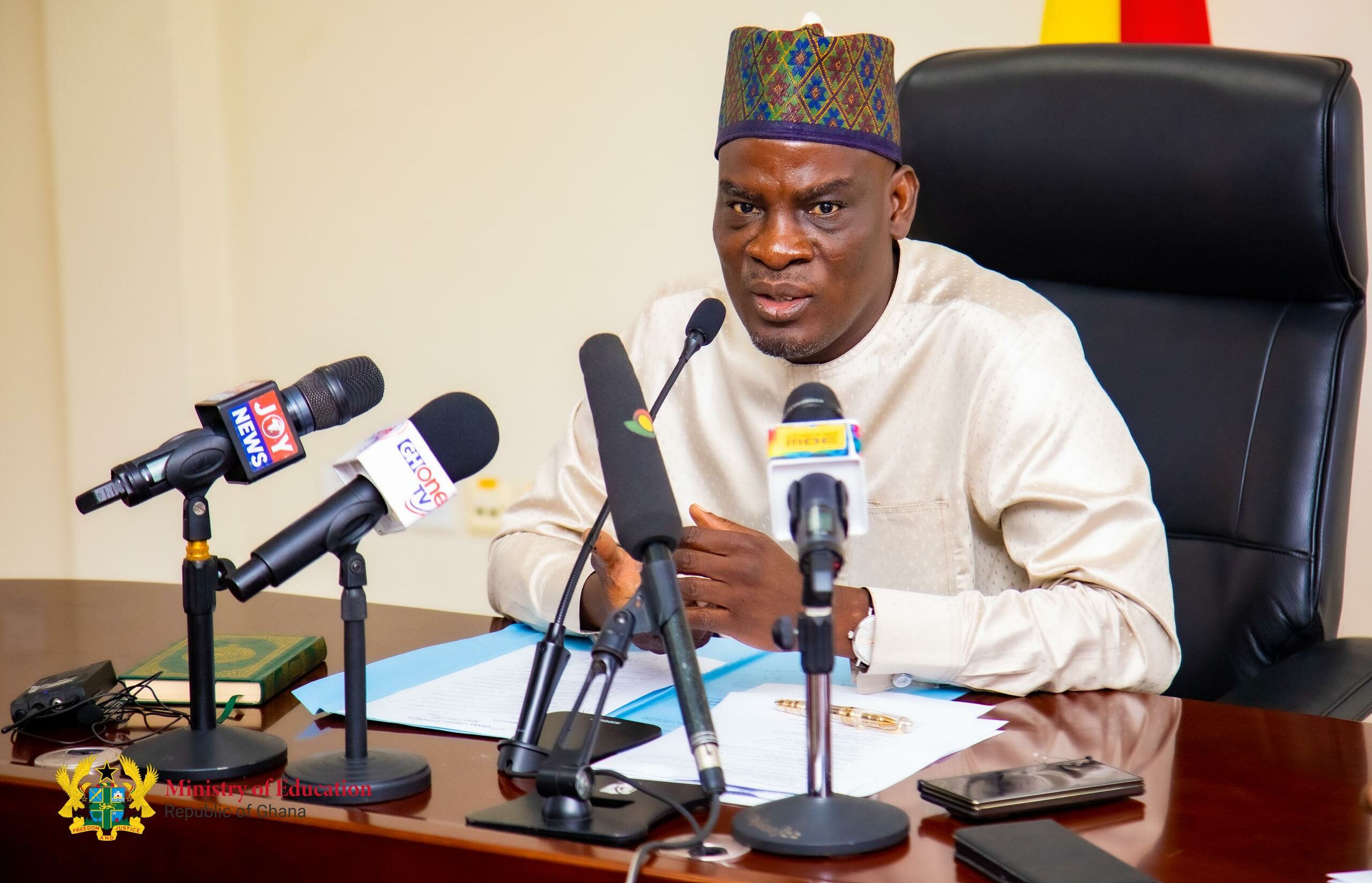

The year 2025 is emerging as a defining moment for Ghana’s education sector, marked by what government officials describe as “hard choices, honest reflection and a decisive reset” under President John Dramani Mahama.
When President Mahama and the Minister for Education, Haruna Iddrisu, took office, they encountered an education system weighed down by long-standing structural problems.
These included mounting debt, weak investment in basic education, unpaid statutory obligations, stalled infrastructure projects and unresolved teacher welfare issues.
“We did not inherit an easy system,” President Mahama noted during engagements with education stakeholders. “But we were elected to fix problems, not to excuse them.”
The challenges cut across the entire sector — from Free Senior High School (Free SHS) and special needs education to unpaid obligations to the West African Examinations Council (WAEC), expired teacher recruitment windows, struggling new public universities and delayed promotions and allowances for teachers.
National Education Forum Sets the Tone
In response, the government convened a National Education Forum in Ho, bringing together teachers, unions, parents, students, academics, civil society organisations and policymakers.
According to Education Minister Haruna Iddrisu, the forum was designed to “tell ourselves the truth about where the system is and where it must go.”
“The Ho Forum gave us practical, Ghana-made solutions,” he said. “Those recommendations are now shaping our reforms.”
Education Takes Centre Stage in the Budget
Government’s commitment was first reflected in the 2025 Budget Statement- education received one of the largest sectoral allocations.
“Budgets tell the real story of priorities,” President Mahama said. “And education is clearly at the centre of this government’s reset agenda.”
Historic Boost for Basic Education
For the first time in more than 50 years, basic education received a record allocation of GHC 9.1 billion. Officials say the funding is already improving classroom infrastructure, learning materials, sanitation and teacher support nationwide.
“This is about fixing the foundation,” Mr Iddrisu explained. “If basic education fails, everything else struggles.”
Free SHS Reset: From Access to Quality
While Free SHS expanded access, government says it inherited a system that prioritised enrolment over quality, leading to overcrowding and the controversial double-track system.
“Our position is clear: Free SHS stays,” President Mahama stressed. “But it must be sustainable and deliver quality.”
In 2025, Free SHS received GHC 3.5 billion through GETFund — the highest allocation since the programme began. About 100 double-track schools have already been converted to single-track, with a pledge to eliminate the system entirely.
Government has also announced plans to upgrade 50 secondary schools across categories, alongside infrastructure improvements in existing Category A schools.
Feeding, Welfare and Girls’ Education
Reforms in SHS feeding have drawn positive feedback from students and parents, while GHC 895 million has been released for the School Feeding Programme at the basic level, alongside an increase in the per-child feeding grant.
In a major gender-equity intervention, government distributed more than six million sanitary pads to girls in basic and second-cycle schools.
“No girl should miss school because of her period,” Mr Iddrisu said. “This is about dignity and equal opportunity.”
Clearing Arrears, Supporting Schools
The Ministry of Education also cleared significant inherited arrears, including GHC 72.8 million in Capitation Grant arrears and GHC 122.8 million for BECE registration. WASSCE practical fees and feeding grants for special needs schools were also paid.
Additionally, all Metropolitan, Municipal and District Assemblies have been directed to construct a Nursery, Primary and JHS using the 2025 District Assemblies Common Fund.