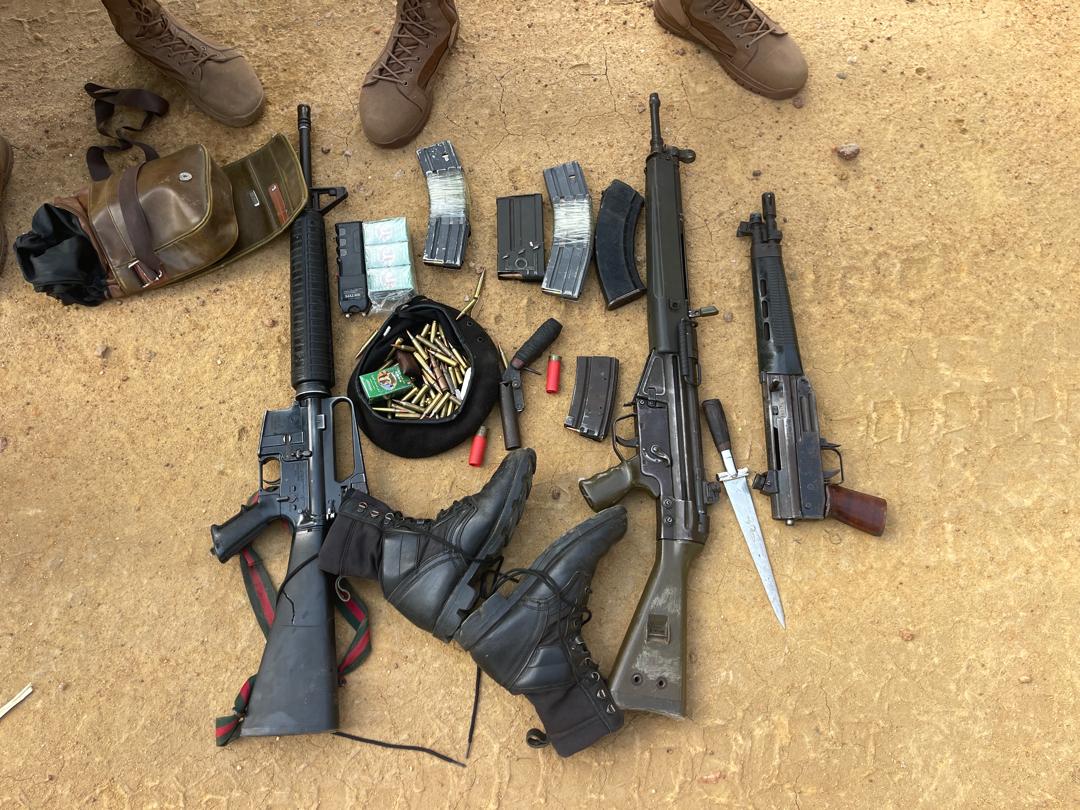

The Executive Secretary of the National Small Arms and Light Weapons Commission, Dr Adam Bonaa, has revealed that more than 2,000 weapons have been surrendered nationwide under the Interior Ministry’s gun amnesty programme.
This announcement follows the Interior Ministry’s decision to extend the amnesty period from January 15 to January 30, 2026.
“A couple of thousands, if you ask me. That obviously means more than 2,000. Since December 1, we have collected thousands of weapons,” Dr Bonaa said in an interview on Wednesday, January 21, 2026.
He emphasized that police and military-grade arms cannot be regularized and must be handed over to the state for confiscation.
“Weapons such as AK-47s, G-series, and M-series rifles are strictly for state security officials. Civilians cannot use them, and they must be surrendered for confiscation or destruction if necessary.”
Dr Bonaa noted that security agencies are on high alert at borders, airports, and ports to prevent attempts to bypass the law.
“Due to the amnesty declaration, there is heightened alertness at all border checkpoints, airports, and terminals,” he said.
He explained that sidearms, particularly pistols, are the most commonly surrendered weapons, followed by locally manufactured firearms.
“From the initial trend analysis, pistols dominate, both imported and locally manufactured. These appear to be leading the surrender patterns.”
He highlighted that Greater Accra currently leads in compliance, with the highest number of surrendered weapons, and encouraged individuals hesitant to approach police stations to visit the Small Arms Commission instead.
“Greater Accra is leading in terms of surrendered illicit weapons brought in for regularization.”
Ghana has an estimated 2.3 million small arms and light weapons in circulation, with about 1.2 million legally registered and 1.1 million unregistered.
In response to stakeholder appeals, the government extended the gun amnesty period by two weeks, now ending on January 30, 2026.
Dr Bonaa reiterated that once the amnesty ends, enforcement agencies will show no mercy in applying the law.