
At a time when global investors are increasingly wary of regulatory instability, environmental risk, and policy reversals across parts of Africa, Ghana is projecting a different narrative.
This narrative is etched in institutional stability, reform momentum, and a mining sector deliberately positioning itself for the next phase of the global energy transition while offering opportunities for long-term returns and growth.
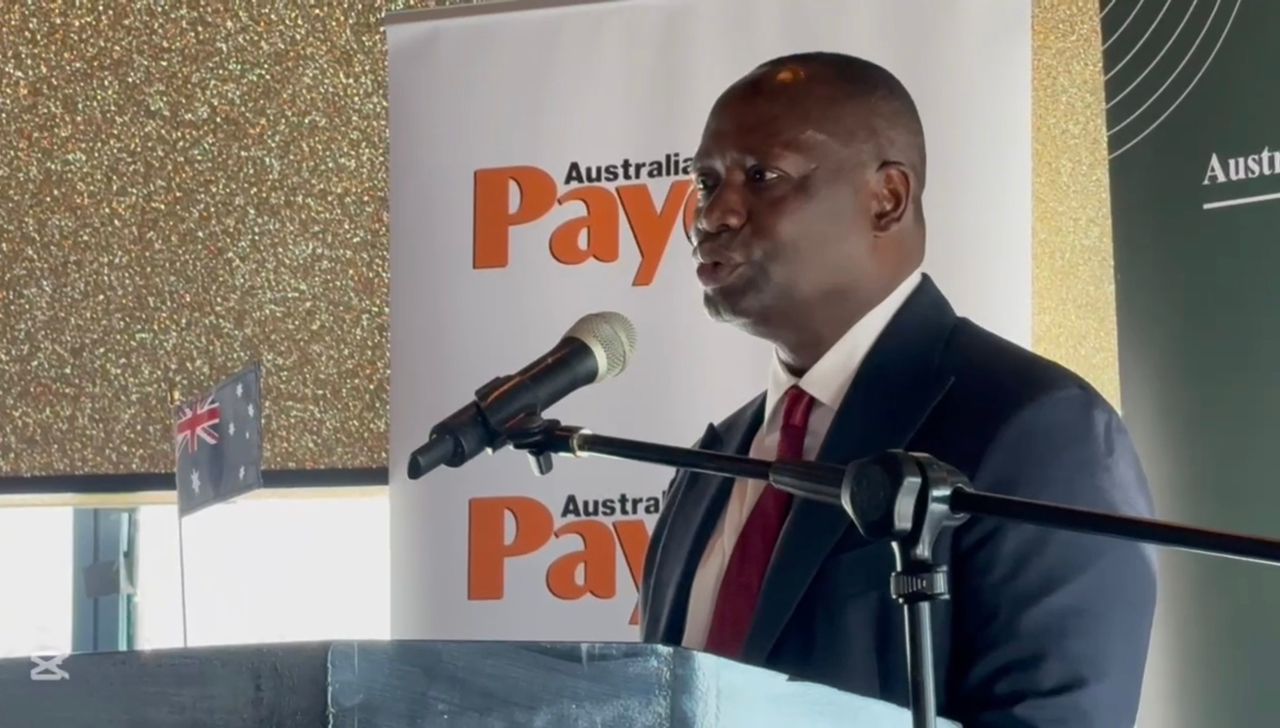
That message was reinforced by the Minister for Lands and Natural Resources, Emmanuel Armah-Kofi Buah, at the Australian Mining in Africa Reception during the Mining Indaba in Cape Town, one of the world’s most influential platforms for mining investment decisions.
Emmanuel Armah-Kofi Buah explained that the country’s enduring appeal to mining capital lies less in geology alone and more in governance architecture.
The country’s 1992 Constitution vests mineral resources in the state, held in trust for the people, a framework that has provided predictability for investors for decades. This constitutional foundation is operationalised through the Minerals and Mining Act, 2006 (Act 703), its accompanying regulations, and a clearly articulated Minerals and Mining Policy.
For investors, the Minister’s value proposition is straightforward and guarantees contract sanctity, protection of accrued rights, tax exemptions on imported mining equipment, as well as capital repatriation and expatriate remittances.
The Minister argued that these assurances have allowed Ghana to avoid the policy volatility that has unsettled mining capital in other jurisdictions, giving investors a clear view of potential returns in a stable environment.
“Strong regulatory institutions—including the Minerals Commission, Environmental Protection Authority, Water Resources Commission, and the Ghana Revenue Authority—provide oversight across the mining value chain, reinforcing compliance and investor confidence,” he explained. This oversight signals risk management built into the sector, reducing exposure to operational and environmental uncertainties.
Over the past two decades, Ghana has attracted nearly US$20 billion in mining investment, which the Minister insisted is a glaring testament to the sector’s durability through commodity price cycles, political transitions, and global economic shocks.
“Even amid tightening global financial conditions and heightened ESG scrutiny, Ghana’s mining industry has continued to attract exploration capital, particularly in gold, lithium, bauxite, and iron ore.” Investors can therefore view this as both validation of the market’s resilience and an indicator of sustained opportunity for ROI.
However, Emmanuel Armah-Kofi Buah did not downplay challenges confronting the sector, stressing that illegal mining, commonly referred to as galamsey, remains one of the sector’s most significant risks, with implications for water security, land degradation, and investor operations.
Yet, he assured that the government’s posture has been a shift from episodic crackdowns to institutional reform. “Government has rolled out a suite of interventions designed to address the problem structurally. The Blue Water Initiative, for instance, has deployed over 1,600 personnel to protect polluted river bodies and secure critical water sources. Meanwhile, the Responsible Cooperative Mining and Skills Development Programme (rCOMSDEP) seeks to formalise artisanal and small-scale mining by embedding community ownership, skills training, and environmental responsibility.” This demonstrates proactive risk management and ESG-aligned operations, key factors for investor confidence.
He also mentioned other complementing efforts, including the National Anti-Illegal Mining Operations Secretariat (NAIMOS), a central command structure coordinating security agencies with a singular mandate to enforce mining laws. For investors, this centralised enforcement system reduces operational risk and strengthens compliance assurance.
The Minister wants investors to see these reforms as a signal of a country willing to confront risk head-on, rather than allow regulatory drift to undermine long-term value.
Perhaps the highlight of Armah-Kofi Buah’s investment pitch was the revelation of the country’s strategic shift in its mining narrative toward deliberate alignment with the global green-energy transition.
While gold remains dominant, he also mentioned the expansion in exploration activities into minerals critical for clean technologies particularly lithium, iron ore, bauxite, and base metals such as nickel and zinc. These minerals present emerging-market opportunities for investors seeking early access to high-demand green-energy resources.
Recent geological investigations have confirmed viable prospects in minerals essential to electric vehicle batteries, renewable energy infrastructure, and industrial decarbonisation, and the Minister affirmed the country’s readiness to take advantage of this evolving market.
The ambition, therefore, is not merely to extract these resources, but to move up the value chain through beneficiation, processing, and industrialisation, which enhances potential returns for strategic investors.
According to the Minister, this is where partnerships, especially with technologically advanced mining jurisdictions such as Australia become central. Ghana is therefore actively courting collaboration in processing plants, green mining technologies, and skills transfer, aiming to reduce environmental footprints while improving recovery rates and local value retention. For investors, this signals both ESG compliance and efficiency gains that directly impact profitability.
Despite its long mining history, Ghana still presents an emerging-market growth story. Large segments of its bauxite and iron ore value chains remain underdeveloped, offering investors first-mover advantages in infrastructure, processing, and downstream manufacturing.
Industrial minerals, too, continue to underpin domestic infrastructure growth, with over 110 licensed quarry operations extracting limestone, granite, clay, feldspar, sand, and salt nationwide.
For patient capital, the opportunity lies at the intersection of stability, reform, and upside an established jurisdiction evolving to meet new global demands.
The message from Cape Town was therefore not one of unchecked optimism, but of calibrated confidence. Ghana is positioning itself as a mining jurisdiction that understands modern investor priorities—legal certainty, ESG alignment, risk management, and long-term returns.
As the global mining industry pivots toward sustainability and energy transition minerals, Ghana appears intent on ensuring it is not left behind not as a passive supplier of raw materials, but as a strategic partner in the future green economy.