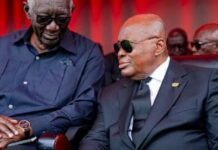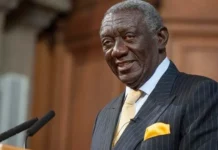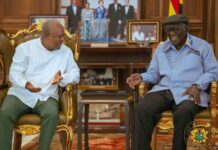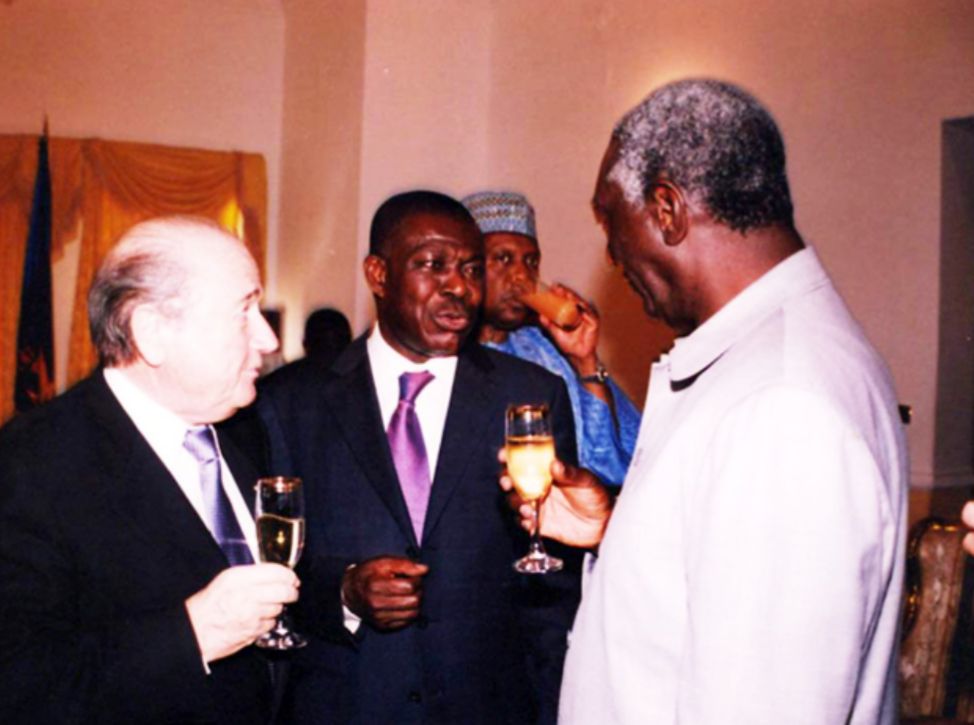

They are the unsung heroes of the state, working behind the scenes to keep the country moving forward.
But have you ever wondered about the exact role of the Secretary to the President of the Republic?
Well, Evelyn Tengmaa sits down with the Secretary to former President John Agyekum Kufuor, Ambassador D. K. Osei, to tell us more about the job.

Ambassador D.K. Osei served as Secretary to President John Agyekum Kufuor between 2001 and 2009.
A seasoned diplomat, Ambassador Osei joined the Foreign Service in 1976 and worked in several countries before being called by President Kufuor to serve as his secretary.

He says his tenure as Secretary to the President was a highlight of his diplomatic career, bringing his exceptional skills and experience to the role.
His appointment came as a surprise, even to himself, as he was serving as Ambassador to Denmark at the time.
He tells this reporter, that as secretary, his day begins at dawn, reviewing the president’s schedule and preparing briefing documents for the day’s meetings.

’’He came to the office and I was the first person he saw, because I normally take him through his day’s activities. I’ll have a programme which he would have seen and then we’ll agree on the timings and the content and also then provide him what we call talking points and briefing notes about the meetings he’s about to hold that day and if there are some meetings he wants to add beyond the programme that we propose,’’ he explained.
He is the gatekeeper, filtering calls, emails, and requests for the president’s attention.
With a keen eye for detail, he ensures every speech, statement, and policy document is accurate and error-free.
As secretary, Ambassador Osei also played a key role in shaping policy directions and advising the president on various issues.
“The president’s letters and emails, all of them come through you and when you receive his letters and his telephone calls and emails, you decide which ones the president is going to see because you cannot give him the whole batch of letters, maybe 110 letters a day.
So, in doing the sifting, the president is not receiving all the information that he would ordinarily have had. Sometimes the president will take decisions that you disagree with. If you are really convinced that the decision he is going to implement is not in his interest or the country’s interest, you try very hard to find bureaucratic ways of slowing it down,’’ he revealed.

As the president’s confidante, Ambassador D.K. Osei is privy to sensitive information and sworn to secrecy.
He is a master of discretion, juggling multiple tasks with ease.
From coordinating international trips to managing the president’s calendar, Ambassador Osei’s work is never done.
He is the calm in every storm, ensuring the president is prepared for every event, meeting, and engagement.
The role comes with its challenges according to Ambassador D. K. Osei: “The president has only 24-hours and everybody wants to see him for three hours and most cannot see him beyond 15 minutes and they can only blame you for it. And you know being a politician when you call him, he will say no no come and see me. It is not his duty to manage the come and see me. He told his friends and of course as a politician when the man goes to see him, he will insult you, “just ignore that stupid secretary of mine, I told you to come yesterday.” Of course, he’s a politician so you take the blame for it, but I didn’t really mind.’’

Despite the demands, Ambassador Osei finds fulfillment in serving his country.
He described former President Kufuor as a deep thinker with a fabulous memory.
“If he met you once for 20 minutes and you saw him 20 years later, he’ll say Evelyn, you used to work for TV3. He remembered everybody and where he met you and human beings like that and I learned that from him,’’ he recalled.
One thing is clear: the secretary’s role requires flexibility, adaptability, and a deep understanding of governance structures.
From Ambassador D.K. Osei’s tenure under President Kufour to the unsung efforts of secretaries such as Dr. Callistus Mahama, these individuals are the backbone of Ghana’s governance.
Their work behind the scenes is a testament to their commitment to public service and nation-building and their stories serve as inspiration for future generations.
By Evelyn Tengmaa