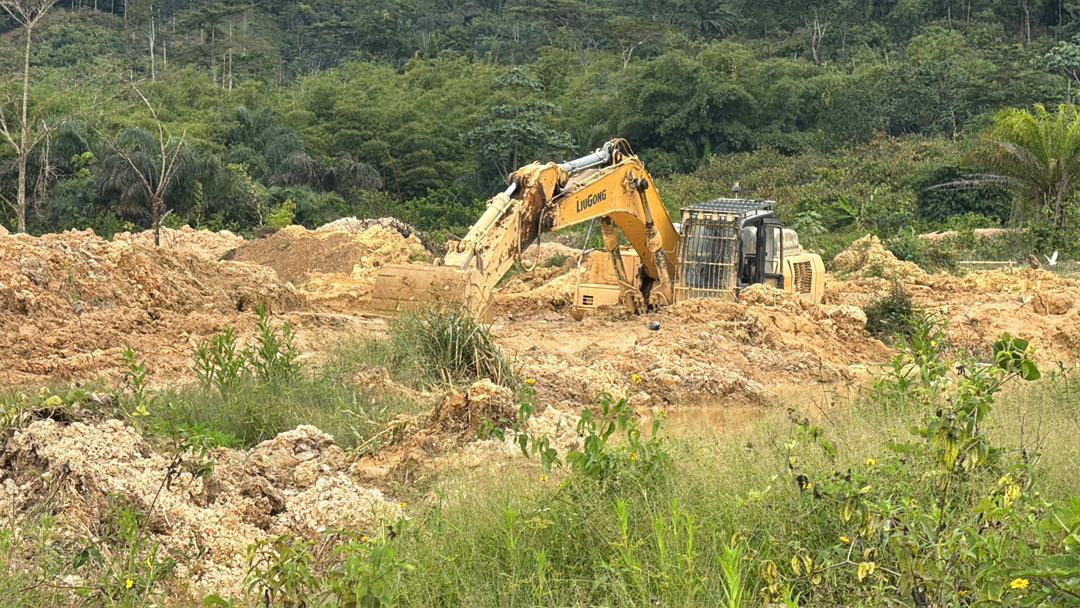

Galamsey activities in forest reserves in the country increased from 5,252.9 hectares in 2021 to 8,923.8 hectares as of December 31, 2024, according to survey conducted by the Forestry Commission.
The survey revealed that, the Ashanti Region was the most impacted, covering 4,948.9 hectares, followed by the Western North Region with 2,195.7 hectares.
Operations Manager at Plantations Department of the Forest Services Division, Dr Ben Torgbor, presenting the report on Tuesday, February 24,2026, said the lowest impacted areas were the Savanna Region, covering 29.5 hectares, and the Central Region, with 44.7 hectares.

The most impacted forests are the Oda River Forest Reserve and the Apamprama, both in the Ashanti Region, and the Upper Wassaw Forest Reserve in the Western North Region.
The survey explored three methodologies – ground survey, drone mapping, and expert judgment – to arrive at the findings.
He stated that, the survey also used the satellite remote sensing-based verification methodology to analyze the mining sites to ensure quick results and wider coverage of affected areas.
“It explored historical imagery in Google Earth Pro applications, which was a cost-effective approach,” he stated.

Dr Torgbor revealed that, the Commission has plans to develop an artificial intelligence-enabled system to automatically detect and quantify affected areas of illegal mining in forest reserves.
This, he explained, would help inform advocacy and policy, stressing that the adoption of technology would provide frequent updates on the sector.
Dr Torgbor announced that the Commission would publish an ongoing survey on forest reserves affected by illegal mining for 2025 in June 2026.
By Benjamin Aidoo