
For many families, childbirth can quickly shift from joy to uncertainty when babies are unable to breastfeed.
But a rare initiative, a pioneering breastmilk bank at the University of Ghana Medical Centre, is improving survival chances for premature and critically ill newborns.
Mary is here at the UGMC to donate breast milk at the human milk bank as a volunteer.
As a regular contributor who has donated for months, she describes it as a simple act that can make the difference between life and death for another child.
“I gave birth here at the UGMC and I was on admission at the intensive care unit with other mothers. But one of them was unable to breastfeed her baby. The milk was not coming and the baby kept crying so when the nurses said I can donate for her, I decided to and since then, even though I have been discharged, I still come at least once a month to donate. Knowing that my milk can help save another baby’s life gives me so much joy. It’s a small sacrifice, but it means everything to a mother in need,” she said.
The safety of the milk remains a top priority. Donated milk undergoes rigorous screening and processing before being approved for use, ensuring it meets clinical standards for infant care.
The initiative, Ghana’s first of its kind, has already supported a growing number of babies, relying on a steady pool of lactating mothers who volunteer as donors.
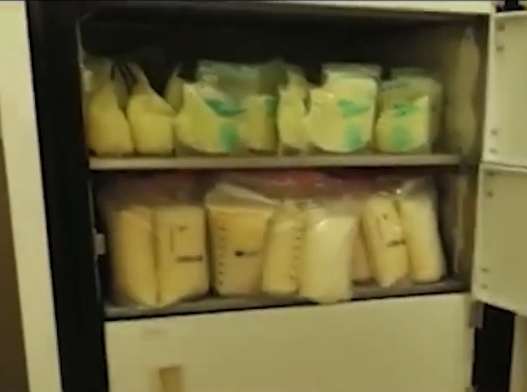
In the neonatal units, vulnerable infants who cannot receive milk from their mothers are supported through donor breast milk, which is safely screened, pasteurized, and stored under strict medical standards. Dr Ophelia Ganyaglo is a pediatrician at the unit.
“Since the launch of the milk bank, we have supported dozens of premature and critically ill babies who otherwise would have struggled to survive. We first screen the mothers for HIV, Hepatitis, TB and SYPHILIS before you qualify to donate. Currently, we have 7 active donors and we are focusing only on NICU, critical care babies. We have also supplied Korle Bu Teaching Hospital. So we continue to encourage more mothers to come on board,” she said
But beyond the statistics, the real story is written in the lives of mothers and their babies.
For beneficiary mothers like Ama, the milk bank has been lifesaving.
Unable to produce milk in the critical early days after delivery, she turned to donor milk to keep her baby nourished and stable.
“I had my baby through CS and I was very worried because I couldn’t produce breast milk after delivery, and my baby was so weak. The doctors introduced me to the milk bank and it saved my baby’s life and me too. I am very grateful to the mothers who donate.”
While the initiative is already improving neonatal outcomes and easing the emotional strain on mothers, healthcare professionals say expanding awareness and increasing donor participation will be key to its future success.
Breast milk banks are relatively rare in Africa but are slowly growing, with only about eight operational milk banks across the continent as of early 2025.
While South Africa has a more established network, other facilities exist in Kenya, Nigeria, Angola, Cameroon, Mozambique, Uganda, and Cape Verde, largely focused on lowering high infant mortality rates.
Breast milk provides essential nutrients, boosts immunity, protects newborns from infections, supports brain development, and strengthens bonding between mother and baby early in life.
By Sarah Apenkroh