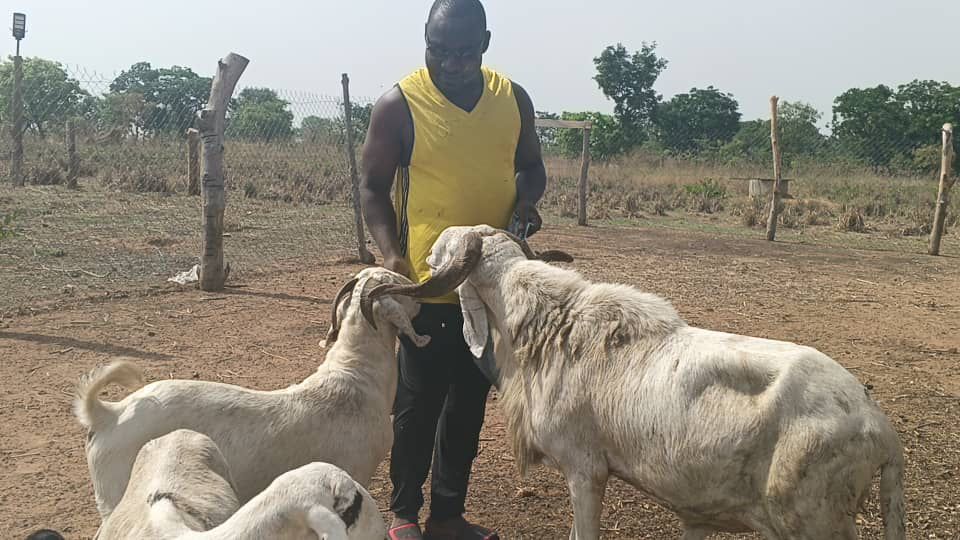

By cultivating his own pasture and improving livestock breeds, a Kpandai farmer is boosting incomes, improving food security, and reducing conflict between herders and crop farmers.
In the dry, sun-beaten plains of Kpandai, where the struggle for pasture has long fueled tension between herders and crop farmers, one man is quietly rewriting the story of livestock farming and community coexistence.
Mohammed Awal is not your typical farmer. Trained as a laboratory scientist, his heart has always belonged to the land. Growing up as both a herdsman and a farmer, he witnessed a harsh reality that defined life in northern Ghana: every dry season, grass disappeared, animals weakened, and conflicts over land intensified.
“During the dry season, there is no green grass,” he recalls. “The animals suffer.” This struggle alone is what fuels my innovation.
On a 20-acre farm he calls Premium Pasture Animal Farm, Awal has replaced uncertainty with control. Instead of relying on unpredictable natural grazing, he grows his own pasture a decision that has transformed his livelihood.
What began just three years ago with only ten animals has grown into a thriving enterprise of over a hundred sheep and goats.
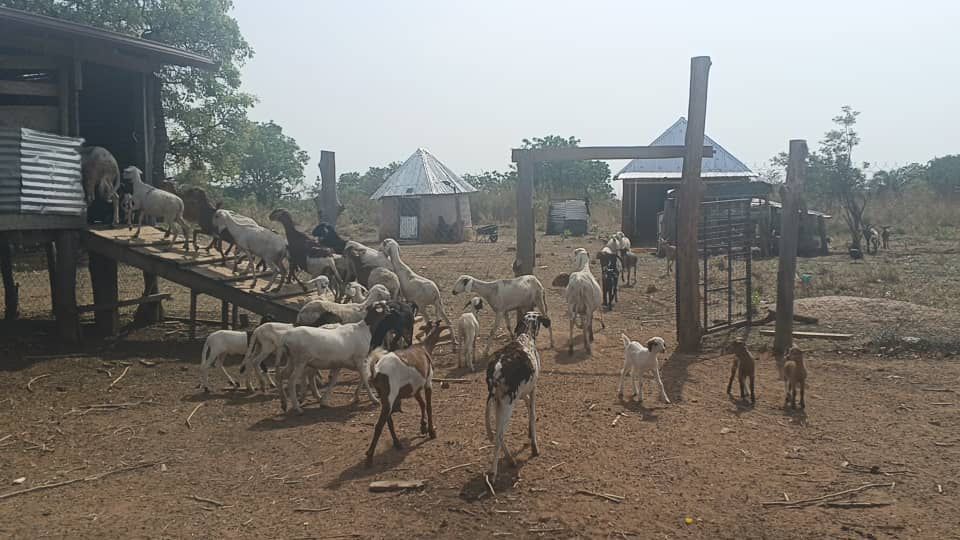
Rows of lush, green pasture now stretch across parts of his land. a rare sight during the dry season. These are not ordinary grasses. Awal carefully selected and introduced improved varieties like Napier grass, Brachiaria, and Mucuna from countries as far as India, Kenya, and Thailand.
The result? His animals eat well all year round no matter the season. But Awal didn’t stop at feeding. He also focused on improving the quality of his animals. By introducing superior breeds such as the Savannah goat from South Africa and the long-legged Balibali sheep from Niger, he has significantly boosted meat production and overall herd quality.
Healthier, stronger animals mean better prices at the market and a more reliable source of income. For Awal, it’s simple: “If you improve the animal, you improve the farmer’s life.”
One of the biggest threats to livestock farmers is something small but dangerous. ticks.
For years, Awal battled infestations using chemicals, which were costly and not always effective. Then he found a solution in nature.
He introduced guinea fowls onto his farm.
The birds move freely, feeding on ticks both on the animals and around the farm. Since then, tick infestations have nearly disappeared.
“For two years now, we haven’t had any major tick problem,” he says. I have found a solution which is simple, natural solution. one that saves money, protects the environment, and even creates another income stream through the sale of the birds. He said.
Beyond productivity and profit, Awal’s approach is solving a much deeper problem: conflict.
In many parts of northern Ghana, clashes between herders and crop farmers are common, often sparked when animals stray into farms.
Awal’s semi-intensive system changes that.
By feeding animals on cultivated pasture within the farm, there is little need for open grazing. His animals stay put and crops remain untouched.
It’s a quiet but powerful shift one that shows how innovation can build peace.
Awal’s farm is not just about animals. It’s a carefully balanced ecosystem.
He grows crops like yam, cassava, maize, and sweet potato both for food and to support his livestock. Even the grass he cultivates has become a source of income.
“Growing grass alone is bringing me money,” he says. This integrated approach means that even if one part of the farm faces challenges, others can sustain the business. He added.
Despite his success, the journey has not been easy. Water remains his biggest challenge. While he harvests rainwater during the wet season, the dry months bring scarcity and added costs.
There are other hurdles too: limited access to credit, the constant threat of bushfires, and difficulty finding skilled farm workers.
Yet, Awal remains undeterred.
He dreams of turning his farm into a training center a place where young people and retirees alike can learn modern livestock farming.
“This kind of farming can change lives,” he says. “It is flexible, and it can bring income.”
His message to the youth is clear: agriculture is not just survival, it is opportunity.
As climate change, population pressure, and land disputes continue to challenge traditional farming, Awal’s model offers a glimpse into the future.
A future where farmers grow their own feed, raise better animals, protect the environment and live in peace with their neighbors.
On his farm in Kpandai, that future is already taking root.
Central Region: Two groups arrested with 27 stolen goats and sheep
By Nadra Mohammed