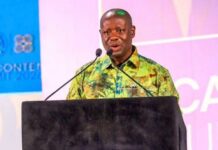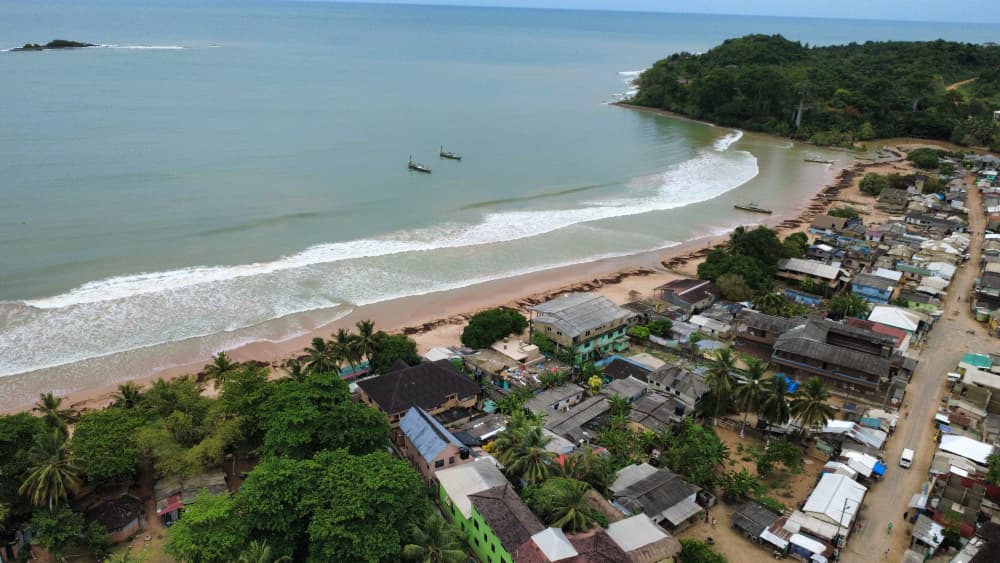

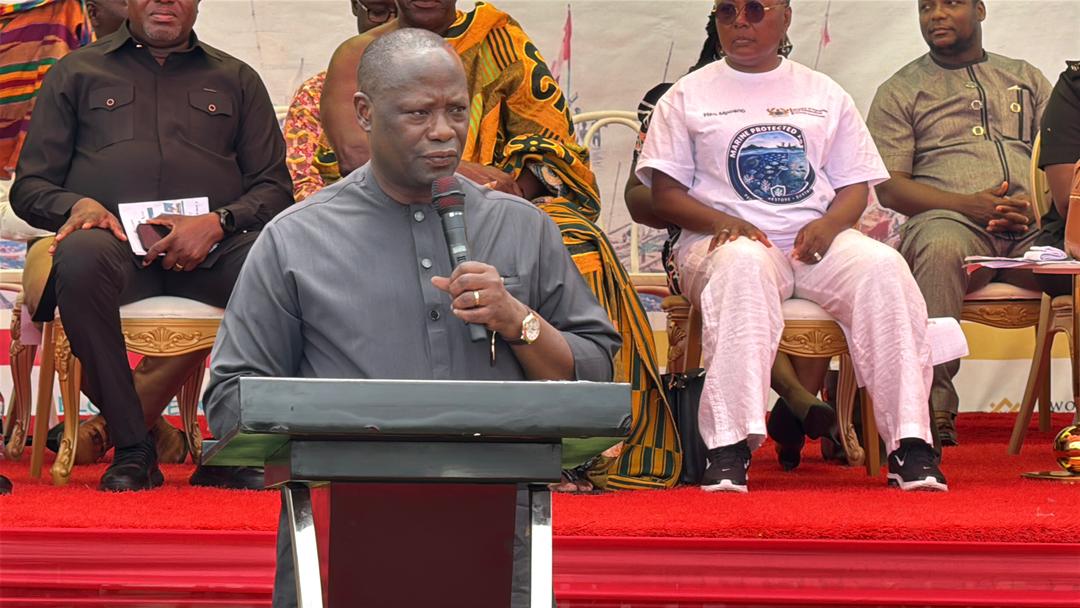
In a historic address, Minister for Lands & Natural Resources and Acting Minister for Environment, Science & Technology, Emmanuel Armah-Kofi Buah, announced the launch of the nation’s first-ever Marine Protected Area (MPA) – the Cape Three Points Marine Protected Area, spanning 700 square kilometres.
Reflecting on his own childhood by the seashore, the Minister noted that coastal communities have always known intuitively that “the sea could not give forever unless we learned to give back.”
He warned that Ghana’s marine resources are under severe threat from overfishing, pollution, habitat destruction, illegal mining, and climate change – pointing to the destruction of mangroves at Keta Lagoon, Ada, Sakumono, Densu Delta, Muni Pomadze, and other Ramsar sites.
These pressures have led to biodiversity loss, ecosystem degradation, and reduced food security.
The new MPA is a bold declaration that Ghana is ready to protect what sustains us. It builds on ongoing efforts under the West Africa Coastal Areas (WACA) Programme, whose first phase has already benefited 27,000 households by reducing exposure to coastal erosion and flooding.
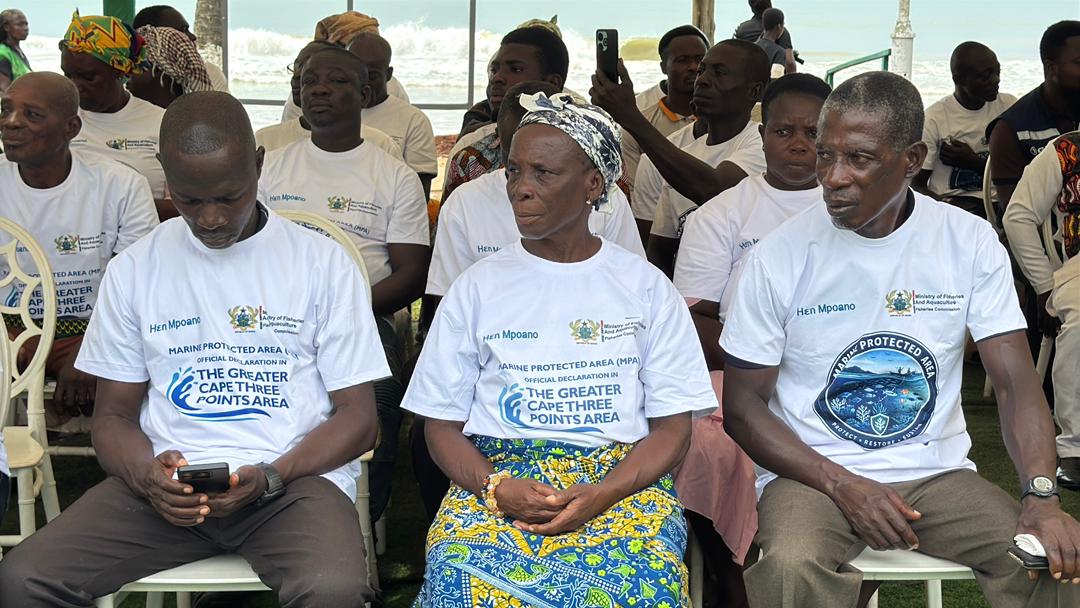
Minister Buah stressed that the initiative is not only about protection but also about opportunity – securing livelihoods, enhancing resilience, and empowering coastal communities as true custodians of the marine environment.
He called for collaboration among government agencies, research institutions, civil society, and development partners to make the MPA a model of excellence rooted in science and inclusive governance.
He described the launch as a catalyst for scaling conservation, deepening public awareness, and integrating sustainability into every facet of Ghana’s development agenda.
The Minister reaffirmed the full support of both the Ministry of Lands & Natural Resources and the Ministry of Environment, Science & Technology, concluding: “We will protect our oceans, preserve our heritage, and build a future where nature and people thrive in harmony.”
By Ebenezer Atiemo