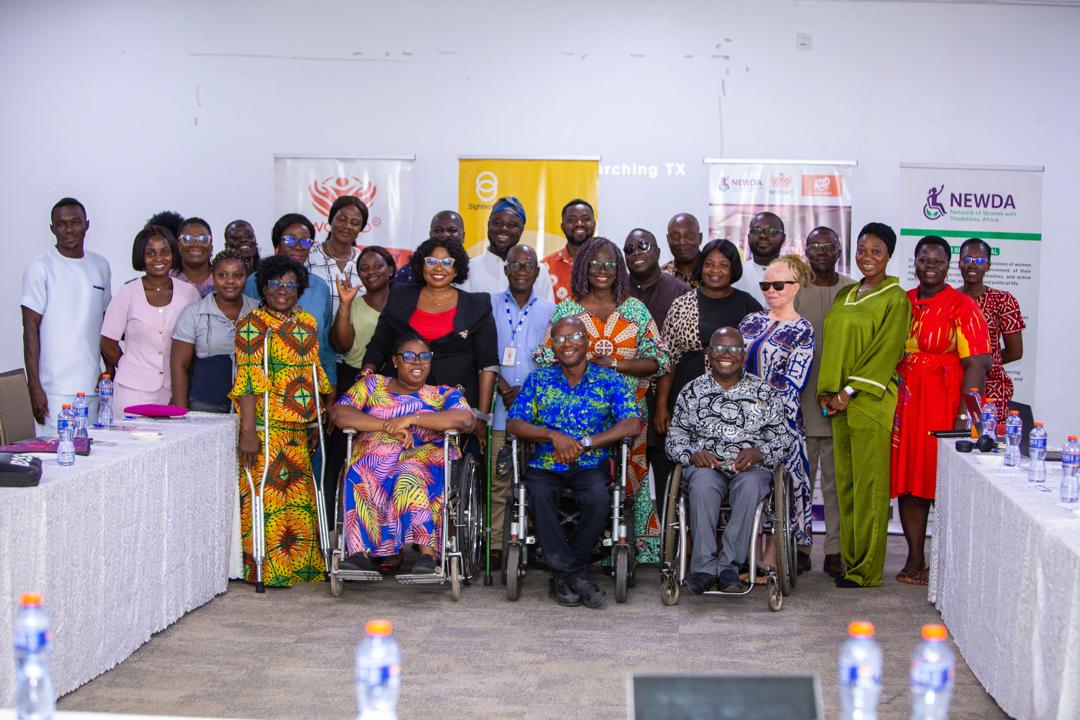

The Network of Women with Disabilities in Africa (NEWDA) has called on the Government of Ghana to urgently ratify and implement the African Disability Protocol (ADP) to strengthen the protection, inclusion, and empowerment of women and girls with disabilities in Ghana.
According to NEWDA, women with disabilities continue to face significant barriers, including gender-based violence, exclusion from economic opportunities, limited access to healthcare and education, and underrepresentation in leadership and decision-making spaces.
Speaking during the launch and stakeholder engagement activities under the NEWDA Project, Executive Director Veronica Kofiedu emphasized that the ratification of the African Disability Protocol is essential for achieving inclusive development and gender equality in Ghana and across Africa.
“Women with disabilities are not asking for charity; we are demanding equal rights, equal opportunities, and equal participation in society. The African Disability Protocol provides a strong framework to make this a reality,” she stated.
She further noted that despite ongoing national conversations on inclusion, many women with disabilities remain invisible in policy implementation and development planning.
“True inclusion cannot happen when women with disabilities are excluded from decision-making tables. Our voices, experiences, and leadership must be recognized as essential to national development,” Veronica Denyo Kofiedu added.
The African Disability Protocol is a landmark African Union instrument that outlines the obligations of State Parties to protect and promote the rights of persons with disabilities, with particular attention to women and girls who face multiple and intersecting forms of discrimination.
Through the NEWDA Project, the Network is working to strengthen the women with disabilities movement in Ghana and across Africa by building advocacy capacity, promoting collaboration among Organizations of Women with Disabilities, and increasing representation in governance and accountability processes.
Professor Augustina Naami, who is also a convenor of NEWDA, stressed that the ratification and implementation of the Protocol would contribute significantly to protection against violence and abuse, inclusive healthcare and sexual and reproductive health services, economic empowerment and livelihood opportunities, access to inclusive education, and participation in leadership and governance.
The organization also called on government institutions, civil society organizations, development partners, and the private sector to actively support disability-inclusive policies and programmes.
“The time has come for Africa to move from promises to action. Women with disabilities must no longer be left behind in development, governance, and social protection systems,” Veronica Denyo Kofiedu concluded.