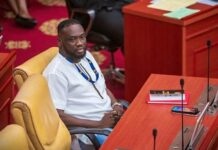

The reported detention of Ghanaian Member of Parliament, Ohene Kwame Frimpong, at Schiphol Airport is triggering growing legal debate over whether sitting lawmakers enjoy immunity once outside Ghana’s borders.
The development has also renewed public discussion over how international arrest requests are enforced and the extent to which foreign authorities can act against elected officials.
Under Ghana’s Constitution, Members of Parliament enjoy certain protections largely connected to their parliamentary duties and proceedings. However, legal experts say those protections are mostly domestic in nature and do not automatically extend beyond Ghana’s jurisdiction.
The case has therefore raised a central legal question — does a sitting MP enjoy immunity under international law?
For many constitutional and international law analysts, the answer is generally no, mainly because parliamentary immunity differs significantly from diplomatic immunity, which is protected under international treaties such as the Vienna Convention on Diplomatic Relations.
Diplomatic immunity applies primarily to accredited diplomats representing their states abroad, whereas Members of Parliament are not automatically recognised as diplomats under international law. As a result, unless an MP is travelling on an officially recognised state mission with specific diplomatic protections, foreign authorities may still act on valid criminal warrants or international arrest requests.
The reported detention has also generated questions over the possible involvement of international policing systems. Although searches of INTERPOL’s public database do not currently show a public Red Notice in the name of Hon. Ohene Kwame Frimpong, legal and security experts caution that the absence of a public notice does not necessarily mean no international alert existed.
Many INTERPOL communications remain confidential and are visible only to law enforcement agencies through secure internal systems, while in some situations arrests may also occur through direct bilateral cooperation between states rather than through publicly accessible notices.
Back in Ghana, the matter is raising further questions over whether local authorities had prior knowledge of any international request linked to the case.
INTERPOL Ghana operates within the Criminal Investigations Department of the Ghana Police Service, although experts note that matters involving politically exposed persons or high-profile office holders may require coordination with institutions such as the Attorney-General’s Department before any domestic response is undertaken.
Legal analysts say the broader principle remains clear: political office may provide constitutional protections within a country’s jurisdiction, but parliamentary status alone does not automatically shield an individual from foreign criminal processes abroad.
By Enyonam Haligah