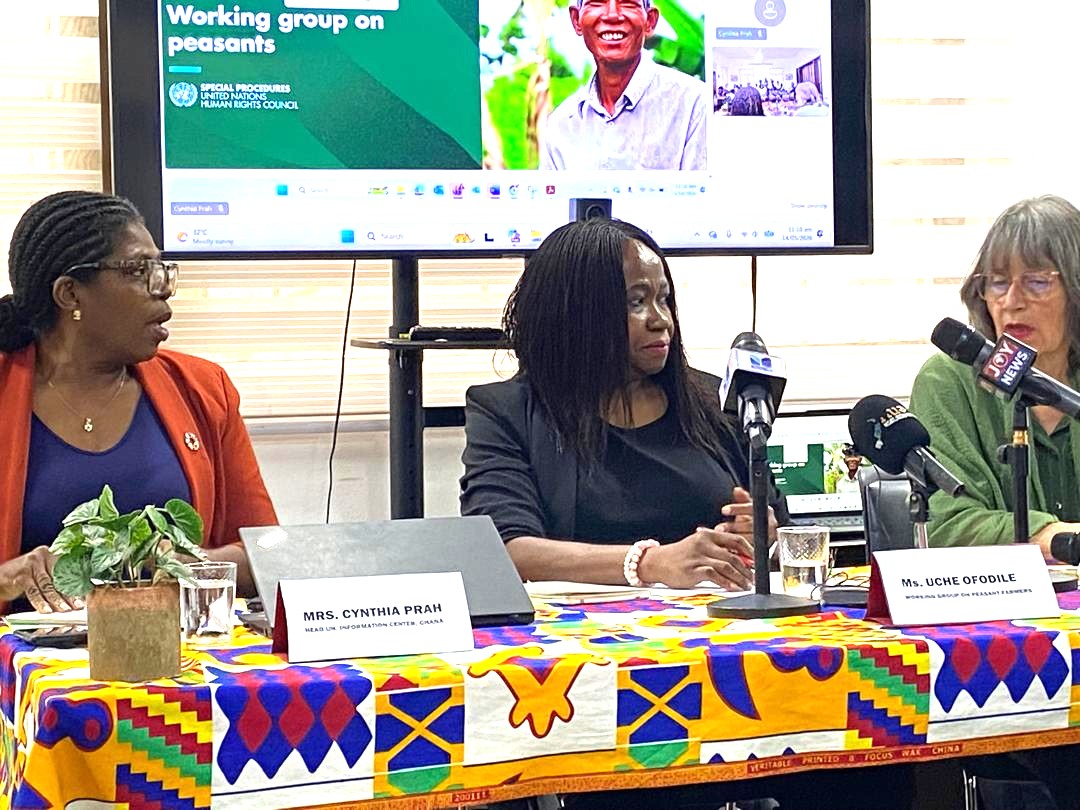

The United Nations Working Group on the Rights of Peasants and Other People Working in Rural Areas has identified major implementation gaps undermining the protection of rural communities despite existing legal and policy frameworks under the United Nations Declaration on the Rights of Peasants (UNDROP).
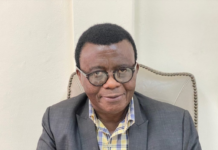
Presenting the end-of-mission statement and findings from the country visit, members of the Working Group, Uche Ofodile and Geneviève Savigny, revealed that rural workers across many communities continue to face severe land tenure insecurity, limited access to agricultural financing, loss of traditional seed rights, and increasing vulnerability to climate change and environmental degradation.
The findings noted that many peasants and rural workers are trapped in insecure land ownership systems caused by the overlap between customary and statutory laws. This situation often exposes communities to forced evictions, land dispossession, and limited access to justice.
The Working Group further highlighted the exclusion of smallholder farmers and artisanal workers from formal financial systems. Many are unable to access agricultural loans and credit facilities because they lack conventional collateral demanded by financial institutions.
Another major concern raised is the threat to traditional seed systems. The findings said biotechnology-driven seed reforms and commercial certification policies are increasingly restricting the rights of farmers to save, exchange, use, and sell their own seeds, practices which have sustained rural agriculture for generations.
Environmental degradation and climate change were also identified as key threats to rural livelihoods. In Ghana, the report specifically pointed to the devastating effects of illegal and informal mining activities such as galamsey, which continue to pollute water bodies, destroy farmlands, and threaten the safety and livelihoods of farming communities.
The Working Group also expressed concern over the marginalization of pastoralists and artisanal fishers. It explained that many governance systems prioritize industrial exploitation and settled farming, leaving pastoralists with restricted grazing rights while fishers struggle with overfishing and declining marine resources.
Additionally, the report underscored persistent gender inequalities affecting rural women and girls, who continue to experience disproportionate poverty, violence, and limited access to healthcare, land ownership, and leadership opportunities.
Despite the existence of several national and regional policies aimed at protecting rural populations, the Working Group stressed that implementation remains weak due to entrenched interests and insufficient political will.
The mandate concluded that unless governments take concrete steps to enforce existing protections and prioritize the rights of peasants and rural workers, many of the commitments under UNDROP will remain largely.
By Kingsley Adusei-Amakye