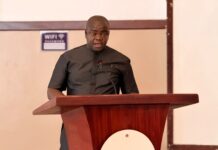

Western Regional Public Relations Officer of the PURC, Eric Awuku, has advised property owners who finance the extension of electricity infrastructure to newly developing communities to take advantage of the Public Utilities Regulatory Commission’s (PURC) Capital Contribution Policy (Consumer Service).
Details of the policy have been captured under Regulations of 2020 (L.I. 2413) and Regulation 22 to recover part of their investment.
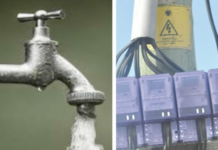
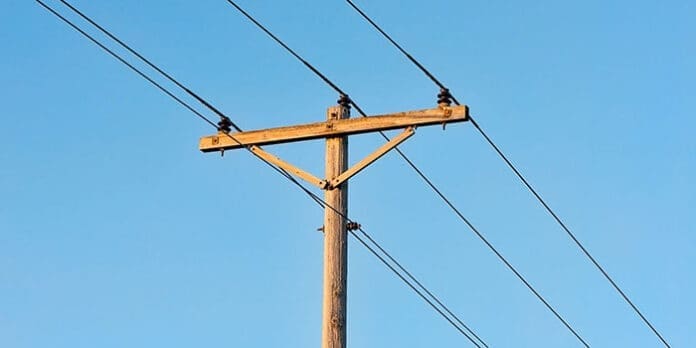
Many prospective electricity consumers in peri-urban and newly developing settlements are often required to bear the cost of extending the low-voltage (LV) distribution network, including the procurement of LV poles, before they can be connected to the national grid.
Misunderstandings frequently arise in some communities after individuals who initially financed the extension infrastructure later see other residents connected to the same poles without contributing to the initial investment cost. The situation has become common in some developing parts of the Essikadu-Ketan and Effia Kwesimintsim where electricity network expansion is still ongoing.
Under existing electricity distribution arrangements, LV poles erected for network extension automatically become part of the Electricity Company of Ghana’s (ECG) distribution assets after installation and commissioning.
“Once the pole is erected and integrated into the network, it effectively becomes state property within 24 hours, and ECG can use it to extend supply to other consumers within the catchment area,” he stated.
Although the arrangement supports broader electricity access and network expansion, some prospective consumers deliberately wait for others to finance the infrastructure before applying for service connection.
The development is not peculiar to electricity infrastructure alone, as similar concerns are sometimes raised in relation to water extension projects in newly developing communities where residents contribute towards the expansion of pipelines to secure access to potable water.
In the case of water, extension is required beyond a distance of one hundred and twenty (120) meters from an existing point of connection with a pipe diameter not more than sixty-three millimeters (63mm).
To address such concerns, he urged consumers financing electricity extensions to formally apply for capital compensation under the Commission’s Capital Contribution framework. He explained that the policy allows customers who finance approved network extensions outside ECG’s planned capital investment programme to recover part of their expenditure when additional consumers are subsequently connected to the infrastructure.
“Once you apply and secure the capital compensation arrangement, you become entitled to a 60 per cent cost recovery whenever ECG connects a new consumer to the poles you financed,” Mr Awuku said.
Under the PURC’s Capital Contribution Policy, consumers who finance electricity extensions beyond two LV poles may qualify for refunds equivalent to 60 per cent of their contribution, provided the application is made within five years after completion of the project. Refunds may be made either through direct payment or credits to the customer’s utility account, depending on the connection agreement.
Mr Awuku stressed that beneficiaries must retain proper documentation covering the connection agreement and proof of participation in the capital contribution arrangement to facilitate future claims. “If any additional connection is made on the poles within the five-year period, ECG is required to honour the compensation arrangement, provided the customer has the necessary documentation,” he added.
Mr Awuku stressed that the compensation is “one time.”
He, however, clarified that the compensation mechanism does not apply to companies or industrial facilities that secure dedicated high-voltage infrastructure under special supply arrangements due to their operational energy demands.
The PURC has in recent years intensified public education on consumer protection mechanisms within the country’s utility sector, including compensation and complaint resolution processes involving electricity and water service providers.
By Eric Yaw Adjei