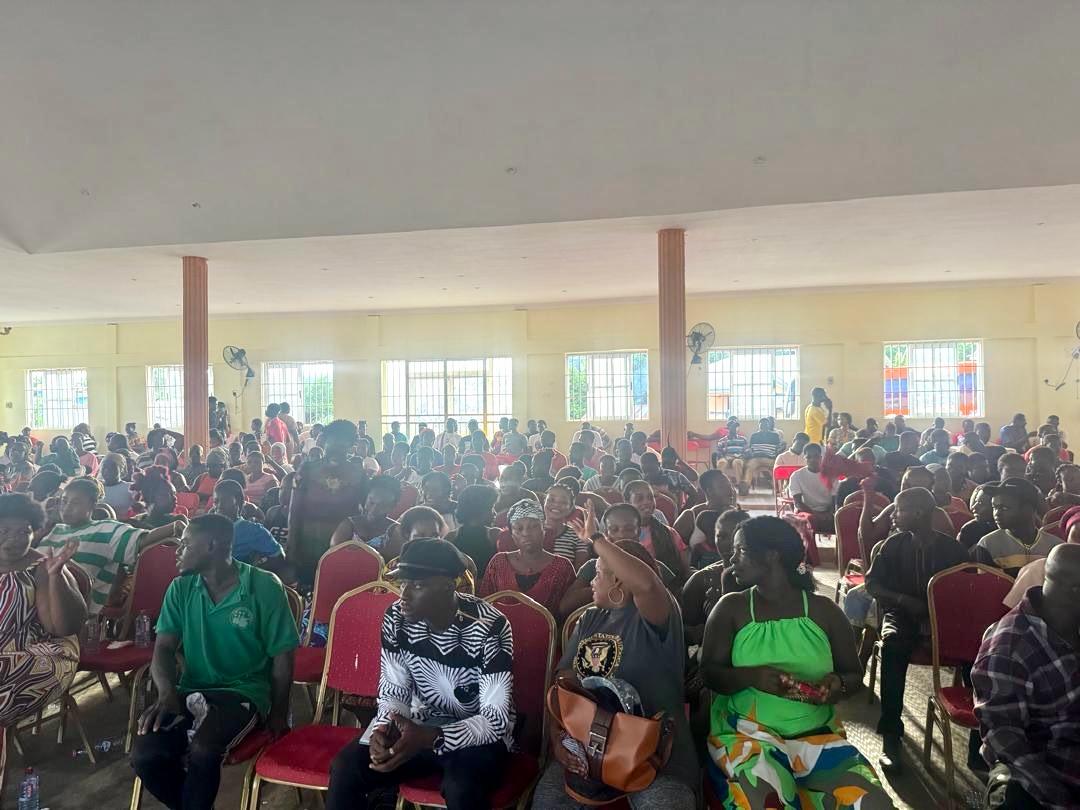

The Apinto Youth Association is demanding that mining companies operating on Apinto lands surrender five percent of their annual declared profits and taxes into a dedicated community development fund, alongside expanded local employment, contract opportunities and greater participation in the mining governance of the area.
The demands were made at the launch of the Association at Awudua in the Tarkwa-Nsuaem Municipality, where youth leaders set out proposals they say are intended to ensure communities directly benefit from mining activities in the area.
President of the Association, Augustine Kwaw, said the proposed Apinto Development Fund would finance community development projects and youth empowerment initiatives across the traditional area.
He indicated that the Association would engage mining companies operating on Apinto lands with a memorandum of understanding aimed at securing structured agreements on jobs, skills development and local economic participation. Mr. Kwaw said the current model, where communities remain on the margins of resource extraction, must change.
He noted that he personally benefited from a Gold Fields Ghana Foundation scholarship and called for the establishment of a modern technical school at Awudua to support skills training for young people in mining communities.
The Association is also demanding priority for indigenes in mining-related contracts and services, including haulage, labour recruitment, transportation, catering and outsourcing.
Mr. Kwaw further proposed that all local contracts be channeled through an Apinto Oversight Committee to ensure accountability and community participation in mining-linked economic activities. The launch also revived discussions around the future of Gold Fields Ghana and the ongoing national debate over the renewal of its mining lease.
Youth Chairman for Huniso and Pepesa, Fredrick Joseph Anderson, said any extension of the company’s lease should be tied to conditions that strengthen local participation and community development outcomes. He urged the Ministry of Lands and Natural Resources and the Minerals Commission to include the youth of Apinto in negotiations and regulatory processes governing mining operations in the area.
Mr. Anderson also called for defined allocations for local contracts and expanded educational and technical training opportunities to prepare young people for technical and managerial roles within the mining sector. He said greater youth inclusion in decision-making is necessary, noting that many workers in the mines are not indigenes of the area.
By Eric Yaw Adjei