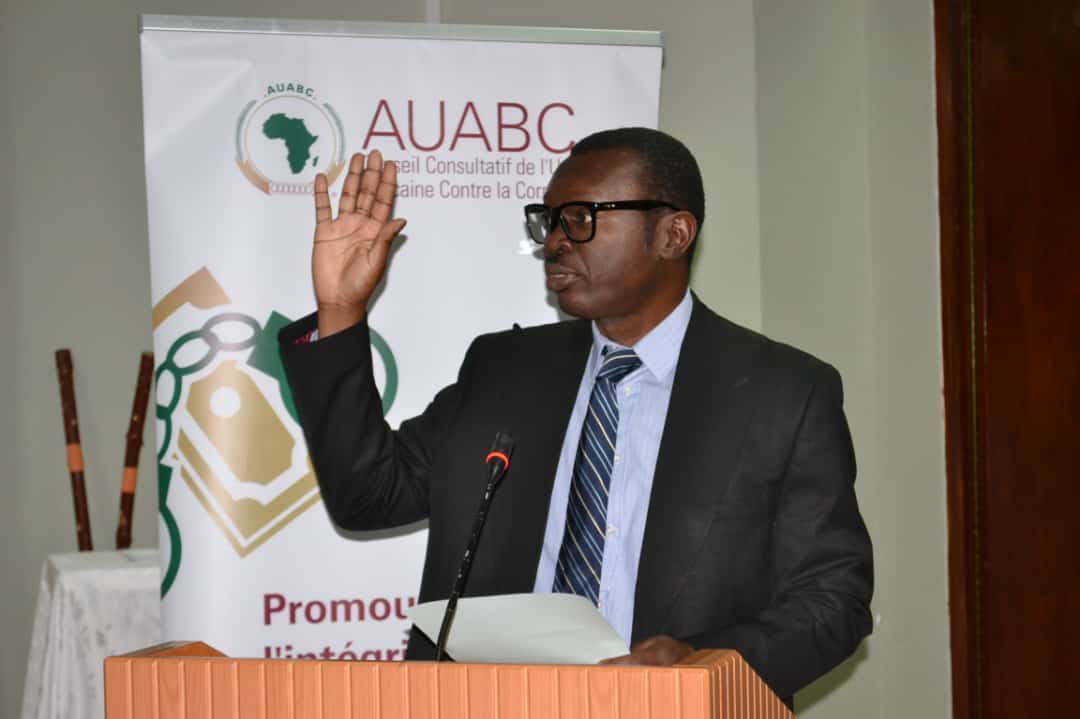

Co-chair of the Citizens Movement Against Corruption, Edem Senanu, has urged Ghana to prioritise ethics, institutional reforms and stronger accountability systems rather than relying solely on proposals such as restricting the travel of former public officials after leaving office.
Speaking on the KeyPoints with Alfred Ocansey, on anti-corruption reforms, Mr. Senanu said the country’s corruption fight must go beyond adding new laws and focus more on rebuilding a sense of conscience and ethical responsibility among public office holders.
He expressed concern that Ghana is gradually losing its ethical grounding, with leadership increasingly driven by self-interest rather than public accountability.
“In many cases, people are guided by their own interests rather than public ethics,” he said on June 27.
According to him, leadership comes with an inherent responsibility to remain accountable, and no individual should assume public office without accepting scrutiny and responsibility.
His comment was in reaction to a suggestion by Vice President of IMANI Africa, Kofi Bentil, that public office holders must be compelled by legislation to stay in the country for one year when their government leaves office.
Mr. Senanu noted that while legislative reforms are important, they cannot replace personal integrity and ethical conduct in public service.
He stressed that Ghana’s anti-corruption agenda must also focus on rebuilding a culture of accountability for the next generation.
“We are losing the sense of conscience that should guide public leadership,” he said.
On proposals to require former public officials to remain in Ghana for one year after leaving office, Mr. Senanu said the idea could contribute to existing accountability measures but would not, on its own, solve the problem.
He explained that corruption prevention requires a broader system of reforms working together rather than isolated interventions.
Mr. Senanu highlighted the need to strengthen internal audit systems across public institutions, arguing that internal auditors must be made fully independent to avoid conflicts of interest.
He warned that auditors embedded within institutions may be unable to act effectively due to institutional pressure and personal relationships.
He also proposed opening up channels for citizens to provide information at the end of government tenures, arguing that public intelligence could help uncover wrongdoing that internal systems may miss.
According to him, Ghana’s asset declaration regime is currently not strong enough and should be reformed to allow greater transparency, including public access to relevant information.
He cited examples from other countries where asset declaration systems are more transparent and allow citizens to challenge unexplained wealth.
Mr. Senanu further called for the introduction of an unexplained wealth law with a reverse burden of proof to make it easier to investigate public officials whose assets do not match declared income.
He also advocated for the establishment of specialised anti-corruption courts that can expedite corruption cases within short timelines.
Citing international examples, he noted that some jurisdictions are able to conclude corruption trials within six months due to dedicated courts and efficient processes.
According to him, faster adjudication would create stronger deterrence, as public officials would clearly understand the consequences of misconduct within a short period.
He added that anti-corruption agencies must also be better resourced to enable them to investigate and prosecute cases effectively.
Mr. Senanu maintained that while the one-year post-tenure travel restriction may have value as part of a broader framework, it must be combined with deeper structural reforms to produce meaningful results.
“If we only add one more law without fixing the system, we will continue to struggle with corruption,” he said.
By Christabel Success Treve