
I am not yet one year at the Bar. But June 30, 1982 already feels like a debt I owe, one I did not incur, and cannot repay, but must never stop carrying.
I have been a lawyer for less than a year. My wig still feels strange on my head. I am still learning to modulate my voice in court so that it does not betray the nerves underneath. I am, in the most honest measures, a beginner, someone who knows enough to understand how much he does not yet know.
I say this because I want you to understand the vantage point from which I write. I did not live through June 30, 1982, I was not alive when Justice Fred Poku Sarkodee, Justice Cecilia Koranteng-Addow, Justice Kwadwo Agyei Agyapong, and Major Sam Acquah were taken from their homes, driven to the Bundase Military Range, shot, their bodies burned, and left to be found.
I know what happened that night only through books, through testimony, and through the particular solemnity that descends over senior lawyers whenever that date is mentioned, as though the weight of it has never fully lifted.
And yet, sitting here at the beginning of my legal career, June 30 feels less like ancient history and more like a conversation I have been asked to continue.
SHOT, BURNT, AND LEFT TO BE FOUND
We sometimes speak about the murders of June 30 in clinical language. Three judges and a retired military officer were killed. Their deaths were politically motivated.
They occurred during a period of military rule. The language is accurate, but it flattens what actually happened into something more manageable than it deserves to be.
Let me be less clinical. Three human beings who had trained for years, who had sworn oaths, who sat on benches and applied the law as faithfully as they knew how were taken from their homes in the dead of night and executed with firearms.
Their bodies were then burnt and left at the Bundase Military Range like discarded evidence of a crime the perpetrators knew they had committed. They were not removed from office, not tried, not even criticised in the open, shot and burned. Because they had exercised the independence of their judicial office in ways that displeased the wrong people.
A gun and a fire, in this context, are not merely weapons. They are a statement addressed to every judge in Ghana; your independence has a ceiling, and we are the ones who set it.
The men who ordered and carried out those killings did not want to end three careers, they wanted to end the idea that a judge’s ruling could go against them.
That is what was communicated at Bundase, not just to three judges, but to the entire judiciary, to the entire country, to the very idea of law itself.
THE COURAGE OF ORDINARY FAITHFULNESS
Here is what has stayed with me since I began reading more deeply about this period. The three judges who were killed had not done anything extraordinary in the conventional sense. They had not led protests or staged open defiance against the regime.
They had simply done their jobs, sat in their courtrooms and applied the law as the law required. In normal times, that would not be remarkable. In Ghana in 1982, it was an act of profound courage.
By then, the PNDC and its revolutionary apparatus regarded independent judicial decisions as hostile acts. People’s Tribunals had been set up specifically to bypass the conventional courts. The message from the political environment was unambiguous; the revolution does not answer to your procedures.
To continue ruling independently in that climate, to continue applying due process, weighing evidence, delivering verdicts that followed the law rather than the revolution, required a kind of quiet, daily, unspectacular bravery I find genuinely moving.
WHAT IT MEANS TO ME, NOW, HERE
I have no illusions that I will face what those judges faced. Ghana in 2026 is not Ghana in 1982. The 1992 Constitution erected specific protections around judicial independence precisely because the framers understood, from living memory, what happened when those protections did not exist.
But I cannot read about June 30 without feeling that it speaks to something still alive and relevant in what I am entering. The principle those judges died defending, that a judge must answer only to the law and their conscience, and not to whoever holds power at any given moment, is not a principle that was resolved in 1982 and put to rest. It must be re-chosen, re-defended, and re-affirmed by every generation that enters this profession.
I am one of the newest members of that chain. The oath I swore some months ago connects me, whether I fully grasped it at the time or not, to every lawyer and judge who swore it before me, including those who swore it and then found themselves at Bundase for honouring it. That is not a comfortable thought. It is not supposed to be.
WHAT THE CEREMONY MUST DEMAND
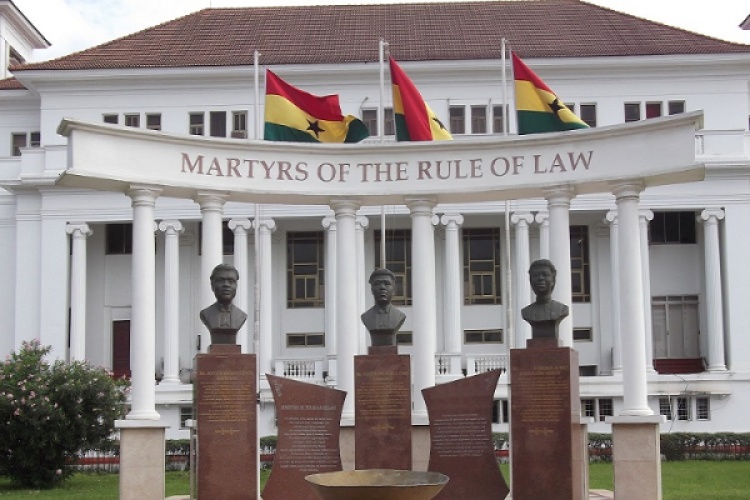
Every June 30, the Ghana’s legal fraternity gathers for Martyrs’ Day. Wreaths are laid, names are read, speeches are made. I will be attending my first such observance this week as a called lawyer.
I will be honest; part of me felt the pull of ceremony for ceremony’s sake, the human tendency to mark an occasion with ritual and then return to ordinary life, having discharged the obligation of remembrance.
But Martyrs’ Day is not a release valve. It is not a day on which Ghana’s legal community feels its emotions about 1982 and then sets them down again for another year.
It is, or should be, an annual reckoning, a moment at which every lawyer and judge asks themselves honestly, am I arguing legal matters in court on their merits? Am I advising clients on what the law actually says, rather than what is convenient? Am I treating the independence of this profession as the sacred thing it is? These are questions a first-year lawyer can ask.
TO THE MARTYRS, FROM THE NEWEST
I did not know Justice Sarkodee, Justice Koranteng-Addow, or Justice Agyapong. I did not know Major Acquah. I know them only through the record of their deaths and the constitutional legacy those deaths helped to build.
But I feel, in a way I find difficult to fully articulate, that I owe them something, not just gratitude, but obligation. The profession I have just entered, the protections it carries, the presumption of judicial independence I get to benefit from without having had to bleed for it, part of that was purchased at Bundase on June 30, 1982, with firearms and fire, at the cost of four lives.
I am not yet one year at the Bar. I have decades of learning ahead of me. But I know this already; I will carry June 30 with me, not as a story from another time, but as a living instruction, as a reminder of what this work is actually for, and what those who came before me paid to make it possible.
May the gruesome murders of yesteryear not be replicated today through acerbic tongues and poisonous inks.
Rest in peace, Justices Sarkodee, Koranteng-Addow, and Agyapong. Rest in peace, Major Acquah.
Long live the Judiciary!
Long live the Rule of Law!
BY: JOSEPH OKAN-MENSAH KHARTEY ESQ; TRAINEE ASSOCIATE, AFRIMORE ADVISORS PRUC.