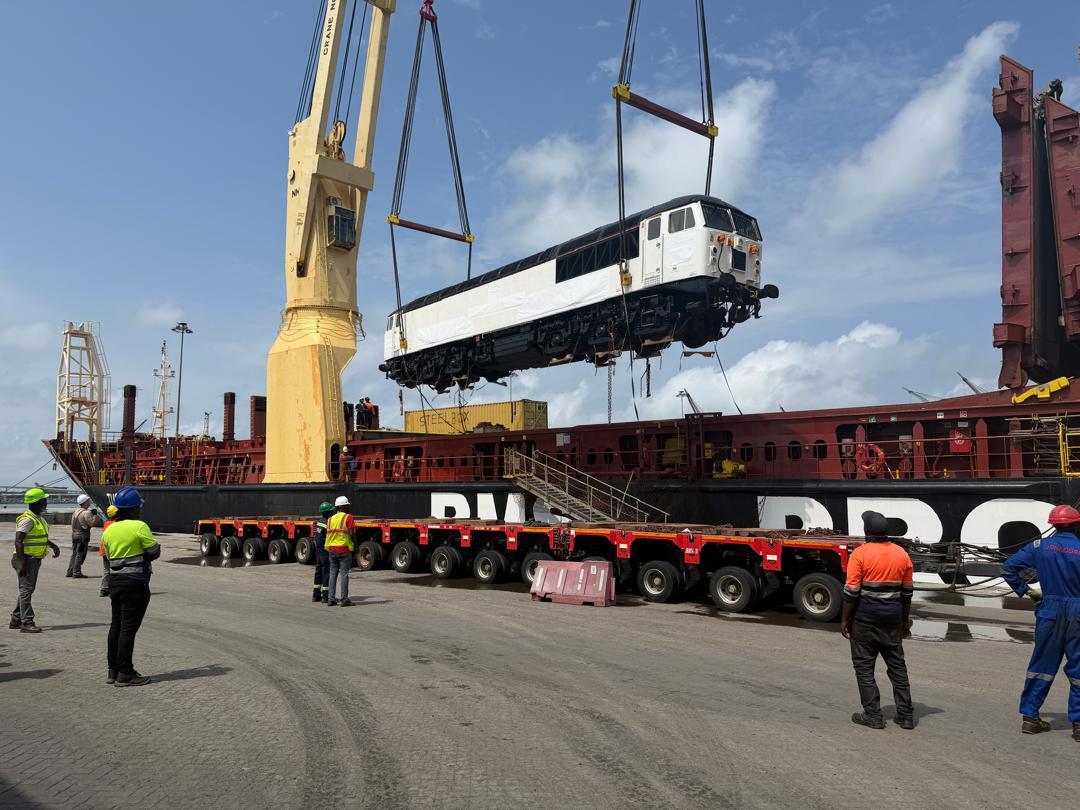

The Ghana Railway Development Authority (GRDA) has dismissed claims by officials of the New Patriotic Party (NPP) that the two recently acquired diesel locomotives are obsolete and fit only for a museum.
According to the Authority, the locomotives were procured after extensive technical evaluations and were selected based on their engineering suitability, operational performance and compatibility with the Tema–Mpakadan standard gauge railway line.
The controversy erupted after videos and photographs of the refurbished British Rail Class 56 locomotives circulated on social media, prompting criticism from some members of the public and the NPP, who argued that the locomotives were outdated and questioned the government’s decision to acquire second-hand rolling stock.
However, speaking at a media briefing on July 7, Chief Executive Officer of the Ghana Railway Development Authority, Dr. Frederick Appoh, said the criticisms overlook the technical realities of railway engineering.
He explained that the procurement decision was guided by operational efficiency, engineering specifications and value for money, rather than the physical appearance or manufacturing date of the locomotives.
“The age of a locomotive is not the determining factor in railway engineering. What matters is its structural integrity, refurbishment quality, reliability, maintainability and ability to perform the task for which it has been acquired,” he said.
Dr. Appoh noted that the locomotives underwent comprehensive technical assessments before their acquisition and fully meet the operational requirements of the Tema–Mpakadan railway corridor.
Built for Freight Operations
The GRDA Chief Executive explained that the two locomotives, together with 20 freight wagons, were acquired at a total cost of approximately GH¢38.7 million as part of efforts to establish a reliable freight rail service capable of transporting containers and other cargo from the Tema Port to inland destinations.
He said the investment will significantly strengthen railway operations by increasing cargo-carrying capacity while complementing passenger services on the corridor.
According to him, moving more freight by rail will reduce the number of heavy-duty trucks on major highways, lower transportation costs for businesses, minimise road deterioration and improve overall road safety.
“The objective is to create an efficient rail freight system that supports trade and economic growth while reducing pressure on our roads,” he stated.
Technical Suitability Over Appearance
Responding to suggestions that the locomotives are outdated, Dr. Appoh explained that railway equipment across the world is often designed to remain in service for several decades, provided it undergoes regular maintenance and refurbishment.
He stressed that modern railway procurement focuses on operational performance, availability of spare parts, maintenance support and compatibility with existing infrastructure rather than the year a locomotive was manufactured.
According to him, the acquired locomotives are fully compatible with the engineering specifications of the Tema–Mpakadan railway line and are expected to provide reliable service for many years.
The Tema–Mpakadan railway is one of Ghana’s flagship standard gauge rail projects aimed at transforming cargo and passenger transportation while strengthening links between the Tema Port and inland logistics hubs.
Government expects the introduction of dedicated freight locomotives to improve the movement of containers, reduce congestion at the ports, promote multimodal transportation and contribute to the country’s broader economic development agenda.
The Ghana Railway Development Authority maintains that the newly acquired locomotives are technically sound, operationally efficient and fully capable of meeting the demands of freight services on the Tema–Mpakadan corridor, despite criticism over their age.
Joseph Armstrong Gold-Alorgbey