
Ghana’s 2026 Infrastructure Report Card is not just a technical document. It is an indictment of how the country plans, funds, builds and maintains public infrastructure.
The Ghana Institution of Engineering gives the country an overall score of 57 percent, a D3, or 2.83 out of 5.
In ordinary school terms, Ghana has not completely failed, but it is nowhere near excellence. It is a weak pass, and in infrastructure, a weak pass can mean bad roads, hospitals without equipment, schools without desks, water that never reaches homes, and rail lines that exist more in speeches than in daily use.
The report assessed eight sectors: aviation, electric power, telecommunications, potable water, education, roads, health and railway.
It used eight criteria: capacity, condition, funding, future need, operation and maintenance, public safety, resilience and innovation.
More than 900 respondents from all 16 regions were involved, including engineers, administrators, infrastructure professionals and the public.
This matters because the report is not merely asking whether Ghana has projects. It is asking whether those projects work, whether they are maintained, whether they are safe, and whether they can serve citizens into the future.
The headline is disturbing. Aviation leads with 71 percent, followed by electric power at 66 percent and telecom at 64 percent. But the sectors that most directly affect the poor and middle-class trail badly.
Water scores 53 percent, education 52 percent, roads 50 percent, health 49 percent, and railway 48 percent. In plain terms, Ghana looks better where infrastructure is concentrated, commercialised or heavily regulated, but performs poorly where services must reach every district, every classroom, every clinic and every community.
The most painful part of the report is the ten-year comparison. In 2016, only three sectors were assessed: electric power, potable water and roads.
By 2026, power had improved from D2 to D1, but water had slipped from 56 percent to 53 percent, and roads had fallen from D3 to E1.
That means Ghana has had a decade of uneven progress. The country improved electricity supply, but allowed roads and water to deteriorate.
Roads: The most visible collapse
The roads sector is the clearest symbol of Ghana’s infrastructure problem. Roads scored E1, or 50 percent, falling from D3 in 2016. Contractor arrears rose to GH¢17.75 billion in 2024, 11.3 times increase from 2016.
Only 27 percent of the road network is paved, meaning 73 percent remains unpaved. Overloading has also risen to 5.7 percent, further damaging roads that are already underfunded and poorly maintained.
This is not just about potholes. It is a governance problem. Ghana awards road contracts, cuts sods, promises completion dates, and then fails to pay contractors on time.
The 2024 budget estimates for the Ministry of Roads and Highways showed unpaid Road Fund invoices of more than GH¢5.53 billion as of September 2023, even before the broader arrears picture worsened.
By July 2025, Roads Minister Kwame Governs Agbodza said government owed road contractors more than GH¢27 billion, made up of Road Fund and Government of Ghana obligations.
The result is predictable. Contractors abandon sites. Roads are left half done. Maintenance is postponed until minor defects become major reconstruction costs. In effect, Ghana has turned routine road maintenance into a debt accumulation machine.
Railway: The expensive line that does not move people
Railway is the lowest scoring sector, with E1, or 48 percent. The report says only 149 kilometres out of 947 kilometres of the rail network are operational, about 16 percent.
Passenger numbers were 21,460 against a target of 200,000 in 2025, an 89 percent delivery gap.
The most embarrassing example is the Tema to Mpakadan railway line. It cost US$447 million and was commissioned in November 2024.
Yet the report says it was still not operational by mid 2026 because of vandalism, an incomplete Mpakadan terminal and the absence of PPP operators.
GraphicOnline also reported in May 2025 that commercial operations had been delayed by theft and vandalism, according to the acting Chief Executive of the Ghana Railway Development Authority, Dr Frederick Appoh.
This is the Ghanaian infrastructure disease in one project: a line is commissioned, speeches are made, political credit is claimed, but the system needed to actually run trains is not ready. A railway line that does not carry passengers or cargo is not infrastructure. It is stranded capital.
Water: Ghana treats water, then loses half of it
Potable water scored D3, or 53 percent. The number that exposes the failure is 50 percent non revenue water. This means half of treated water is lost before it reaches paying customers, either through leakages, illegal connections, metering problems or commercial losses.
The report says daily demand is 1,049,306 cubic metres, but actual daily production is only 572,012 cubic metres. Supply meets just 55 percent of daily demand, while 3.7 million people still lack basic water access.
This is not only an engineering problem. It is a financing and enforcement problem. UNICEF’s 2024 WASH Budget Brief reported that the budget allocation to Urban Water Management fell from GH¢1.403 billion in 2023 to GH¢182 million in 2024, an 87 percent decline.
That kind of cut makes it harder to expand treatment plants, replace old pipes and improve urban water access.
Then there is galamsey. Illegal mining continues to poison river systems that Ghana Water Limited depends on. The Guardian reported in 2024 that illegal mining had polluted rivers, damaged farmland and cost the state an estimated US$2 billion annually in lost taxes, while worsening pressure on water treatment.
Ghana is therefore producing treated water with one hand and losing it with the other, while allowing source water to be destroyed upstream.
Education: enrolment rose, but classrooms did not
Education scored D3, or 52 percent. This is one of the clearest examples of policy running ahead of infrastructure. The country expanded access, especially through Free SHS, but classrooms, desks, ICT, sanitation and boarding facilities did not grow at the same pace.
The report shows a desk deficit of more than one million, with 40 percent of pupils without desks. It also says only 10 percent of education spending goes to infrastructure, with a financing gap of US$2 billion to meet SDG 4.
This confirms what education observers have been warning. UNICEF has noted that GETFund is a major source of financing for education facilities, but from 2019 to 2023, only about 10 percent of GETFund’s annual budget was allocated to basic education, compared with a larger share for second cycle education.
A 2025 UNICEF brief also showed that GH¢3.5 billion, about 33.7 percent of projected GETFund expenditure, was allocated to Free SHS.
The World Bank’s approval of US$300 million in June 2026 for secondary education transformation shows that the infrastructure pressure is now too large to ignore.
The financing is meant to expand access and improve relevance, but it also shows that Ghana’s education system has been carrying an infrastructure burden that domestic budgets alone have not properly resolved.
Health: Buildings do not cure patients
Health scored E1, or 49 percent, the first time it has been assessed in the report. The figures are severe. Ghana has a doctor to patient ratio of about 1 to 8,000, an ambulance to population ratio of 1 to 84,000, only 5 percent of primary facilities fully equipped, and catastrophic household health expenditure at 11.45 percent in 2022 to 2023.
This is the contradiction. Ghana has spent years announcing hospital projects, but the system still struggles with staff, equipment, ambulances and operating funds. Agenda 111 was launched as a major health infrastructure programme.
The Ministry of Health said it included 101 district hospitals, six regional hospitals, two specialised hospitals, a regional hospital in the Western Region and the renovation of Effia Nkwanta Regional Hospital.
The Ministry of Finance also said GH¢600 million, equivalent to US$100 million, had been released as start-up funding for the project.
But the GhIE score shows why buildings alone cannot be the measure of progress. A hospital without adequate staff, oxygen, laboratories, ambulances, beds, drugs and recurrent financing is only a shell. Ghana’s health problem is not just that it needs more facilities. It needs functional facilities.
Power: The bright spot with a dangerous weakness
Electric power is one of the few improved sectors. It scored D1, or 66 percent, up from D2 in 2016. Installed capacity grew from 3,796 megawatts in 2016 to 5,492 megawatts in 2024, while peak demand rose from 2,335 megawatts to 3,952 megawatts. National electrification reached 88 percent.
But the sector is still fragile. The report says the reserve margin is 15 percent, below the 18 percent minimum needed, while frequency was within the acceptable range only 28.56 percent of the time.
It also identifies ECG’s financial fragility as a major issue. The IMF has repeatedly highlighted Ghana’s energy sector shortfall, ECG collection problems and the need for greater transparency in collections and payments.
The World Bank has also estimated that Ghana’s energy sector shortfall could exceed US$2 billion annually between 2023 and 2027 under a business-as-usual scenario.
So, power has improved, but the finances are dangerous. Ghana has built generation capacity, but distribution losses, weak collections, gas supply risks and sector debts continue to threaten reliability.
Telecom: Growth without enough competition
Telecommunications scored D1, or 64 percent. It is one of Ghana’s strongest growth sectors. The report shows mobile voice penetration at 116 percent, mobile data subscriptions at 26.13 million, year on year data traffic growth of 54 percent, but fixed broadband penetration at only 0.38 percent.
It also points to extreme concentration, with MTN holding 85 percent of data traffic share.
NCA’s Q4 2024 statistical bulletin confirms MTN’s dominance in voice subscriptions, with 73.97 percent market share, followed by Telecel at 18.14 percent and AT at 7.89 percent.
The Ministry of Communication, Digital Technology and Innovations says Next Gen InfraCo was created as a shared infrastructure company for 5G deployment, involving government, Ascend Digital, K NET and technology partners.
The critical issue is that Ghana has strong mobile internet growth, but weak fixed broadband and high market concentration. That makes digital access expensive, unequal and vulnerable to dominance by one operator.
Aviation: The exception, but not immune
Aviation is the best sector, scoring C3, or 71 percent. The report credits Accra International Airport Terminal 3, FAA Category 1 status, strong passenger volumes, and zero major accidents since 2018. But even aviation has a warning sign: a 40 percent funding gap for 2024 to 2027 and US$1.2 billion needed by 2035.
Terminal 3 was one of Ghana’s more successful infrastructure stories. The Ministry of Finance said the airport expansion was backed by a US$120 million AfDB facility and was expected to help Ghana target five million passengers annually.
But the report still warns that Kumasi’s runway must be completed, ageing navigational aids must be replaced, technical staff must be retained, and green aviation investments must be advanced.
The lesson is clear. Even Ghana’s best sector survives because of focused investment and regulation. It can also decline if maintenance and funding are neglected.
The real issue: Ghana underfunds everything
The most important slide in the report is not about roads, water or health alone. It is the funding crisis. No sector scored better than D1 on funding.
Four sectors scored E1 or E2. The report explains what this means in practice: projects are awarded before funding is secured, maintenance revenues are diverted, capital budgets are approved but not released, contractor arrears stretch beyond six months, health capital budgets are under executed, education infrastructure receives too little, railway construction stalls mid project, and water investment falls below need.
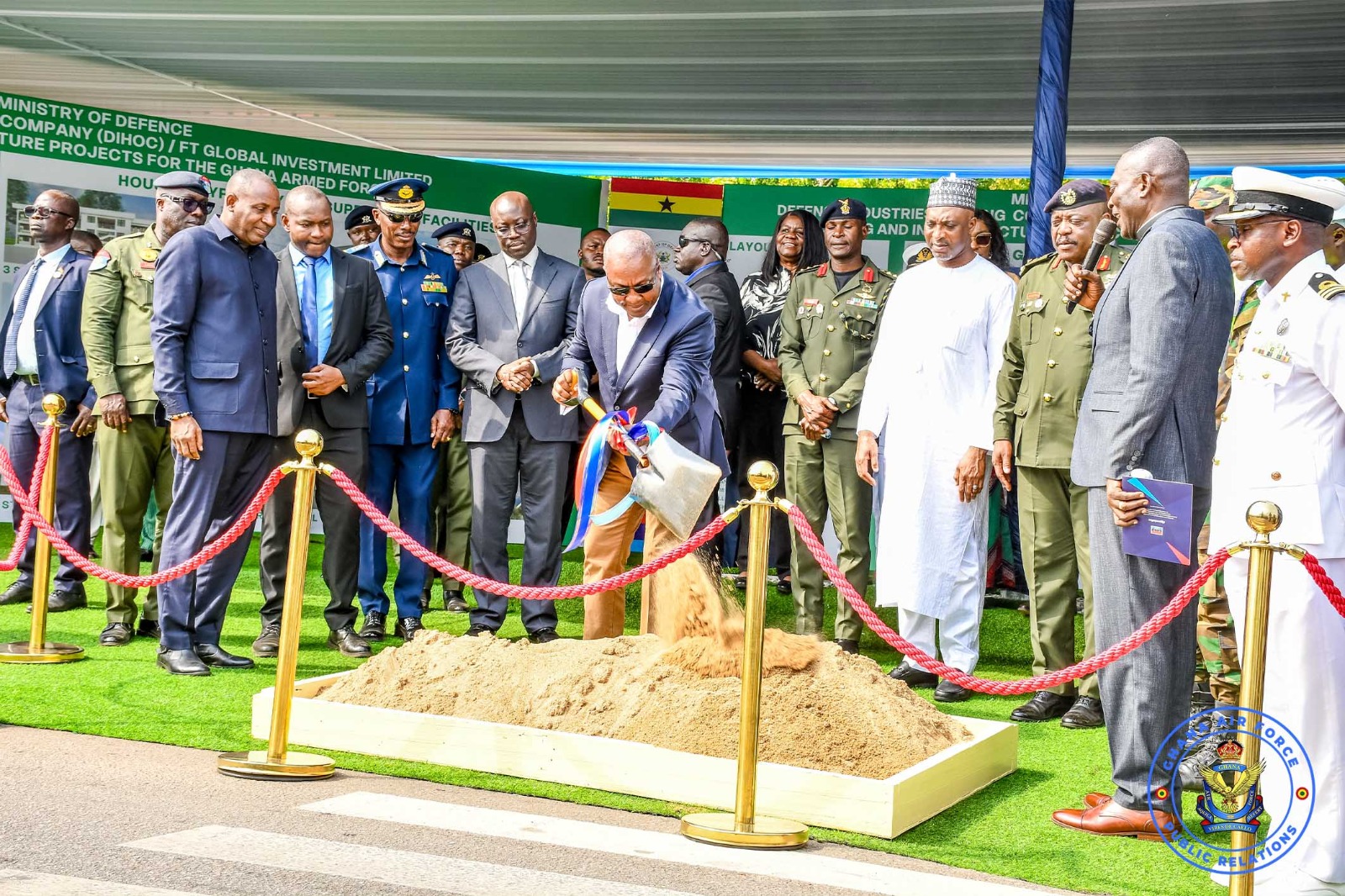
This is why Ghana’s infrastructure problem cannot be solved by another sod cutting ceremony. It is systemic. Political project cycles create pressure to announce projects.
Weak planning produces poor prioritisation. Underfunding creates arrears. Arrears delay contractors. Delays worsen costs. Poor maintenance turns repairable assets into failed assets. Then government borrows more to rebuild what should have been maintained.
The IMF has also pushed Ghana to improve commitment controls and prepare a centralised inventory of ongoing and planned public investment projects, precisely because weak public investment management and arrears accumulation have become macroeconomic risks.
The conclusion: Ghana does not lack projects. Ghana lacks discipline
The GhIE report is brutal because it cuts through political optics. Ghana has airports, power plants, hospitals, school blocks, water systems, roads and rail lines. But too many of them are underfunded, poorly maintained, delayed, abandoned, overloaded or not operational.
A D3 national grade is not just a score. It is a warning. It says the country is still functioning, but with serious deficiencies. Roads are deteriorating. Water is leaking away. Schools are overcrowded. Hospitals are under equipped. Railways are nearly dead. Power is improved but financially weak. Telecom is growing but concentrated. Aviation is the best performer, but even there, future funding is uncertain.
The expose is this: Ghana has normalised the politics of commissioning and neglected the discipline of completion, maintenance and accountability.
Until maintenance becomes a legal obligation, until projects are not awarded without secured funding, until arrears are publicly tracked, and until Parliament demands annual infrastructure performance reporting, the country will keep celebrating new projects while old systems collapse quietly behind them.
By Wisdom Sarfo