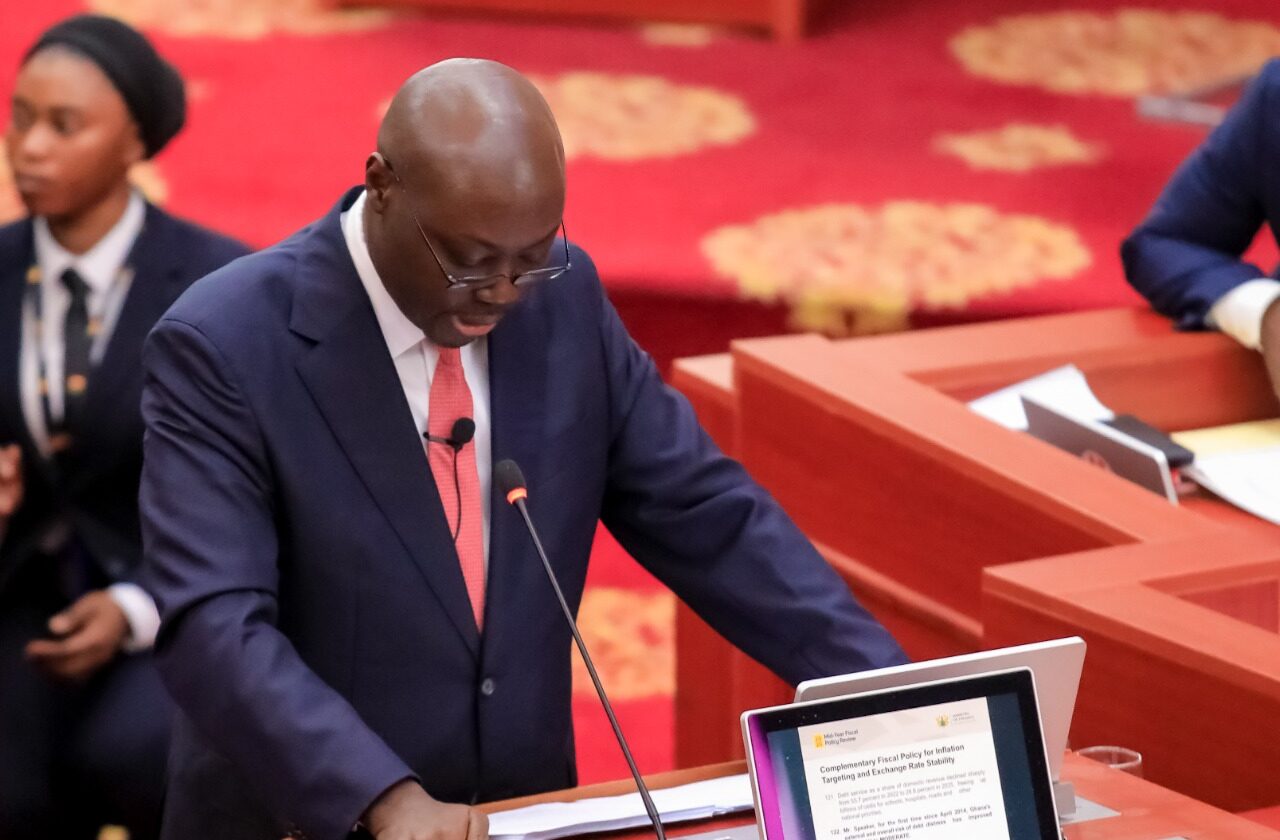

Finance Minister, Dr. Cassiel Ato Baah Forson, has disclosed that Ghana has successfully raised its first long-term cedi-denominated bond since 2022.
This follows the nation’s inability to borrow domestically due to its debt default four years ago.
According to the Minister, Government had to solely rely on treasury bills to finance its budget, a situation he says the current administration’s fiscal discipline has resolved.
Presenting the 2026 Mid-Year Budget Review to Parliament on Thursday, July 23, 2026, Dr. Forson described Ghana’s inability to borrow long-term in its own currency as the “original sin”.
“Mr. Speaker, following the 2022 public debt default, government couldn’t borrow long term in cedis and relied heavily and solely on treasury bills to finance the budget.
“Mr. Speaker, Ghana has now overcome what economists describe as the original sin which is the inability of a country to borrow over the long term in its own currency,” he stated.
The inability to borrow long-term domestically, Dr. Forson maintained, was due to the three-year restriction that was placed on new bond issuance as a result of the default in the debt payment.
“Mr. Speaker, three years’ restriction on new bond issuance, introduced as a result of the debt default, caused this original sin.
“Mr. Speaker, in April 2026, Ghana successfully raised US$2.7 billion through its first seven-year cedi-denominated bond, since the 2022 debt default,” he indicated.
The Finance Minister added that the country’s ability to now borrow in the local currency for the long term is vital in the country’s quest to build a robust domestic bond market and a long-term financing in the cedi.
“This marks an important step in rebuilding the domestic bond market and restoring long-term financing in our own currency,” he added.
Gov’t will not seek a supplementary estimate in Mid-Year Budget Review – Ato Forson