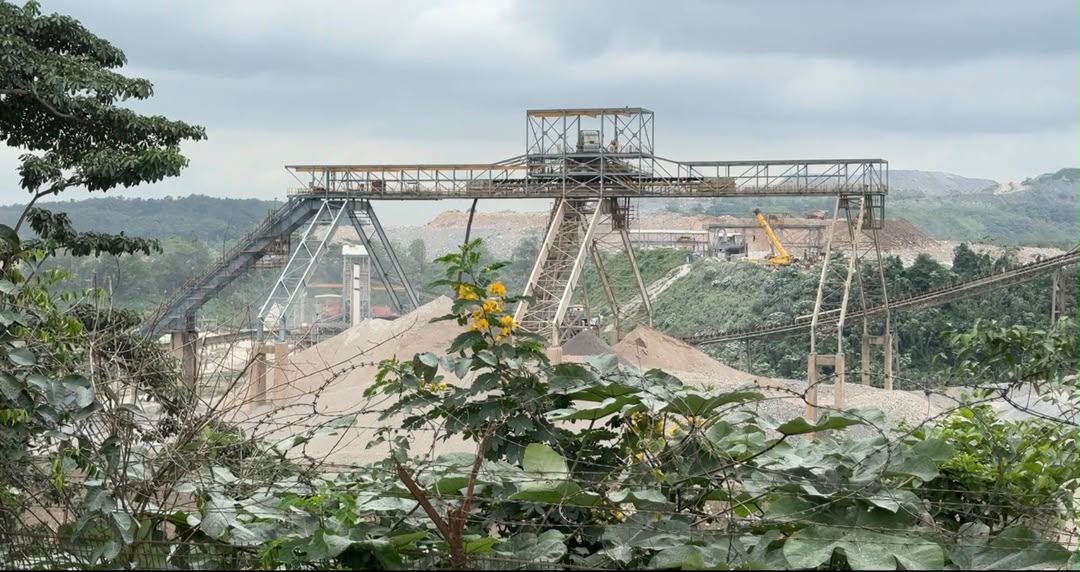

For three decades, the earth of Apinto has given up its gold. But ask the people who live above that gold what they have to show for it, and the answer is painfully thin: degraded farmlands, crumbling roads, a clinic built not by the mining giant but by the chiefs themselves.
Today, the Apinto Divisional Council, the traditional owners of the land on which Gold Fields Ghana’s Tarkwa Mine operates have drawn a line in the red laterite soil.
In a press conference that could reshape Ghana’s mining future, the chiefs announced they will oppose the renewal of Gold Fields’ mining lease when it expires in April 2027.
But they didn’t stop there. They unveiled something far more ambitious: a proposal for a Ghanaian-owned mine built on what they call a “shared prosperity model.”
The decision came after a tour of the mine earlier this week. What the chiefs saw shook them. More than four thousand hectares of Apinto lands have been degraded. Land that once fed families, that held ancestors, that was never meant to become a moonscape of waste rock and empty promises.
The Council said the development provided by Gold Fields does not “commensurate with the extent of the degradation of our lands.”
Poor roads, inadequate schools, insufficient healthcare, youth unemployment- These are the daily realities of communities that have hosted one of Ghana’s largest gold mines for 30 years.
“If confirmed,” analysts warn, the Council’s position “will mark a major setback for Gold Fields Ghana.”
The timing is critical. Gold Fields’ lease expires in April 2027, and the company is seeking a 20-year extension. The Tarkwa mine is no small operation. It produced 14.8 tonnes of gold in 2025 and is estimated to have 17 more years of life. But the national debate is shifting.
The Institute of Economic Affairs has called for Ghana to own and control its mines. Former Energy and Mines Committee Chair Dr Kwabena Donkor argues Ghana “has come of age to own its mines.”
Now, the Apinto Divisional Council is adding its voice with a concrete plan.
Their “Apinto Shared Prosperity Proposal” is built on “history, justice, equity, and sustainable development.” It seeks not charity, but fairness a model where host communities become “genuine partners in the ownership, governance, and benefits of the mine.”
The Council is clear: “A mine that generates wealth from the lands of Apinto must also create lasting prosperity and sustainable development for the people of Apinto.”
The bigger picture: Ghana’s mineral wealth, Ghana’s future
This isn’t just about one mine. It’s about a fundamental question: who benefits when Ghana’s gold leaves the ground? For too long, the answer has been foreign shareholders South African investors holding 24% of Gold Fields, Americans holding 17%, with Ghanaians watching from the fence.
The Apinto chiefs are calling for a new era. “We believe this initiative will usher in a new era of inclusive, responsible, and sustainable mining that benefits both the nation and its host communities.”
Gold Fields, for its part, has argued that its record of investment presents a “compelling case” for renewal. The Ghana Chamber of Mines has warned that rejecting the lease could harm investor confidence.
But the people of Apinto have seen 30 years of investor confidence. They have seen the gold leave and the land stay broken. Now, they are asking: what about our confidence? What about our future?
The final decision rests with the government. But the position of the traditional landowners carries considerable weight. With the chiefs formally opposing renewal and the youth movement growing louder, the pressure on Accra is mounting.
The Apinto Divisional Council has submitted its proposal for a Ghanaian-owned mine. They are asking Parliament, the Minerals Commission, and all Ghanaians to give it serious consideration.
By Ebenezer Atiemo