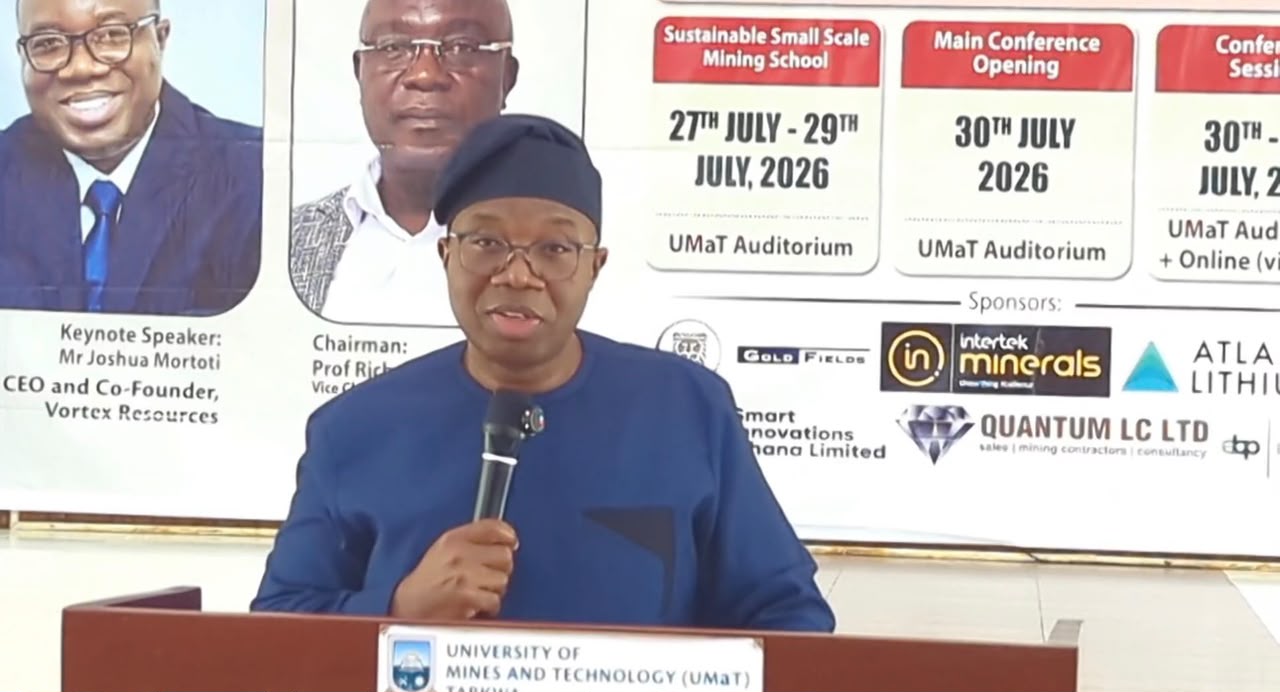

The national conversation around mining in Ghana is trapped in a “false and dangerous” binary, and the government must abandon its fixation on high royalty rates if it truly wants to capture value.
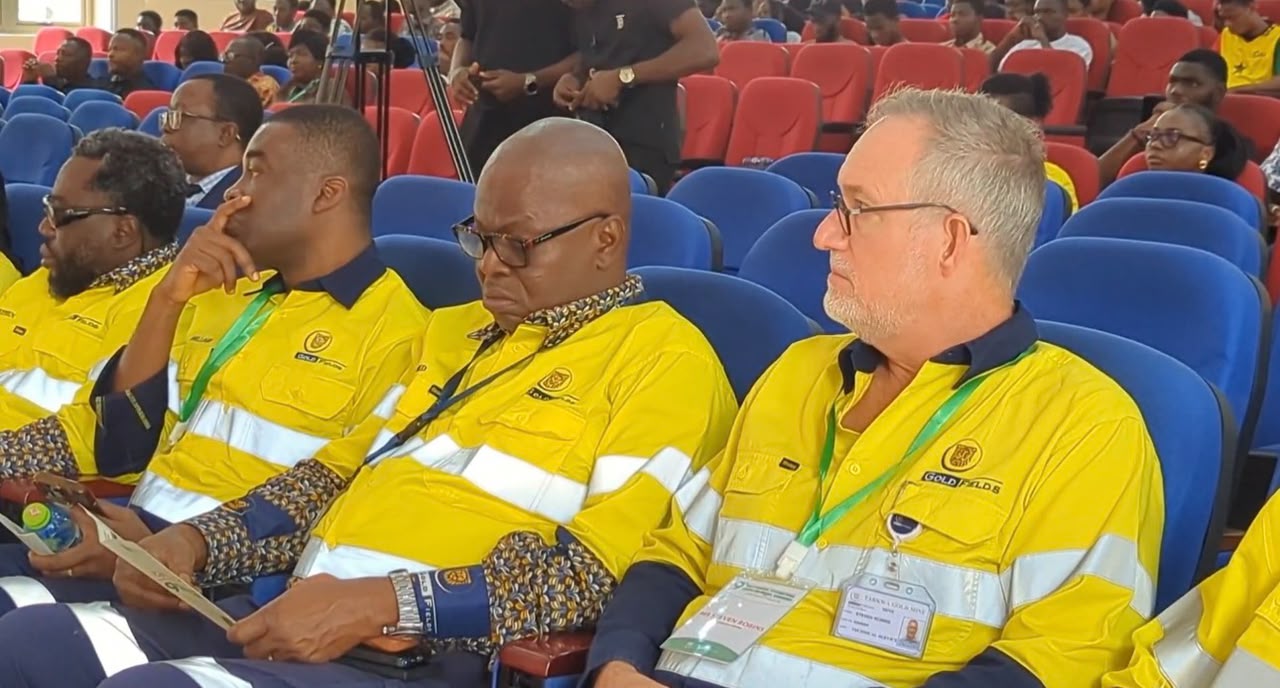
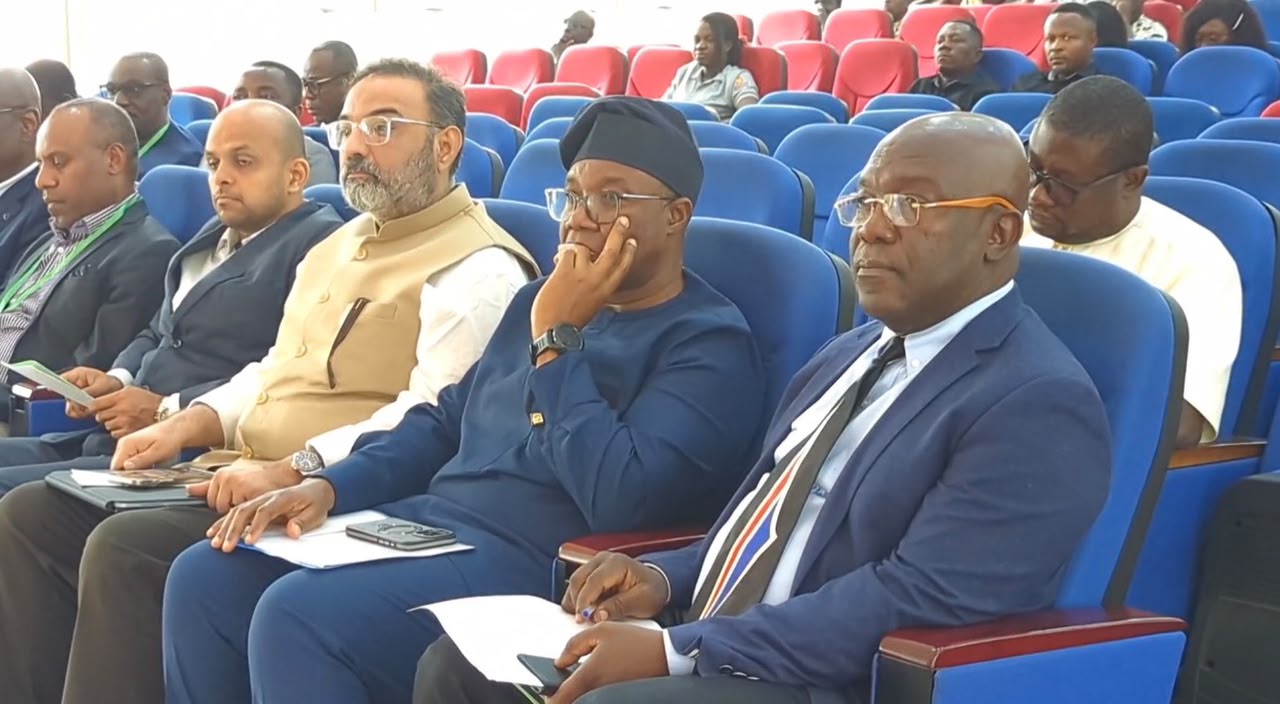
That was the central message from mining and mechanical engineer, Joshua Mortoti, at the 9th UMaT Biennial International Mining and Mineral Conference held in Tarkwa on Friday, July 31, 2026.
Mr. Mortoti used the platform to call for two sweeping policy shifts; a mandatory thirty per cent local participation threshold for all major mining projects, and a revised uniform three per cent royalty rate applicable to both large-scale and small-scale operators.
According to the engineer, these reforms are non-negotiable if Ghana is to enhance local economic benefits while simultaneously boosting state revenue.
Taking direct aim at current fiscal thinking, Mr. Mortoti argued that hiking royalties a common policy reflex is counterproductive. He pointed to a striking statistic: over fifty percent of Ghana’s gold output now comes from the small-scale mining sector, where the effective royalty rate is virtually zero.
“I am not an advocate for simply raising royalties,” he stated. “In fact, I would rather keep them as low as possible to encourage broad participation in the mining sector.”
His proposal for a flat three percent rate is designed to formalize the informal sector. He warned that imposing a punitive rate such as twelve percent on small-scale miners would be a catastrophic miscalculation.
“Imposing a rate as high as twelve percent on them would inevitably drive operations underground and encourage smuggling,” Mortoti cautioned. “So, I am not a proponent of the government raising royalties merely because it believes that is the only way to capture value.”
Beyond fiscal policy, Mr. Mortoti challenged the prevailing framing of Ghana’s mining discourse. He criticized the tendency to pit national interests against foreign capital, arguing that such polarization serves no one.
“The public debate is often presented to us as a binary choice: Ghanaian ownership or foreign investment, national interest or investor returns, mining or environmental protection,” he observed. “I believe this framing is false and dangerous.”
For Mortoti, the path forward requires holding three truths simultaneously. First, national ownership is essential, because minerals are held in public trust. Second, foreign investment is indispensable, given that modern mining is capital-intensive, technologically demanding, and fraught with geological, market, and execution risks. Third, and perhaps most critically, sustainable development must be the ultimate benchmark of success.
The engineer concluded with a sobering reminder that profitability without responsibility is a hollow victory. He urged stakeholders to look beyond balance sheets and consider the broader impact of mining operations on host communities and the environment.

“Above all, we need genuine sustainable development,” Mortoti insisted. “Because a profitable mine that destroys water sources, weakens the community, or leaves a hollow productive economy behind is not a success at all.”
His remarks have reignited calls for a comprehensive review of Ghana’s mining fiscal regime one that balances formalization, local ownership, and environmental stewardship without resorting to the blunt instrument of royalty hikes alone.
Minerals Commission did a ‘shoddy’ job in awarding mining leases to companies – Minority
By Ebenezer Atiemo