

The Ashanti Region continues to record Ghana’s highest maternal mortality rate, with health authorities warning that urgent measures are needed to prevent more women from dying during pregnancy and childbirth.
Data from the Ashanti Regional Health Directorate shows that the region’s maternal mortality ratio increased marginally from 195.6 deaths per 100,000 live births in 2024 to 196.7 in 2025.
The region also accounted for about 24.6 percent of maternal deaths recorded nationally in 2025, making it the highest contributor.
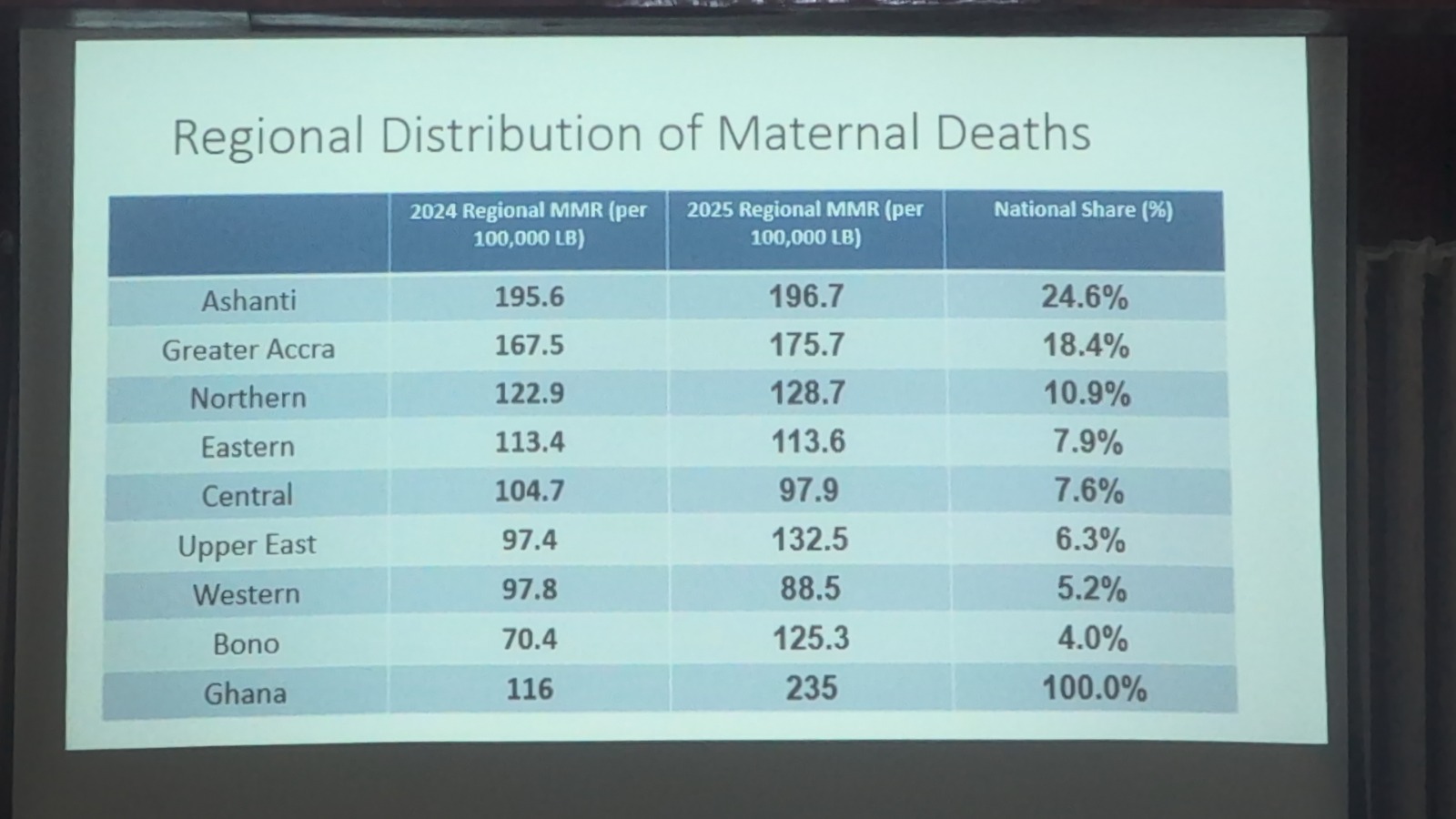
Deputy Minister of Health, Dr Grace Ayensu Danquah, says the situation remains a major concern, particularly as Ghana seeks to meet the Sustainable Development Goal target of reducing maternal mortality.
“Our maternal mortality index is actually 235 per 100,000 live births. And you all know that for us to reach universal health coverage and to also get to the Sustainable Development Goals, the recommendation is 70 deaths per 100,000 live births.”
The Deputy Minister says Ghana has only four years to make significant progress towards the target.
“So if you’re at 235, that means you’re at least three times the required number. You and I also know that to get to 2030, we only have four years.”
Health authorities, however, say Ashanti Region’s position at the top of the maternal mortality table does not necessarily mean the region’s health facilities are solely responsible for the deaths.
The region has become one of Ghana’s major referral centres, receiving complicated cases from several parts of the country.
The Regional Health Director, Dr Fred Adomako Boateng says many women arrive after their conditions have already deteriorated significantly.
“Most of these women, by the time they get here, between 24 to 48 hours, the death has already happened. Most of the deaths occurring at Komfo Anokye Teaching Hospital creates the impression and perception of KATH as the source of these deaths. However, if you analyze this trend… 92 percent of the deaths occurring in Komfo Anokye are from outside.”
Health authorities say they are strengthening interventions across the referral chain, including clinical mentorship, quarterly reviews of maternal deaths and a virtual labour room system.
The virtual system is expected to allow specialists to support health workers in facilities outside major referral centres, particularly when managing complicated cases.
The Regional Health Director says stronger coordination and feedback mechanisms will also be critical.
The interventions come as Ghana races against time to reduce maternal deaths to the SDG target of 70 per 100,000 live births by 2030.
For Ashanti, health authorities say reducing preventable deaths will require early detection of complications, faster referrals and stronger capacity at health facilities before patients reach major referral hospitals.
By Ibrahim Abubakar