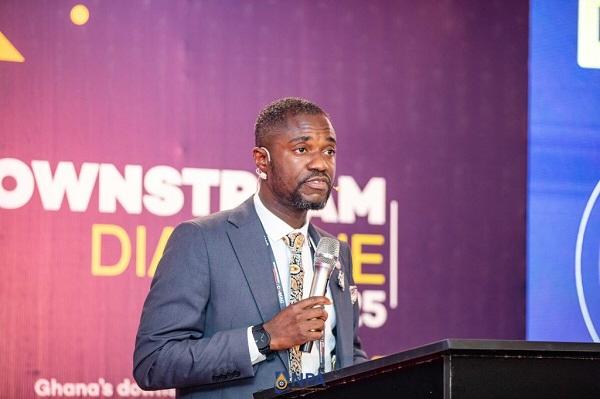

Dr Riverson Oppong, Chief Executive Officer of the Chamber of Oil Marketing Companies (COMAC), has raised concerns about the mounting challenges facing players in Ghana’s downstream petroleum industry, warning that continued neglect could threaten the sustainability of the sector.
Speaking on Business Focus on August 31, Dr Oppong said industry players, particularly Bulk Distribution Companies (BDCs), are increasingly burdened by taxes and levies, with little consideration given to measures that could cushion their operations.
“We are still perturbed that the government is not considering giving us tax relief to cushion the industry,” he said.
Dr Oppong explained that the current tax regime places significant pressure on BDCs, as taxes and levies are imposed before products are even sold.
According to him, the government takes its share through taxes and levies when BDCs load their products, regardless of whether the products are eventually sold.
Breaking down the cost structure of diesel, Dr Oppong noted that even with the government’s two-cedi relief intended to ease pressure on the energy sector, a significant portion of the pump price still goes to the state.
“Even with the two cedis taken out, for every one litre of diesel, 26 per cent of today’s price goes to government in taxes and levies, 70 per cent is the commodity price, and four per cent stays with the entity buying the product,” he explained.
He added that depending on prevailing market conditions, the four per cent margin available to industry players could decline to as low as two per cent.
Dr Oppong also disagreed with what he described as the tendency for discussions about the energy sector to focus almost exclusively on consumers, while overlooking the challenges confronting businesses operating within the downstream petroleum industry.
“We have turned a blind eye to issues in the downstream sector,” he said, stressing that the lack of attention to the concerns of BDCs is placing enormous strain on their operations.
He warned that unless urgent steps are taken to address the industry’s concerns, the situation could eventually reach a breaking point.
“A time is coming when we will lock the stations and let the consumer build and buy their own fuel,” Dr Oppong cautioned.
His remarks underscore growing frustration among players in the downstream petroleum sector, who are calling for greater government support and a review of the tax and levy structure to ensure the long-term sustainability of the industry.
By Ishmael Oduro-Acheampong