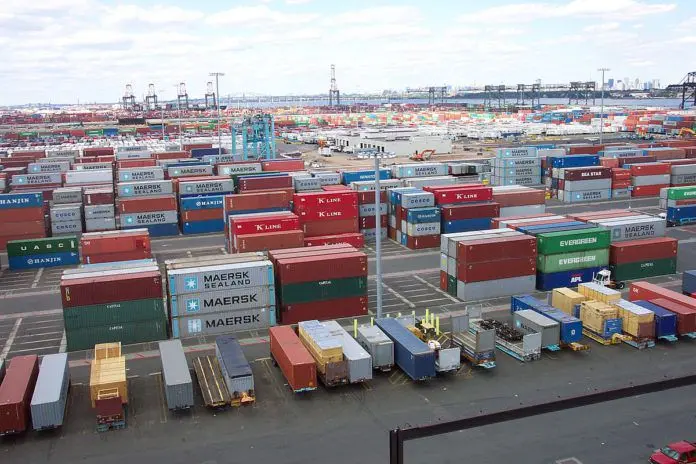

The Importers and Exporters Association of Ghana (IEAG) has called for an urgent high-level government intervention, led by the Chief of Staff, to address worsening congestion at Ghana’s ports.
They warned that persistent delays, rising costs and operational bottlenecks could force importers to divert cargo to neighbouring countries, particularly Côte d’Ivoire.
The association, at a press conference held in Accra on September 14, described the situation at the ports as a growing national trade competitiveness issue that could undermine Ghana’s revenue mobilisation efforts and industrialisation agenda if immediate action is not taken.
IEAG said congestion at the ports was not caused by a single institution but was the result of systemic challenges involving customs valuation and examination processes, regulatory inspections, terminal operations, truck turnaround times and poor inter-agency coordination.
The association therefore urged the Chief of Staff to convene a special delegation involving the Ministers for Finance, Trade, Agribusiness and Industry, and Transport, together with key port and regulatory agencies, to formulate an immediate action plan to decongest the ports.
Among the concerns raised by IEAG was what it described as excessive routing of containers for intrusive physical examination. According to the association, about 74% of containers subjected to scanning are reportedly directed to the red channel for further examination, a situation it said places enormous pressure on examination bays, terminals and truck operators.
IEAG called for a data-driven review of Customs’ risk management and cargo selectivity systems.
The association also cited the breakdown of coordinated inspections among state agencies, alleging that some containers are subjected to multiple examinations because certain regulatory bodies fail to participate in initial joint inspections. It further called for investigations into allegations of unofficial payments of up to GH¢1,000 to avoid additional inspections.
IEAG expressed concern over increasing regulatory fees imposed by agencies such as the Ghana Standards Authority (GSA), Food and Drugs Authority (FDA) and Environmental Protection Agency (EPA), arguing that the cumulative cost burden contributes significantly to delays and higher logistics expenses for importers.
The association further pointed to long truck turnaround times at some terminals, including facilities operated by shipping giant MSC, saying delays in cargo evacuation reduce the efficiency of haulage operations and worsen congestion.
IEAG warned that the situation could deteriorate during the peak trading season later this year and disclosed that some importers were already considering routing cargo through the Port of Abidjan in Côte d’Ivoire because of delays in Ghana. It cautioned that once traders establish alternative supply chains, it may be difficult for Ghana to regain the lost business.
The association also petitioned President John Mahama to review and remove the representation of the Ship Owners and Agents Association of Ghana (SOAAG) on the boards of the Ghana Maritime Authority and the Ghana Ports and Harbours Authority, citing concerns over compliance with state directives on port charges.
IEAG concluded by urging government to establish measurable port performance targets and hold agencies accountable for delays within the cargo clearance process, insisting that efficient ports are critical to Ghana’s economic growth and competitiveness.
By Ishmael Oduro-Acheampong