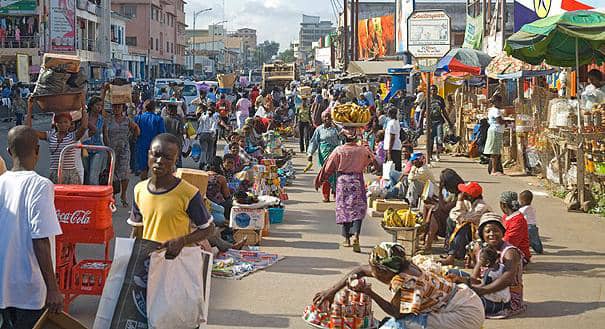

More than half of Ghana’s population now lives in urban areas, the Ghana Statistical Service (GSS) has said.
According to its new flagship publication, Ghana in Numbers, 2025, about 19.8 million people, representing 58.7 per cent of the population, were living in urban areas in 2025.
The report brings together data on population, housing and access to basic services to track changes in Ghana’s settlement pattern and to guide planning.
The Government Statistician, Dr Alhassan Iddrisu, said planning decisions must be based on local data and not national averages.
“Use local figures, not national averages, to decide where the next cedi goes, because averages hide differences,” he said.
According to the report, Ghana’s population became more urban than rural in 2010. In that year, 12.55 million people lived in urban areas compared to 12.11 million in rural areas.
By 2021, the urban population had increased to 17.47 million, while the rural population stood at 13.36 million. The figure is projected to have reached about 19.8 million in 2025.
On housing, the 2021 Population and Housing Census counted about 10 million dwelling units. The GSS estimated the housing deficit at 1.8 million units in 2021, down from about 2.8 million in 2010.
It explained that the deficit is only an estimate of the number of homes required and available, and does not measure quality, affordability or vacancies. The report also noted that average household size has fallen to 3.6 persons, the lowest on record, a development that could increase demand for housing even when population growth slows.
The report further noted expansion in access to basic services, though gaps remain.
Electricity coverage rose from 43.8 per cent in 2000 to 86.3 per cent in 2021, while access to improved drinking water increased from 60.7 per cent to 92 per cent within the same period. Improved sanitation also increased from 44.8 per cent in 2010 to 69 per cent in 2022.
Despite the progress, 30.8 per cent of the urban population still lives in slums or informal settlements. The report found that about one in seven households has no electricity, while almost one in three lacks an improved toilet.
The GSS said national access rates must be considered alongside local living conditions.
It said housing and service needs are not evenly distributed and district-level data can help identify communities with the greatest gaps in housing, water, sanitation and electricity.
Dr Iddrisu said population statistics should guide decisions on “where schools, clinics and homes must go”.
The Ghana in Numbers, 2025 publication and its related district data are available on the GSS website, StatsBank, the Ghana in Numbers web portal and the GSS Stats App.