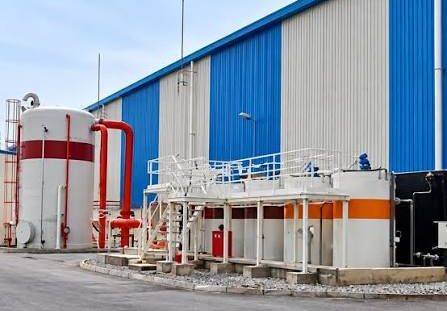

The Ghana Water Justice Network (GWJN) has warned that government’s plan to acquire the Teshie-Nungua Desalination Plant must not lead to water becoming more expensive for consumers.
The Network, which made the call at a press conference in Accra on Tuesday, November 3, 2026, said while reliable water supply for eastern Accra is important, the proposed acquisition must not impose another avoidable burden on taxpayers and households.
Government has announced negotiations to acquire the facility, reportedly at a price significantly below amounts pursued in arbitration, with the aim of restoring operations and securing state ownership.
But the GWJN said the deal must be subjected to public scrutiny.
“Reliable water supply for eastern Accra is important, but acquisition must not impose another avoidable burden on taxpayers,” the Network said.
It demanded that independent financial and technical assessments be published to establish the plant’s condition, rehabilitation costs, realistic operating performance, purchase value and the effect of any agreement on arbitration liabilities.
The Network fears that if proper assessments are not done, the cost of acquisition and the US$235 million arbitration liability could be passed on to consumers through higher water tariffs, at a time when water is a necessity used in every household.
“The consequences of flawed water-sector contracts must not be passed on to households through higher water tariffs. Water is essential to health, dignity and livelihoods,” the Network warned.
It also questioned the origins of the project, noting that its reported origin as an unsolicited proposal raises questions about appraisal, procurement and oversight.
According to the Network, concerns were ignored over the years, with the Teshie Concerned Citizens Association questioning the taste, salinity and acceptability of water from the plant, while groups including ISODEC, Water Citizens and the Public Utility Workers’ Union (PUWU) highlighted financial and technical risks.
“Water is a public good and a human right – not merely a commodity for private profit,” the Network stressed, calling for disclosure of the Water Purchase Agreement, State Guarantee and material arbitration findings.
Privatising water will make it more expensive for consumers – Water Justice Network warns