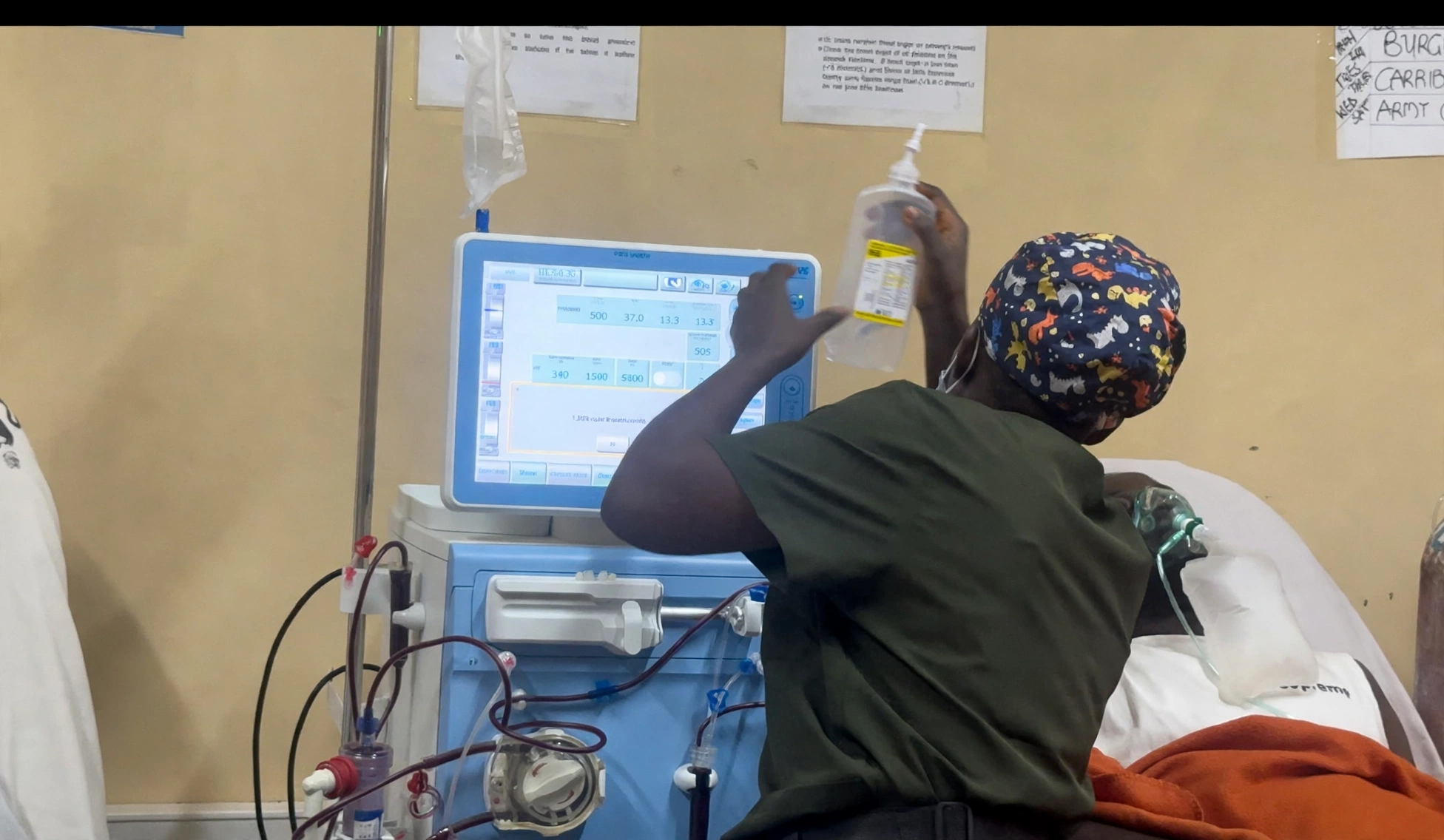

Patients receiving dialysis at the Effia Nkwanta Regional Hospital in Takoradi are facing a worsening crisis following the breakdown of two dialysis machines, leaving only one operational to serve the growing number of patients.
The situation has left several patients who travelled from different parts of the Western Region stranded at the hospital, with some reportedly spending days waiting for their scheduled dialysis sessions.
Patients say the pressure on the only functioning machine has forced nurses to reduce the duration of dialysis sessions from the usual three to four hours to just two hours to accommodate more people.
Some of the affected patients have travelled from communities including Aboadze, Tarkwa, Bogoso, Prestea, Asankragwa and Half Assini.
They say returning home without receiving treatment could worsen their conditions, particularly as some are already experiencing increased fluid accumulation and swelling in their bodies.
Cynthia, who travelled from Half Assini with her husband, said they had been sleeping on the hospital premises for days while waiting for their turn.
“My husband is on dialysis. We are scheduled for our sessions, but just one machine is left, so we are still stuck at the hospital. The number of patients is many, and the one machine is unable to take care of all of us,” she said.
“We have been sleeping at the hospital premises for some days now due to this issue. We now have to wait until it gets to our turn,” she added.
Another patient, Joseph, who travelled from Aboadze, said he had been at the hospital since 6:00 a.m. but was still waiting to receive treatment.
He said patients were increasingly worried about their deteriorating conditions, particularly the accumulation of fluid in their bodies.
“We are suffering, and our conditions are getting worse. Fluid accumulation in our bodies is getting worse. We still have no idea when it will get to our turn,” he said.
“We plead with you to help us get more machines to help our plight. The number of patients waiting is many, so they have reduced the time we spend on the machine. More machines are needed as soon as possible,” he appealed.
Egyir, another patient who had just completed his dialysis session after spending days at the hospital, also called for urgent intervention.
“Just one machine is currently active, and we are pleading for people to come to our aid. Those who can should quickly come around and help us. The situation here is gradually getting messy,” he said.
“Instead of a patient spending three or four hours on the machine, we are compelled to spend just two hours to enable others to also have their turn,” he added.
For Leticia, a teacher, the situation has meant missing three consecutive weeks of dialysis.
She said she had been unable to report to work because of her worsening condition, with repeated assurances from the hospital to wait due to the limited number of functioning machines.
“For three weeks, I’ve not been on dialysis. I’m unable to go to work. I keep bloating by the day. They keep telling me to wait due to the limited number of machines at the hospital. The situation is bad,” she said.
The patients are appealing to government, health authorities, corporate organisations and philanthropists to urgently intervene by providing additional dialysis machines to ease the pressure on the facility and prevent further delays in treatment.
By Eric Nana Gyetuah