
Finance Minister, Dr Cassiel Ato Forson has called on traditional authorities to support government’s proposed economic transformation agenda, arguing that temporary employment schemes cannot provide a lasting solution to Ghana’s youth unemployment challenge.
He noted that initiatives such as the National Builders Corps (NABCO) and the Youth Employment Agency (YEA) could provide temporary relief and work experience but were not sufficient to address the structural unemployment challenge.
The Minister believes the country must move beyond temporary job opportunities towards a production-driven economy capable of creating sustainable employment and improving incomes.
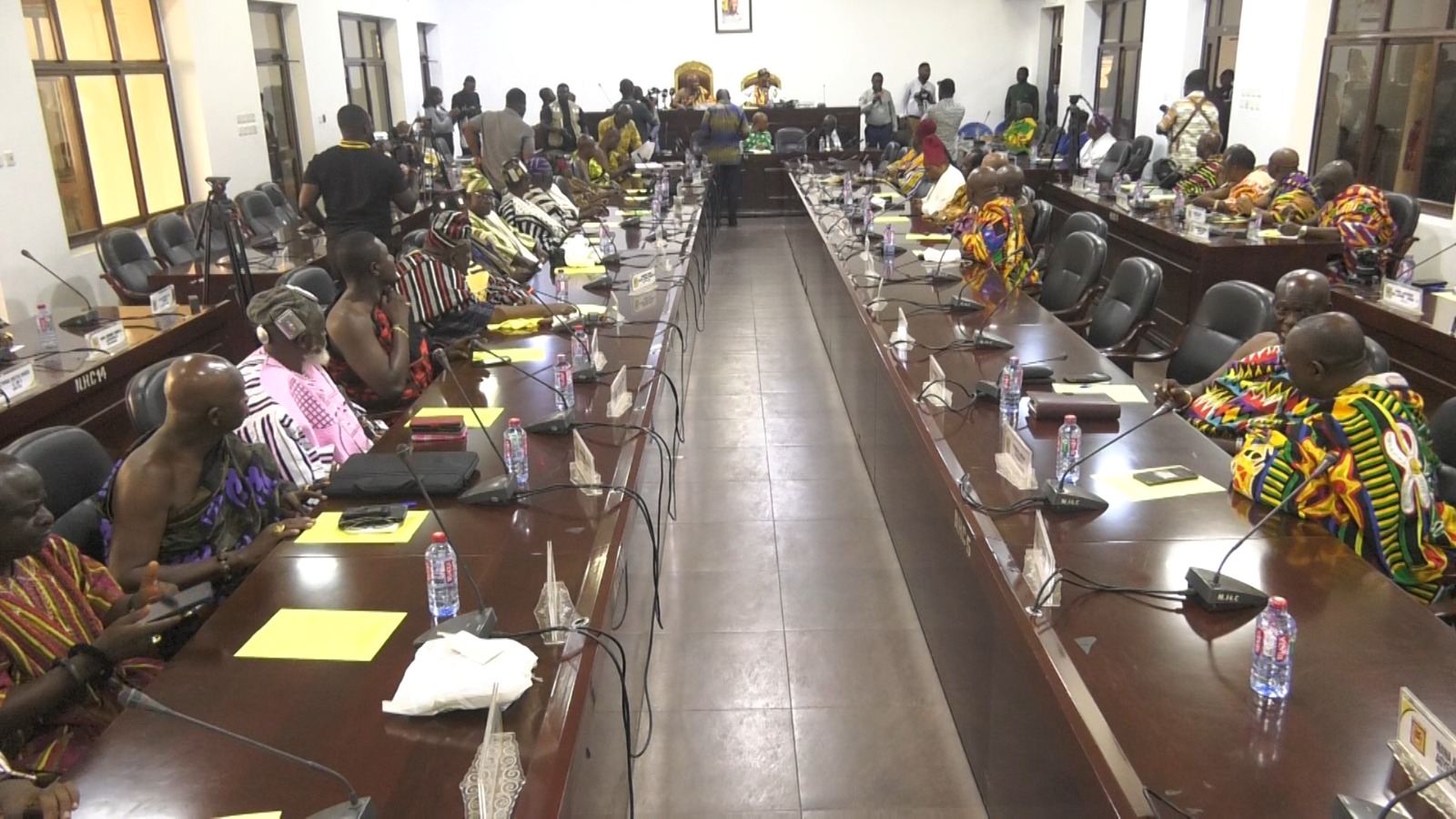
Addressing the National House of Chiefs ahead of the presentation of the 2027 Budget scheduled for November 12, Dr Forson said Ghana’s population had increased by approximately 16 million since 2001, but job creation had failed to keep pace with the growing workforce.
The Minister said although Ghana had expanded access to education and trained more young people, the economy had failed to generate enough productive employment opportunities to absorb the growing workforce.
“Our population has grown faster than the opportunities available to many of our young people, unfortunately. Their future cannot depend on moving from one temporary opportunity to the next,” he stressed.
He argued that Ghana could no longer rely on an economic model that exports raw materials with limited processing while importing finished products that could be manufactured locally.
“Government’s proposed four-year New Economy programme is intended to change this pattern by strengthening domestic production, adding value to natural resources and creating sustainable employment”.
He called for a deliberate shift towards an economy where Ghanaian businesses could expand production, access larger markets and employ more people.
According to him, the private sector must take the lead in job creation, while government provides the necessary investment and enabling environment to support businesses.
Dr Forson warned that failure to address youth unemployment could have serious consequences for national stability.
“If we fail to act, today’s employment challenge could grow into explosive social crises. We must act now to turn our youth’s ability into production and turn hope into opportunity for our young people,” he cautioned.
He further assured the traditional leaders that government would maintain fiscal discipline and ensure value for money in public expenditure.
The Finance Minister appealed to the National House of Chiefs to make the New Economy agenda a national priority, emphasizing that traditional authorities had an important role in mobilizing communities behind the transformation effort.
President of the National House of Chiefs, Ogyeahorhor Yaw Gyebi II, commended government for efforts to stabilize the economy but urged the Finance Minister to prioritize youth employment in the upcoming budget.
“So far, so good. Our expectation is the next budget will factor is sustainable jobs for the youth to further expand the economy”, he said.
Ogyeahorhor Yaw Gyebi II further appealed for financial support to enable chiefs to intervene early in chieftaincy disputes and prevent conflicts from escalating into security threats.
“Adequately resourcing traditional institutions could reduce the financial burden on security agencies by allowing chiefs to help resolve emerging conflicts before they become uncontrollable”.
The Finance Minister said the 2027 Budget was still being prepared and assured the chiefs that their recommendations would be considered as government finalizes its spending priorities.
The engagement forms part of government’s efforts to build wider stakeholder support for its proposed economic transformation agenda.
By Ibrahim Abubakar