

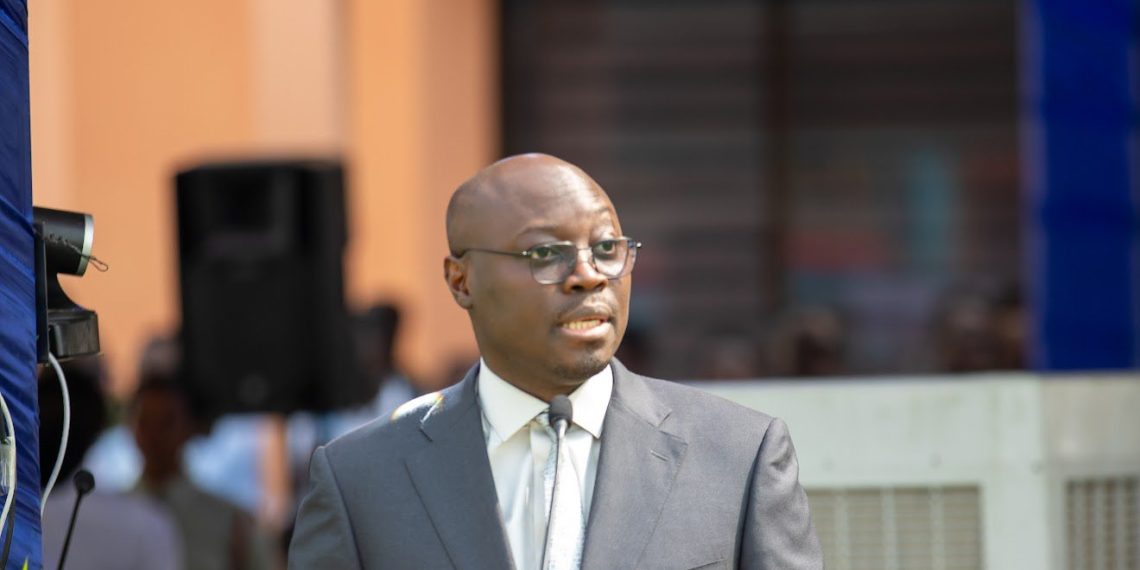

The Minister of Finance Dr Cassiel Ato Forson, has said that the first pillar under the New Economy programme, will institutionalise the stability on which every farm, factory, household and public institution depends.
He says the duty of the government is to protect the gains made and apply them to the benefit of Ghanaians.
From 2027, he said “we will maintain a positive primary balance of at least 0.5 per cent of GDP; we will keep public debt consistent with the 45 per cent of GDP; we will preserve single-digit inflation; and strengthen our external buffers.”
By 2030, he added, “we are targeting real GDP growth of about 8 per cent; unemployment below 8 per cent; and a credible path to investment-grade sovereign credit rating.”
He said that investment-grade sovereign rating cannot be conferred by a speech. It must be earned through sustained performance.
To that end, he said the government will publish an annual Investment-Grade Readiness Report covering:
i.fiscal performance;
ii.debt affordability;
iii.reserves;
iv.monetary credibility;
v.financial sector strength;
vi.institutional quality; and
vii.economic diversification.
Presenting the 2027 budget statement in Parliament on Thursday November 12, he said “affordable finance will turn stability into opportunity. Lower interest rates will translate into credit that businesses can access, afford and repay.”
From the market woman seeking working capital, to the manufacturer investing in new machinery, he said Ghanaian enterprises need financing that supports growth.
“We will strengthen bank lending, deepen corporate bond markets, and create the conditions for cheaper, longer-term credit. Government will work through the Development Bank Ghana, Ghana EXIM Bank and participating financial institutions to expand financing for productive businesses. Credit guarantees, equipment leasing and export finance will help viable enterprises overcome financing barriers.
“Patient capital will give farmers and industrialists time to invest, produce and earn before repayment falls due. Support will be transparent and tied to investment, production and employment.
“Our ambition is to bring the cost of capital into single digits and make finance more widely available,” he said.
Dr Forson also said that the government will sustain fiscal discipline and create greater room for banks to finance private enterprise.
“Affordable financing means businesses can expand and provide more jobs for our young people. That is how the gains of stability will reach homes, workplaces and communities across Ghana,” he said.
He added that these are national commitments.
“Fiscal discipline will apply throughout the election cycle. The room created by discipline will be directed purposefully towards irrigation, energy, transport, industrial infrastructure, technology, skills and the productive sectors set out in this Programme. Stability will improve the balance sheets of Ghanaian businesses.”
He said the purpose of stability is productive confidence:
i.a farmer will be able to plan the next season without fearing an inflation shock;
ii.a manufacturer will be able to price an order without gambling on the exchange rate;
iii.an investor will be able to commit capital beyond one political term; and
iv.a young Ghanaian will see economic growth reflected in jobs, wages and opportunities.
“We will judge growth by the jobs it creates, the incomes it raises and the productive capacity it leaves behind,” he said.
He said that commodity windfalls and debt-financed consumption will no longer define progress.
Ghana’s next phase of growth must be investment-led, export capable and job-intensive.
NEW ECONOMY PROGRAMME FINANCING
The Finance Minister explained that the government will invest US$10 billion over the period 2027 to 2030 to finance the New Economy Programme through two fiscal measures.
“First, we will reduce Ghana’s primary surplus target by 1 percentage point of GDP over the period, creating room for investment in productive infrastructure, industries and jobs.
“Second, tax reforms already approved by Parliament and compliance measures are expected to generate 0.5 percent of GDP.
“In 2027, we will invest 1.5 per cent of GDP, equivalent to GH¢30 billion, in the New Economy.”
This will finance the foundations for economic transformation needed to expand businesses, increase exports and create jobs for the Ghanaian people, he said.
“We will sustain it throughout 2027 to 2030 to fund the New Economy, while preserving macroeconomic stability and protecting our hard-won gains. Every project will undergo rigorous appraisal and value-for-money assessment.
“All commitments will be budgeted, authorised and transparently reported. Every cedi invested will help build a stronger economy and improve the lives of our people. Public funds will concentrate on strategic assets and public goods,” he said.