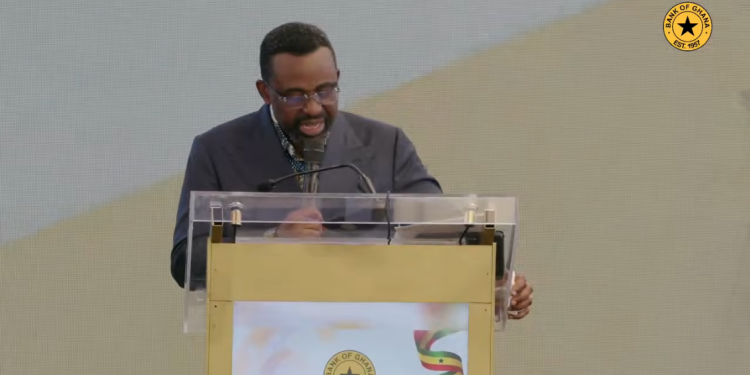

Bank of Ghana Governor, Dr Johnson Pandit Asiama, has said that physical cash remains an essential pillar of our monetary resilience.
He explained that, without doubt, digital payments are transforming economies, expanding access to financial services, and creating new opportunities for businesses and consumers, and Ghana must continue to embrace these developments and strengthen the systems that support a modern, efficient, and inclusive financial sector.
At the same time, he added, experience around the world has shown that payment networks can be disrupted by technical failures, cyber incidents, natural disasters, or deliberate attacks. When such disruptions occur, physical cash provides a dependable means of exchange, helping households and businesses continue to transact without relying entirely on electronic systems.
Dr Asiama said this during the launch of the new Ghana Cedi Heritage Series.
He said the Heritage Series demonstrates that modernisation and national identity can advance together.
“We can embrace innovation while remaining rooted in history and values that define us as people. Our commitment is therefore to advance digital innovation while ensuring that physical cash remains accessible and dependable. These objectives complement one another. A resilient economy must be able to benefit from technological progress while retaining the capacity to function when technology fails.,” he said.
Dr Asiama further explained that the national currency is more than a means of payment. he said it represents a country’s capacity to manage its monetary affairs through its own institutions and to provide the foundation on which economic activity takes place.
“Its credibility depends on sound policies, effective institutions, and the confidence of those who use it. As the Bank approaches its 70th anniversary on 4 March 2027, the Heritage Series represents another step in our continuing efforts to modernise currency management and preserve confidence in our national currency. It reflects our determination to ensure that the cedi continues to meet the needs of the economy while remaining a recognisable symbol of Ghana’s sovereignty,” he said.
The Heritage Series incorporates enhanced security features to strengthen protection against counterfeiting and help the public identify genuine banknotes more easily.
Dr Asiama said that these improvements reinforce the Bank’s commitment to protecting the integrity of the currency and ensuring that the public can transact with confidence.
“Its improved durability is intended to help notes withstand Ghana’s climatic conditions and frequent handling, thereby extending their lifespan in circulation. The smaller, more portable sizes make the notes easier to handle and carry, reflecting the evolving functionality of modern banknotes and the needs of everyday transactions. These changes demonstrate that the physical currency must continue to adapt to how people live, work and conduct business.
“Beyond these practical improvements, the designs connect Ghana’s history and cultural heritage with its present aspirations. Each denomination tells a distinct story through its featured personalities, landmarks, and symbols, creating a series that is both functional and distinctly Ghanaian. By bringing together our national heroes, historic sites and cultural symbols, the Heritage Series offers an opportunity for Ghanaians to engage with their heritage in a familiar, everyday setting. Banknotes can serve as reminders of the people, places and values that have shaped our national journey,” he said.