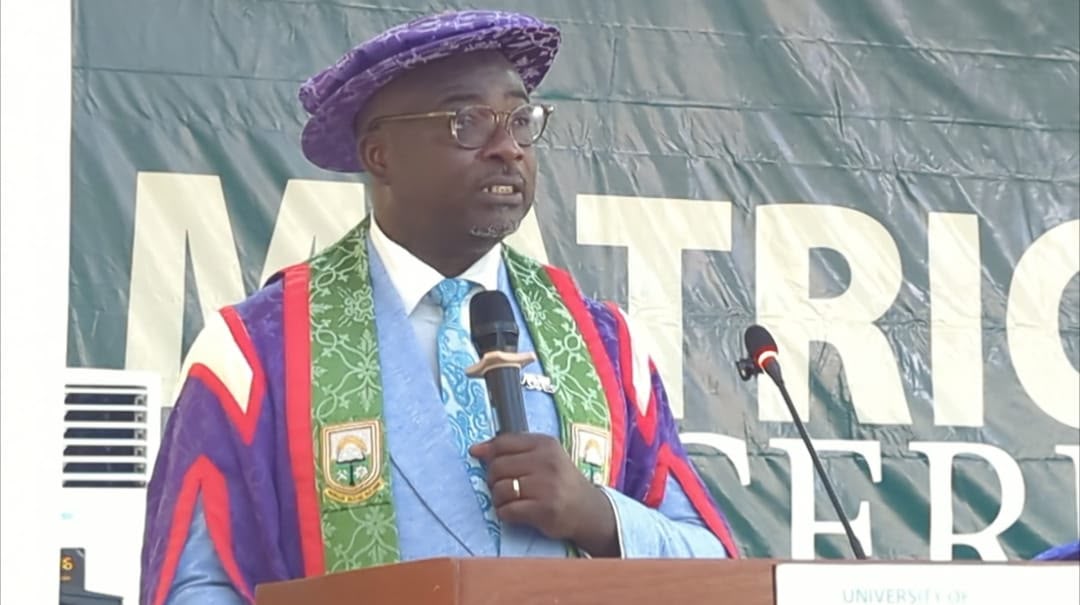

The University of Mines and Technology (UMaT) is set to undertake major infrastructure expansion and introduce new student welfare programmes as its student population rises to 19,683.
The Vice-Chancellor of the university, Professor Bernard Kumi-Boateng, announced the initiatives at UMaT’s 25th Matriculation Ceremony for the 2026/2027 academic year on Saturday, November 14, 2026.
He said the growing student population reflects the institution’s increasing reputation and attractiveness to prospective students but has also placed considerable pressure on existing infrastructure, particularly lecture halls, laboratories and residential facilities.
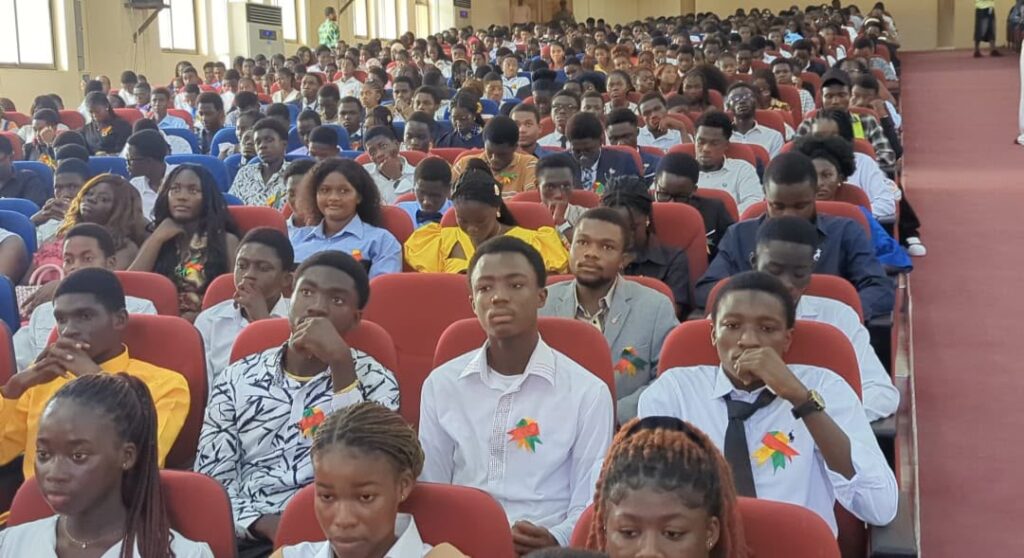
Professor Kumi-Boateng identified infrastructure capacity as the university’s major challenge, stressing that the quality of applicants seeking admission was not the problem but rather the institution’s ability to accommodate them.
He said UMaT was committed to addressing the situation through its Balanced Scorecard and Infrastructure Leap 2030 initiative.
“Our vision to become the MIT of Africa means we must expand our infrastructure. It is a challenge we are addressing head-on through our Balanced Scorecard and Infrastructure Leap 2030 initiative, and we will build classrooms against all odds. Nothing will stop us from building classrooms,” he stated.
The Vice-Chancellor further disclosed that the university would construct new faculty blocks and modern laboratories while ensuring that every classroom was equipped with smart technology by 2028.
He assured students that the institution would not allow infrastructure limitations to undermine their academic potential.
UMaT introduces emergency support fund, feeding scheme
Beyond infrastructure development, Professor Kumi-Boateng announced a series of student welfare interventions designed to address the financial and personal challenges confronting students.
He observed that academic excellence could be difficult to achieve when students struggled to afford basic necessities, including food, or faced unexpected financial and personal difficulties.

Among the initiatives is an Emergency Student Support Fund, which will provide a safety net for students facing sudden financial hardships, medical emergencies and the loss of loved ones.
The university is also introducing a One Meal a Day Scheme to provide daily meals for students from financially disadvantaged backgrounds.
Professor Kumi-Boateng explained that the feeding programme would target students who genuinely needed assistance, allowing them to concentrate on their academic work without the added burden of hunger.
“My dear matriculants, you are the heart of this institution. However, academic excellence cannot thrive in a vacuum. You cannot study for a degree, diploma, or certificate if you are worried about where your next meal is coming from, or if you are feeling overwhelmed and alone,” he said.
He added that the initiatives were intended to support students not only academically but also in their overall well-being.
In another significant policy announcement, the Vice-Chancellor disclosed that coding would become compulsory for all first-year students entering UMaT.
Under the initiative, every newly admitted first-year student will be required to undertake a coding certification examination.
He said the policy was intended to complement the government’s One Million Coders initiative and equip students with relevant digital competencies to prepare them for the demands of an increasingly technology-driven world.
Professor Kumi-Boateng challenged the matriculants to look beyond obtaining academic qualifications and develop the character, resilience and sense of responsibility required to succeed in their chosen careers.
He also urged them to embrace sustainable development and take advantage of the opportunities available at the university to contribute meaningfully to national development.
The announcements form part of UMaT’s broader efforts to strengthen its academic and infrastructure capacity while creating a supportive learning environment as it pursues its ambition of becoming the MIT of Africa.
By Ebenezer Atiemo