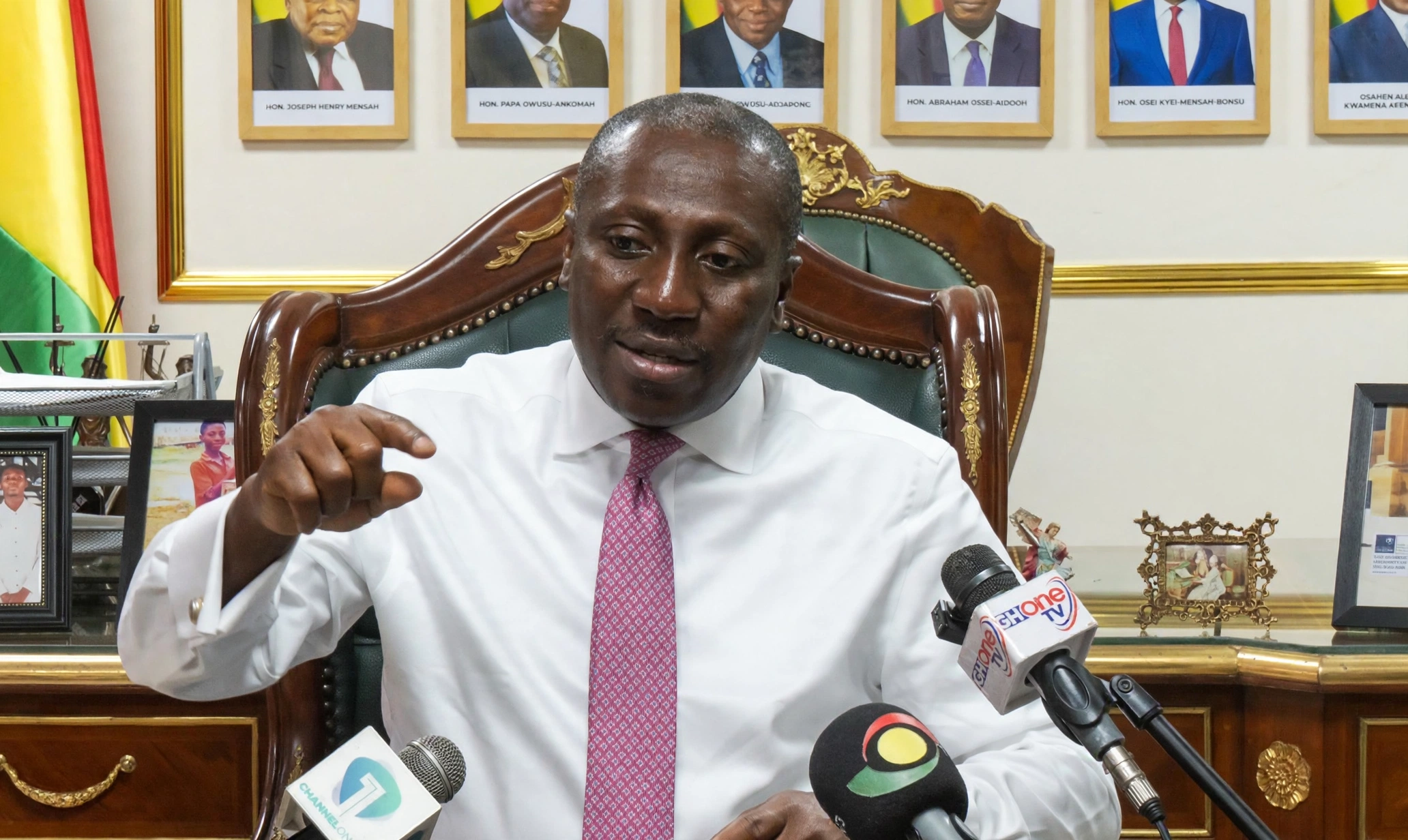

The Minority Leader, Alexander Afenyo-Markin, has called for an end to the politicisation of businesses in Ghana, arguing that governments have undermined local entrepreneurship by allowing political considerations to influence how businesses are treated, rewarded and supported.
While commending the decision to invite African business magnate Aliko Dangote to an investment summit in Accra, Mr Afenyo-Markin questioned whether Ghana was extending the same level of encouragement and opportunity to its own entrepreneurs.
He believes that attracting major foreign investors is important for economic growth, but insists that such efforts would amount to little if Ghanaian-owned businesses continue to face discrimination because of their perceived political affiliations.
His fundamental concern is about how the country can genuinely promote private-sector growth and create jobs when local businesses risk being punished for having undertaken legitimate government contracts under a previous administration.
“I was happy seeing Dangote in Accra on the sidelines of the investment summit; great idea, we need to attract African giants. But are we giving our own the chance?” he asked.
For him, the enthusiasm surrounding the arrival of prominent African investors must be matched by a deliberate commitment to protecting and empowering Ghanaian businesses.
The Minority Leader argued that successive administrations have failed to demonstrate sufficient commitment to local businesses, particularly when political power changes hands.
“Today, there are businesses who have not been paid after working for government because it was NPP time. We’re harming the Ghanaian entrepreneur with partisanship… and this one I won’t blame NDC and leave NPP – both political parties, it happens all the time,” he observed.
EOCO investigations and the question of selective treatment
The Minority Leader’s concerns become particularly pointed when he turns to investigations involving some Ghanaian businesses by the Economic and Organised Crime Office (EOCO).
He questioned what he considers an uneven approach to the treatment of companies that secured government contracts under the previous administration.
According to him, some Ghanaian businesses are facing investigations because they received contracts from the former government, while certain foreign companies that also worked with the same administration are allegedly continuing to secure contracts under the current government without comparable scrutiny.
“Today, Ghanaian businesses are suffering because EOCO is investigating them; reason, a particular administration gave them jobs. The same administration also gave jobs to some foreign companies but those are getting new jobs from the new administration and not reporting to EOCO nor under GRA and OSP investigations; they’re enjoying,” he noted.
For Alexander Afenyo-Markin, the larger concern is that Ghana cannot credibly champion private-sector development while creating an atmosphere in which local entrepreneurs feel vulnerable to political retaliation.
From political slogans to a genuine private-sector jobs agenda
Mr Afenyo-Markin questioned the seriousness of the government’s commitment to building a private-sector-driven economy, arguing that the rhetoric surrounding the 24-hour economy and what is now being presented as a new economy has yet to translate into tangible improvements for ordinary entrepreneurs.
“They promised 24-hour economy; they themselves couldn’t explain the concept but now claim there is a new economy. I don’t see this government being serious about creating jobs through the private sector; it’s another sloganeering game they’re playing,” he remarked.
According to him, “what is being said on paper is different from what the ordinary entrepreneur is experiencing.”
A warning against premature celebrations over economic performance
Beyond his concerns about entrepreneurship and the government’s economic agenda, the Minority Leader cautioned against what he considers premature praise of the current Finance Minister.
“Today, people are praising the Finance Minister; it’s year two; not game over yet,” he said.
Afenyo-Markin warned that Ghana could experience economic stagnation by the fourth year of the government’s tenure if the country fails to pursue deeper economic transformation.
“If we don’t add our voice to get proper transformation, by the fourth year we’re going to experience economic stagnation and we’d come back to square one,” he cautioned.
In making that argument, he drew a comparison with the tenure of former Finance Minister Ken Ofori-Atta, whose initial economic achievements, he suggested, attracted considerable public praise before considerable challenges that frustrated economic progress on a larger scale.
By Christian Yalley