
The Eastern Regional Health Directorate has urged residents living close to rivers and farms in areas prone to river blindness to avoid prolonged exposure to blackfly-infested zones to reduce the risk of infection.
The Directorate says relocating residential communities away from riverbanks and other breeding grounds of the blackfly could significantly reduce exposure to the insect responsible for transmitting the disease.
River blindness, also known as onchocerciasis, is a neglected tropical disease caused by a parasitic worm transmitted through the bites of infected blackflies.
The disease predominantly affects rural communities, particularly populations living near fast-flowing rivers where the flies breed.
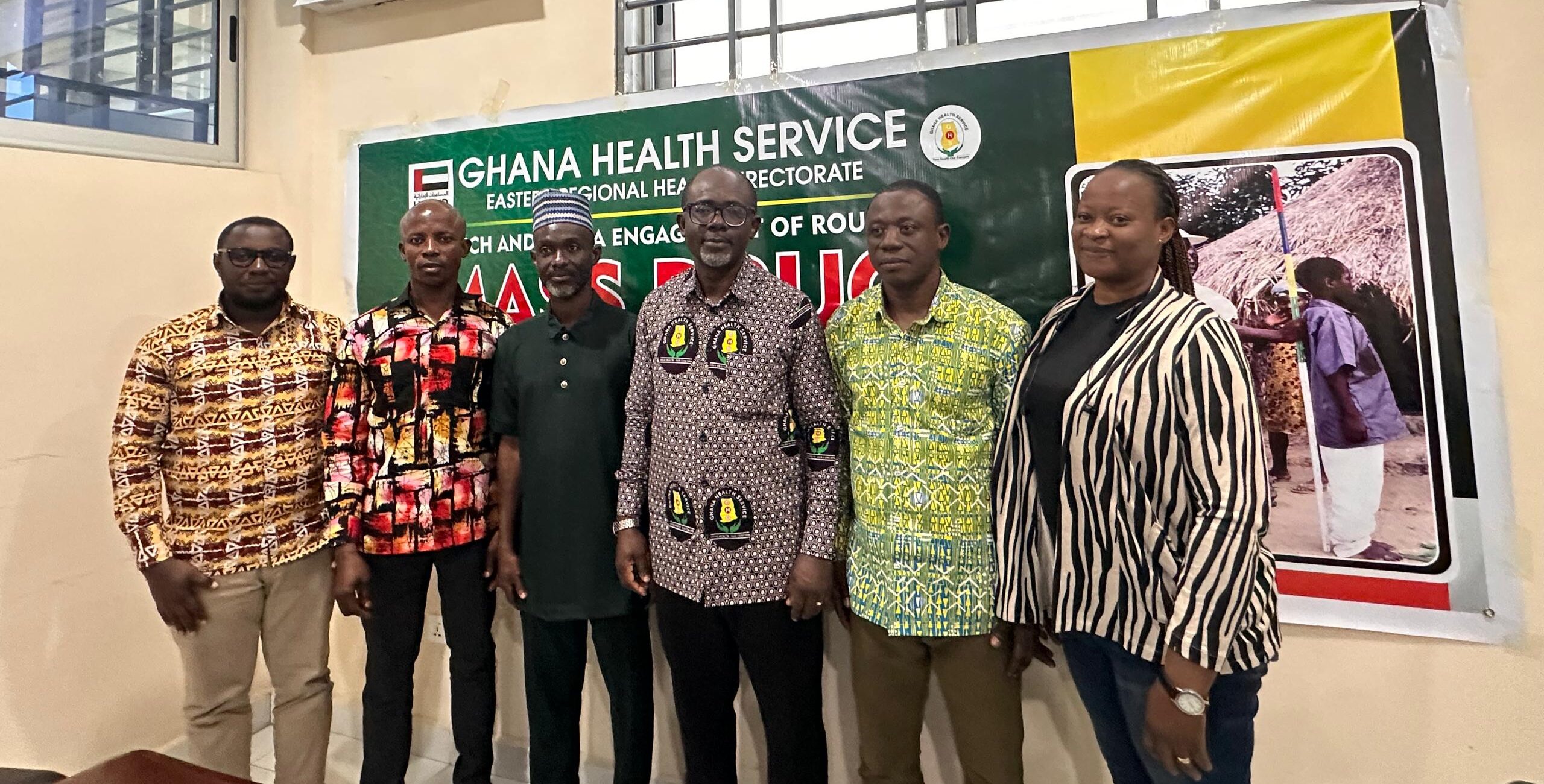
In the Eastern Region, an estimated 168,467 people are at risk, with the Ghana Health Service targeting 134,774 people for mass drug administration.
The intervention covers four districts — Kwahu Afram Plains North, Kwahu Afram Plains South, Kwahu East and Ayensuano — involving 19 sub-districts and 366 communities.
Deputy Director of Public Health, Dr Moses Barima Djimatey, says the Directorate is committed to reducing the population at risk but requires the support of District Assemblies and other stakeholders to address exposure to the disease.
He says communities situated within the breeding and biting zones of the blackfly must consider relocating their settlements to safer areas.
“In well-organised communities, we will make sure that within a certain radius of the fly, we don’t have residential communities. If all the people in those communities move outside those ranges of the river, the insects are not able to fly beyond a certain radius.”
Dr Djimatey acknowledged the economic realities confronting residents, many of whom depend on rivers and nearby farms for their livelihoods.
He says authorities must explore practical alternatives that allow residents to continue farming and fishing without exposing themselves to repeated blackfly bites.
“There is an economic component, a reason why they are there; some of them are fishermen, others are farmers. The next level is what else can we do. Is it possible for them to stay off the radius and go in to fish or farm? When you are done, you move back to where you live. This would drastically reduce the population of people who are within the zone of biting the insect. They must also wear protective clothing.”
As part of the mass drug administration exercise, community-based health workers will visit households to administer medication to eligible residents.
Pregnant women, children below 90 centimetres in height and breastfeeding mothers with infants less than one week old are excluded from the treatment.