


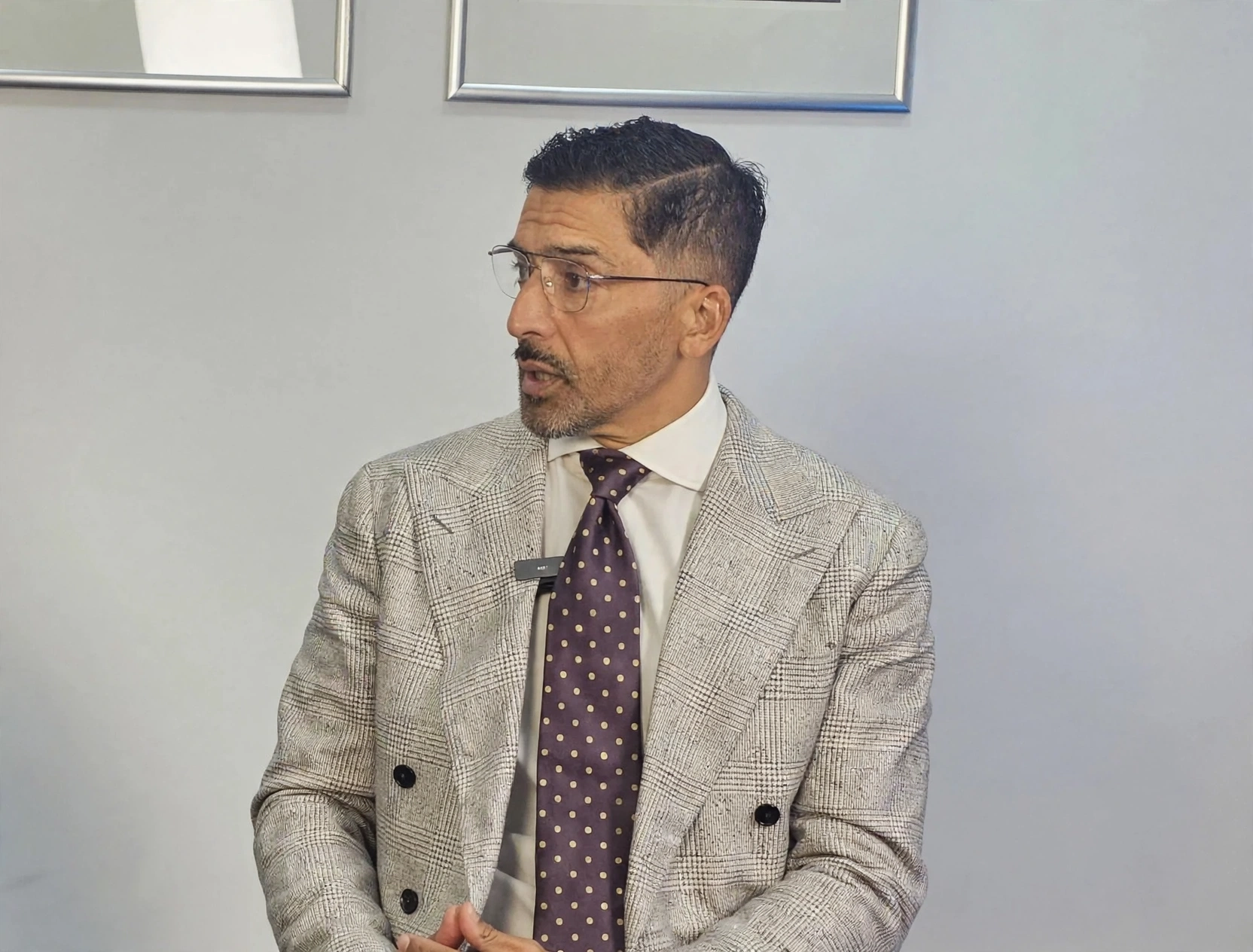

African governments must resist the temptation to direct pension funds into domestic development projects without adequate consideration of the commercial returns and risks to contributors, Chief Economist of Standard Bank Group, Ghulam Balim, has cautioned.
He says although pension assets represent an important source of long-term domestic capital, their deployment into infrastructure and other productive sectors must be guided by investment returns rather than government financing priorities.
His comments come amid growing calls across Africa for pension funds to play a bigger role in addressing infrastructure financing gaps and supporting private-sector development.
Speaking to 3Business, Balim acknowledged that significant portions of pension assets across the continent remain underutilised. However, he argued that the problem is not simply a lack of willingness by pension fund managers to invest in productive sectors. Africa’s limited capacity to develop commercially viable and investment-ready projects is also a constraint.
“So you are correct in saying that many of them sit idle because Africa’s absorptive capacity for investment is not as substantial as one would imagine,” he said.
He cautioned against government-directed investment decisions that could expose pension contributors to unnecessary risks.
“Secondly, there should not be prescription. I’m averse to prescription generally, where we encourage pension funds to invest, say, in domestic projects on the instruction of government,” he added.
Balim insists that investment decisions must ultimately serve the interests of pension beneficiaries.
“It should be lucrative. It should be rewarding to the ultimate beneficiaries in those pension funds,” he said.
Ghana’s Growing Pension Assets
The issue has particular significance for Ghana, where pension assets have expanded considerably over the past few years.
The National Pensions Regulatory Authority’s 2025 annual report puts total pension assets under management at GH¢111.11 billion, compared with GH¢86.09 billion in 2024.
The growth represents an increasingly important pool of domestic savings that could potentially support long-term investment in infrastructure, housing, agriculture and other productive sectors.
However, much of the industry’s investment portfolio remains concentrated in government securities.
The NPRA’s 2024 annual report showed that approximately 73 per cent of private pension fund assets were invested in government securities at the end of that year.
This concentration has raised questions about the need to diversify pension investments and improve the flow of long-term capital to businesses.
An October 2025 report by the African Private Capital Association, supported by the Chamber of Corporate Trustees and British International Investment, identified significant opportunities for Ghana’s pension industry to support private capital investment.
The report found that Ghana’s pension assets had reached GH¢86.4 billion in 2024, but allocations to alternative investments remained relatively low.
It estimated that fully utilising the permissible allocation for alternative investments could unlock more than one billion dollars for private capital investment.
NPRA Calls For Greater Diversification
The National Pensions Regulatory Authority has also acknowledged the need to broaden investment options.
In April 2026, its Deputy Chief Executive Officer, Victor Azuma Mejida, called for greater diversification beyond government securities.
He said excessive concentration in sovereign instruments could expose pension portfolios to risks while limiting the industry’s contribution to productive sectors.
The Authority has been supporting efforts to expand investment opportunities into areas such as private credit and structured finance, which could provide long-term funding for businesses, particularly small and medium-sized enterprises.
Government Also Stresses Protection of Pensioners
Finance Minister Dr Cassiel Ato Forson has similarly emphasised that pension funds must be managed prudently even as government seeks to mobilise domestic resources for development.
Speaking in October 2026, he said pension funds could contribute to infrastructure financing, provided investments were structured to protect contributors’ interests.
He called for transparent governance arrangements, clearly defined risks and predictable cash flows to support institutional investment in infrastructure.
The Minister also acknowledged lessons from Ghana’s Domestic Debt Exchange Programme, arguing that pension assets should not be treated simply as convenient sources of government financing.
He stressed that pension funds belong to workers and must be managed in their long-term interests.
Balancing Development Financing With Retirement Security
Balim believes Africa’s expanding consumer markets, growing demand for natural resources and opportunities in the energy transition could create attractive investment opportunities for pension funds.
However, the availability of capital alone will not be sufficient.
Governments and project developers must also improve project preparation, governance and risk management to make infrastructure investments commercially viable.
For Ghana, the challenge is therefore twofold: mobilising more domestic capital for development while ensuring that the retirement savings of workers are not exposed to poorly structured or politically motivated investments.
By Michael Ogbodu