

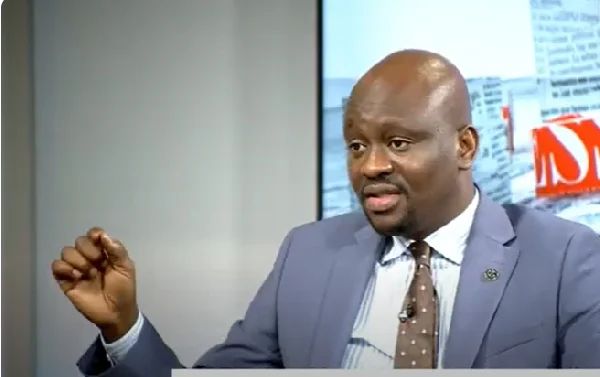

Member of the National Democratic Congress (NDC) Communications Team, Hamza Suhuyini, has called on the police to intensify night patrols to prevent the continued theft of streetlight equipment.
He says although laws exist to deal with people involved in the theft of public infrastructure, the major challenge is the ability of authorities to monitor and prevent such incidents.
Speaking on TV3’s The Big Issue, Thursday, November 26, the private legal practitioner said the focus must be on preventing the thefts, particularly as some stolen metals are melted down before they can be traced.
“Sometimes my understanding is that they even melt them before they attempt to export them. So it is difficult to tell the state in which it was when it was picked,” he said.
Suhuyini also raised concerns about the informal metal trade, where stolen materials are bought and sold without sufficient checks on their origins.
He said some businesses involved in the trade were more concerned about making profits than establishing where the materials they purchase come from.
“Many of these private companies who are in a way organised and established, are not even interested in knowing where these things are coming from, provided they are making their profits,” he said.
He called for stronger monitoring of the trade and greater police presence, particularly along routes where streetlight equipment is vulnerable to theft.
Suhuyini also urged the Inspector-General of Police (IGP) to collaborate with the Electricity Company of Ghana (ECG) to protect public infrastructure.
“Beyond the checkpoints we see, we must see police visibility. We must see the patrols moving in the night, especially around those corridors. That way we can effectively protect them,” he said.
Reacting to reports that about 20 suspects had been arrested, he described the number as insignificant compared with the scale of the problem.
He further called on Assembly members and Metropolitan, Municipal and District Chief Executives (MMDCEs) to make the protection of public assets a priority.
Suhuyini criticised what he described as a lack of commitment among some public officials to initiatives that do not come with financial incentives or procurement opportunities.
He said protecting public infrastructure should be understood as a responsibility to the communities that depend on those facilities.
“When you are protecting them, you are not protecting them for His Excellency the President or the minister responsible for Greater Accra or the minister responsible for energy. It is for your own comfort,” he said.
He warned that without sustained police patrols and stronger monitoring of the scrap metal trade, efforts to stop the theft of streetlight equipment would remain ineffective.
By Evelyn Ampah