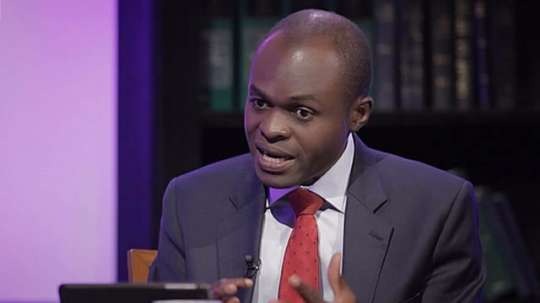

Legal Practitioner, Martin Luther Kpebu, has said it is welcoming for persons who were pushing for the passage of the Anti-LGBTQ to be passed to be calling on the President to exercise some restraint on its assent.
He says the Bill, which has raised series of concerns following its reintroduction to Parliament and subsequent passage, needs to be scrutinised carefully before being assented to, to ensure all the concerns surrounding it are catered for.
According to him, the fact that persons who hitherto pushed for Parliament to pass the law now want the President to exercise some restraint suggests the Bill has some concerns that need to be addressed before becoming a law.
“It is refreshing to hear that even Edem Senanu and co who were baying for the blood of Parliament that the Bill should be passed now say that the President should take his time,” Martin Kpebu had said on Ghana Tonight on TV3 Monday, June 1, 2026.
His comments follow President Mahama’s statement that the Bill still has a long way to go before it can become law.
Speaking during a question-and-answer session at Chatham House in UK on Monday, June 1, President Mahama said several procedural and legal issues surrounding the bill must first be addressed before any decision is taken on presidential assent.
The President noted that the legislation has attracted significant public attention because of its implications for family values and social policy in Ghana.
“The Human Sexual Rights and Family Values Bill has probably been the bill that has evoked the most interest in Ghana. It shows how important issues of family values are,” he said.
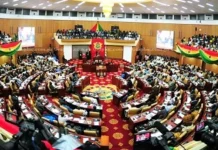
According to him, questions have already emerged regarding the manner in which the bill was passed by Parliament.
He cited concerns over whether there was a quorum at the time of its passage, as well as allegations of procedural lapses during the legislative process.
“There have been a few issues raised. One, that there wasn’t quorum when it was passed. That’s an issue that has come up, and then two, there were some procedural lapses in terms of its passage,” he stated.
Mahama revealed that he had received information that the Speaker of Parliament was addressing concerns raised about the process through which the bill was approved.
He explained that once the bill is formally transmitted to the Presidency, it will undergo a thorough legal review before any decision is taken.
The President said the Attorney General and legal advisers at the Presidency would scrutinise the legislation because it originated as a private member’s bill rather than a government-sponsored bill.
“It must come for assent and so once the president gets it, you go through it because you are not part of the discussion in Parliament. The legal counsel in the Presidency and the Attorney General would sit on it and make sure that everything is in order before the president is advised to assent,” he said.
Mahama also outlined other constitutional options available to the President, including referring the bill to the Council of State for advice if concerns arise.
He explained that if substantial issues are identified, the President could return the bill to Parliament and specify the concerns that need to be addressed.
“The president has another option. If there are some things that he thinks are a problem, he can refer it to the Council of State for advice. If substantial issues are raised, the president would return the bill to Parliament indicating exactly what the issues are,” he said.
He concluded by stressing that the legislative process is not yet complete. “So there’s still quite a while to go before that bill becomes law,” he added.