
The Ashanti Region recorded 561 breast cancer cases in 2024, almost double the 292 cases recorded the previous year, prompting renewed calls for early detection and timely treatment.
Regional health data show that 234 cases were recorded in 2022, rising to 292 in 2023 before reaching 561 in 2024. The figure subsequently fell to 351 cases in 2025.
Although improved detection and reporting may have contributed to the variations, the Ashanti Regional Health Directorate says the figures underscore the need for sustained investment in breast cancer prevention, diagnosis and treatment.
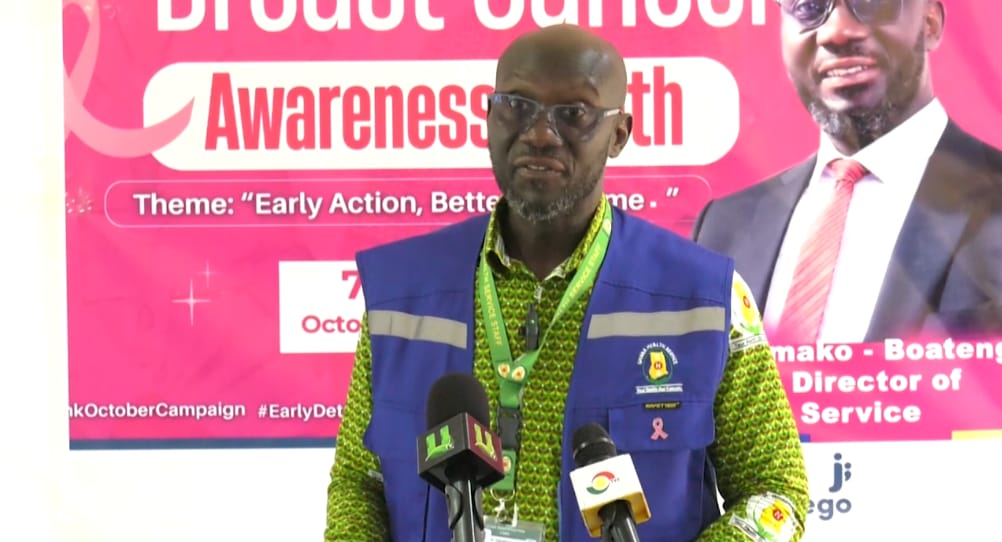
Briefing the media at the launch of the breast cancer month, Ashanti Regional Director of Health Services, Dr Fred Adomako-Boateng, said the region continues to face a substantial breast cancer burden.
“The statistics should strengthen efforts to ensure that breast cancer is detected before it reaches advanced stages”.
Nationally, breast cancer remains the leading cancer among women in Ghana, accounting for 31.4% of all female cancers.
According to GLOBOCAN 2022 estimates, Ghana recorded 5,026 new breast cancer cases and 2,369 deaths, with breast cancer contributing 41.2% of female cancer-related deaths.
Dr Adomako-Boateng expressed concern that more than 80% of breast cancer cases in Ghana are diagnosed at advanced stages; Stages 3 and 4.
“The outcome of breast cancer is influenced not only by the disease itself, but by how early it is diagnosed, how quickly a diagnosis is established, and how promptly appropriate treatment is initiated.”
He said early action begins with people recognising unusual changes in their breasts and seeking professional medical assessment.
According to the Regional Health Director, warning signs may include a new lump or swelling in the breast or armpit, changes in breast size or shape, skin dimpling, redness or scaling, a newly inverted nipple, unusual or bloody nipple discharge and persistent breast or nipple pain unrelated to menstruation.
He, however, cautioned against assuming that every breast lump is cancerous.
“A significant number of breast abnormalities are not cancerous; they are benign. However, the distinction between a benign condition and a cancerous one cannot reliably be made simply by looking at or feeling a lump. You can’t, by vision or by touching. The appropriate response to a new or unusual breast change is, therefore, a professional assessment.”
The Ghana Health Service is encouraging women to undertake regular self-breast examinations, have clinical breast examinations, undergo mammography screening from age 40, maintain healthy lifestyles and promptly report unusual changes.
Dr Adomako-Boateng called on the media to intensify public education, dispel myths and stigma surrounding breast cancer, and encourage people to seek medical attention early.
The Ashanti Regional Health Directorate is implementing the Beat Breast Cancer project with support from Ghana Health Service Headquarters, the NCD team, JHPIEGO and the Pfizer Foundation to strengthen professional capacity, community awareness and access to breast health services in the region.